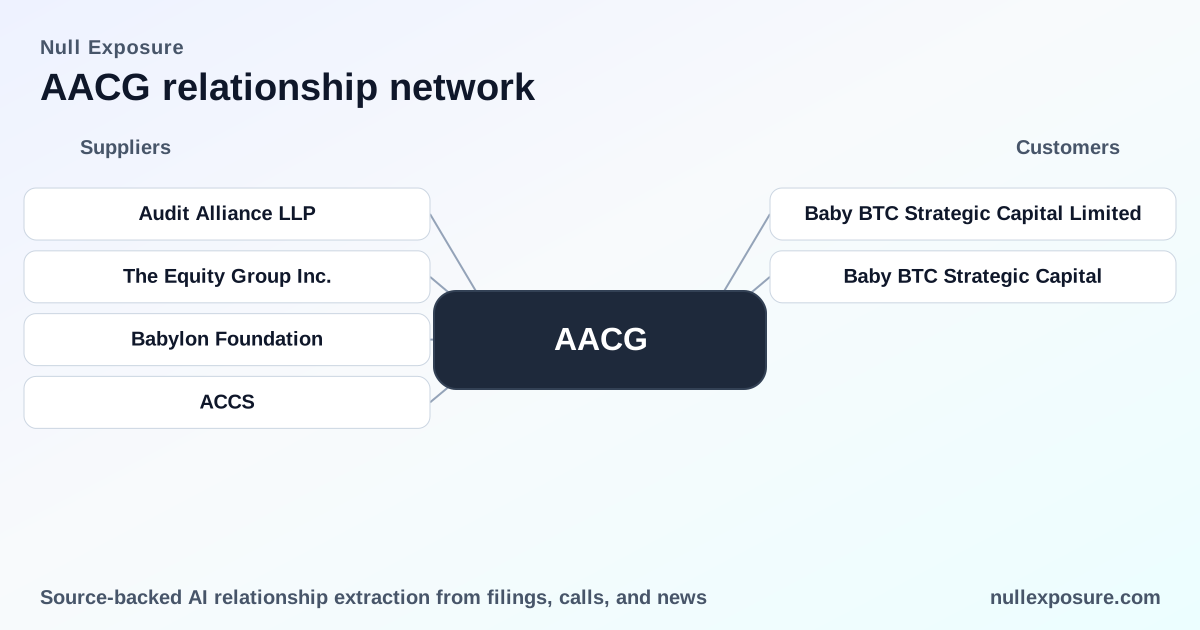
AACG customer relationships: what investors need to know
Thesis: AACG is executing a capital-led growth strategy that converts equity and strategic crypto partnerships into operable liquidity and treasury assets. The company monetizes through equity issuances and by partnering with specialized investment vehicles to seed a token treasury — a hybrid financing approach that blends traditional capital raises with crypto-era balance sheet management.
For investors and operators evaluating AACG, the central question is how these customer and investor relationships change capital structure, counterparty concentration, and treasury risk. This note synthesizes the observable relationships, their commercial shape, and the operating constraints that flow from them.
One-sentence summary of how this relationship-driven model works
AACG raises cash by issuing equity and warrants to strategic investors while simultaneously leveraging those relationships to build a token treasury that supports new revenue or balance-sheet strategies; these transactions create concentrated funding lines that accelerate growth but increase counterparties’ footprint on governance and liquidity.
If you want a concise reference on documented counterparties and disclosures, visit the company overview at https://nullexposure.com/.
Material customer/investor relationships — the facts, plainly stated
-
Baby BTC Strategic Capital Limited (Baby BTC Strategic Capital)
According to press coverage dated March 9, 2026, Baby BTC Strategic Capital agreed to subscribe for new AACG shares worth US$30 million and to acquire warrants valued at US$70 million, making the total committed capital US$100 million under the term sheet; the transaction is reported in connection with AACG’s initiative to seed a Babylon token treasury. (CryptoSlate press release, Mar 9, 2026).
A separate news item on the same date reiterated the same structure — US$30 million in equity plus US$70 million in warrants for a US$100 million transaction — highlighting the investor’s role in initiating the token treasury and the announced subscription terms. (StockTitan / newswire item, Mar 9, 2026). -
Baby BTC Strategic Capital Limited (duplicate reporting, same economic terms)
Coverage from a second outlet repeats the transaction size and mechanics: Baby BTC Strategic Capital’s subscription for US$30 million of new shares and US$70 million of warrants, bringing the transaction scale to US$100 million and tying the capital raise to token treasury plans for AACG. This corroboration provides a second independent media confirmation of the same commercial arrangement. (StockTitan news item, Mar 9, 2026).
What these relationships imply about AACG’s operating posture
- Contracting posture: AACG is using negotiated equity and warrant instruments rather than syndicated debt or conventional bank financing, indicating a preference for flexible, equity-linked capital that preserves operating leverage and avoids fixed interest commitments. The use of warrants creates potential future dilution but defers immediate cash outflow for counterparties.
- Concentration: A single investor committing up to US$100 million creates concentration risk on both funding and governance influence, especially when the counterparty is a strategic crypto-focused vehicle that will interact with treasury objectives.
- Criticality: The Baby BTC relationship is potentially critical to AACG’s near-term treasury plan. If the intended token treasury underpins new product or balance-sheet strategies, the counterparty’s follow-through determines execution capability.
- Maturity: The financing instrument mix (equity subscription plus warrants) is typical of growth-stage recapitalizations rather than mature recurring revenue contracts; this suggests AACG is in a capital-formation stage rather than a stable cash-yielding maturity.
Key investment implications and risk factors
- Dilution and upside mechanics: Warrants valued at US$70 million create upside capture for the investor and future dilution for existing shareholders if exercised; this structure aligns the investor’s interests with AACG’s appreciation but transfers some long-term equity to the counterparty.
- Treasury composition risk: Allocating proceeds into a token treasury changes balance-sheet liquidity characteristics, increasing market and regulatory risk relative to holding cash or traditional securities. Investors should treat token holdings as higher volatility and potentially less liquid.
- Counterparty concentration: Relying on a single strategic investor for a large tranche of capital concentrates economic exposure and could influence strategic decisions; governance covenants or side agreements, if present, will be material to assess.
- Execution dependency: The announced commitment is reported via press release and newswire; investors should confirm definitive agreements and closing conditions in formal filings to validate timing and enforceability.
What to watch next — practical diligence steps
- Confirm the definitive agreement language and closing conditions in AACG SEC or exchange filings to determine whether the US$100 million package is committed, subject to conditions, or contingent.
- Request or review any warrant exercise mechanics: strike prices, exercise windows, and anti-dilution provisions will materially affect shareholder economics.
- Understand the token treasury governance: who controls the token reserves, where they are custodized, and what monetization or distribution model is intended for Babylon tokens.
- Monitor regulatory commentary and statements about token treasuries, as shifting guidance will alter valuation and custody considerations.
Conclusion: strategic capital with execution friction
The disclosed Baby BTC Strategic Capital arrangement represents a concentrated, equity-led capital infusion tied to an experimental token-treasury strategy. For investors and operators, the headline is clear: AACG is swapping equity and warrant economics for ready capital and a partner to seed a crypto-denominated treasury. That trade-off accelerates near-term funding and optionality but imposes concentration, dilution, and treasury-risk that require active monitoring.
For a compiled view of AACG’s counterparties and disclosure links, see the company profile at https://nullexposure.com/.
Bold takeaway: $100M in targeted capital is material; confirm definitive close, warrant terms, and token governance before updating valuation or position sizing.