AAPG: Commercial partnerships turn discovery into recurring cash — and concentrated risk
Ascentage Pharma Group International (AAPG) operates as a China-focused oncology developer that converts proprietary kinase programs into commercial revenue through licensed partnerships, option payments and co-commercialization agreements. The firm monetizes both through direct product sales in China and through upfront/option/license receipts from global pharma partners, creating a hybrid model that blends product revenue growth with discrete licensing cash-ins. For investors, the key valuation levers are olerembatinib sales momentum in China and the timing/size of partner option and license milestones.
Read an investor-focused overview on the company at https://nullexposure.com/.
Market posture and operating model
- Ascentage’s contracting posture is that of a developer-licensor: the company retains commercial exposure in China while outsources or monetizes global rights through option/license arrangements. That structure produces a combination of recurring product revenue and lumpy, high-impact cash events (option payments, licensing fees).
- Concentration is material: olerembatinib is a core commercial asset, and recent public commentary highlights the business’s reliance on that single program for near-term upside and partner payments.
- Criticality of partnerships is high. Inclusion of olverembatinib on China’s National Reimbursement Drug List (NRDL) and joint commercialization deals materially affect uptake and pricing power in the domestic market.
- Maturity sits between late clinical/registrational data and early commercial growth: the program has multi-year follow-up results supporting safety/efficacy while commercial rollout and partner option exercises are already generating revenue.
If you want a concise data-backed tracker of AAPG partner events and revenue signals, see https://nullexposure.com/ for ongoing updates.
Detailed relationship notes (each source result covered)
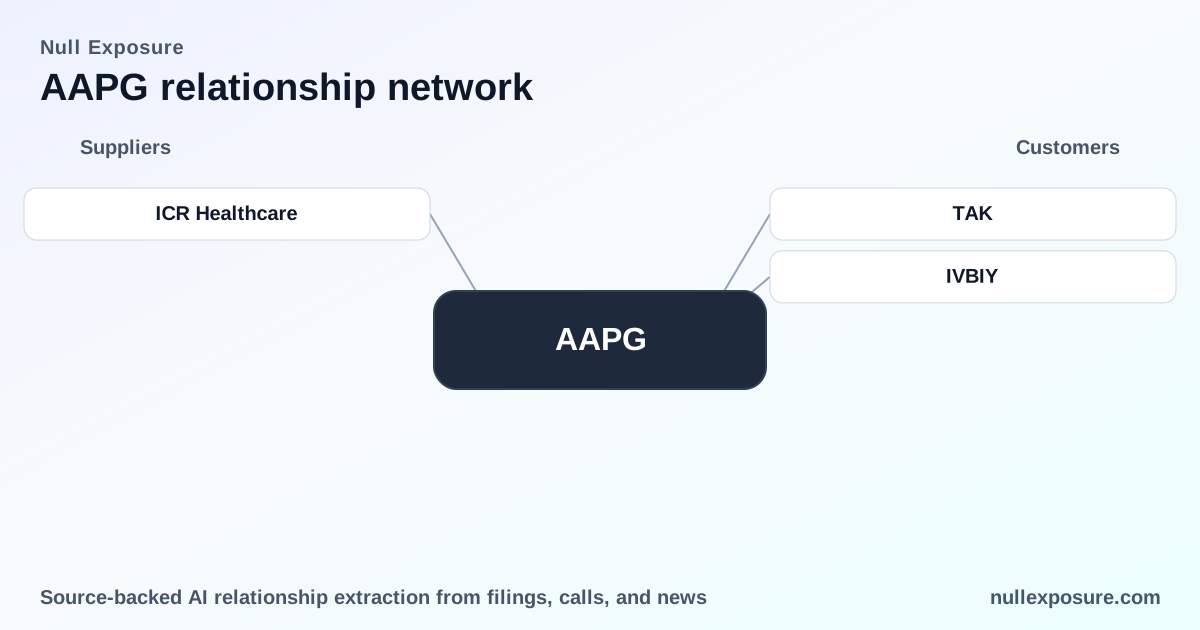
- The Simply Wall St item (first seen March 9, 2026) highlights Takeda’s role and warns that heavy reliance on olverembatinib and a one‑off Takeda payment concentrate downside risk; this underscores that partner payments are material to the investment case. (SimplyWallSt, March 9, 2026)
- The same Simply Wall St article repeats the point using the Takeda name, noting the company’s one‑off payment dynamics and how slower trials or regulatory setbacks could quickly reverse the upside case. (SimplyWallSt, March 9, 2026)
- A GlobeNewswire release (December 9, 2025) confirms Innovent Biologics is a joint commercial partner in China for olverembatinib, indicating Ascentage shares market execution with a local commercial organization. (GlobeNewswire press release, Dec 9, 2025)
- That GlobeNewswire release is also captured under the trading symbol IVBIY and again confirms the joint commercialization arrangement with Innovent, reinforcing that Innovent is the operational commercial partner on the ground in China. (GlobeNewswire press release, Dec 9, 2025)
- A StockTitan news page (May 2, 2026) observes that olverembatinib is included on China’s NRDL and is being jointly commercialized with Innovent Biologics, an access outcome that materially supports reimbursement-led volume growth. (StockTitan news, May 2, 2026)
- The same StockTitan item (May 2, 2026) reports that olverembatinib sales in China grew 52% to US$33.0 million, and that growth was accompanied by a US$100 million Takeda option payment, indicating simultaneous commercial traction and crystallized licensing cash flow. (StockTitan news, May 2, 2026)
- A GlobeNewswire release (Dec 9, 2025) documents Ascentage’s exclusive option agreement with Takeda to enter into an exclusive license for olverembatinib, establishing Takeda as a strategic licensing partner for ex-China rights. (GlobeNewswire press release, Dec 9, 2025)
- The GlobeNewswire source reiterates the Takeda option construct and the formal pathway for a licensing agreement, confirming the contractual mechanism by which AAPG can convert future partner decisions into large, one‑time inflows. (GlobeNewswire press release, Dec 9, 2025)
What this set of relationships means for investors
- Revenue mix and visibility: Product sales in China (notably olverembatinib) provide predictable, growing top-line contribution, while option/license exercises deliver infrequent but high-value cash events such as the reported US$100 million Takeda payment. Both streams matter to the near-term cash runway and valuation.
- Concentration risk: Multiple sources explicitly connect the company’s upside to olverembatinib performance; that concentration creates asymmetric risk if regulatory or clinical setbacks occur. The Simply Wall St commentary and GlobeNewswire disclosures together make this dependency explicit.
- Access and reimbursement are pivotal: Inclusion on the NRDL and a joint commercialization arrangement with Innovent materially de‑risk reimbursement and distribution execution in China; StockTitan’s May 2026 report quantifies the immediate revenue impact (52% growth to US$33.0 million).
- Partner optionality accelerates monetization: The Takeda option structure is a clear lever for converting program value into cash; GlobeNewswire documents the exclusive option agreement and StockTitan records the option payment outcome, demonstrating the model in action.
Key investment takeaways
- Positive: The commercial evidence—NRDL inclusion, double‑digit sales growth in 2026 and an executed US$100 million option payment—shows the company is successfully converting development-stage assets into realized commercial value. Joint commercialization with Innovent provides a distribution partner to scale China sales.
- Risk: Concentration on olverembatinib and the lumpy nature of partner payments produce higher event-driven volatility in cash flow and valuation. Regulatory or clinical setbacks would have outsized impact given the asset concentration.
- Catalysts to watch: further license exercises by Takeda, subsequent milestone receipts, continued China sales growth trendlines, and real-world uptake following NRDL listing.
Conclusion and next steps Ascentage’s model packages recurring China sales with powerful but variable partner monetization levers; that combination supports upside while concentrating risk on a single leading asset. For active investors and operators assessing counterparty exposure and cash runway, tracking NRDL-related uptake, Innovent execution metrics, and Takeda option/license milestones will be decisive.
For a concise tracker of partner events, filings and cash milestone timelines, visit https://nullexposure.com/ for regularly updated customer relationship intelligence.