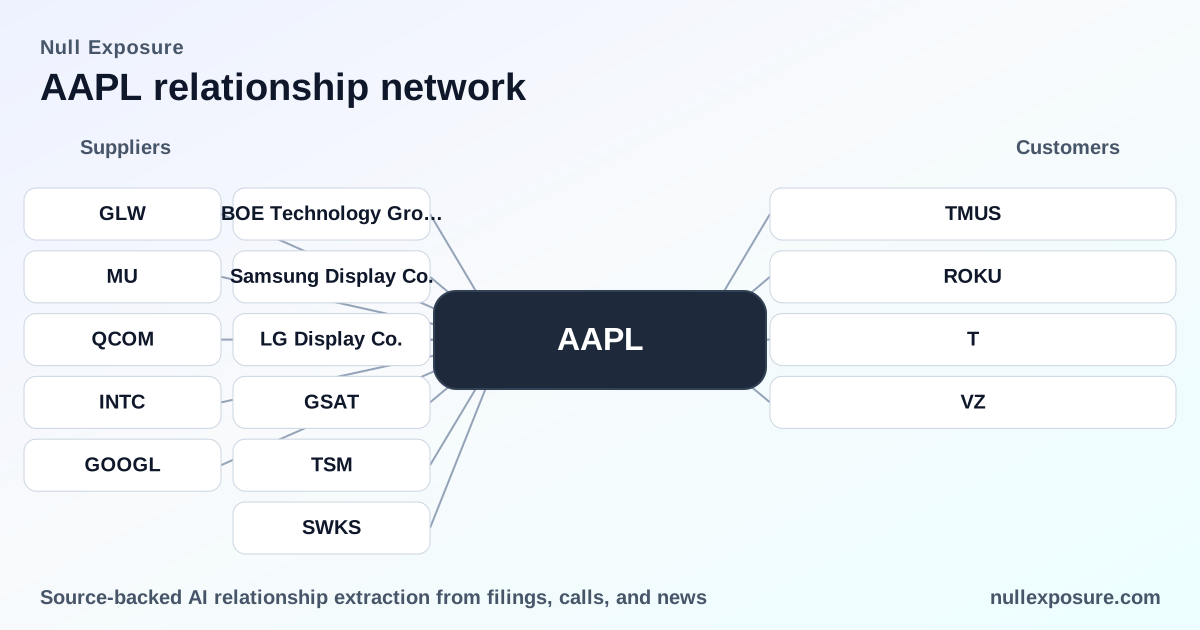
How Apple Converts Hardware Reach into Recurring Revenue: a customer-relationship map
Apple sells premium hardware and funnels users into high-margin, subscription-driven services and platform revenue (App Store, Apple TV, Apple Music, iCloud, Apple Pay). The company monetizes by combining device sales with ecosystem lock‑in, distribution economics and selective enterprise deals—a model that creates both recurring cash flow and concentrated counterparty dependencies worth tracking for investors. For a concise, machine‑readable view of these customer‑facing relationships, see NullExposure’s homepage: https://nullexposure.com/.
What the relationship landscape looks like in plain language
Apple’s customer relationships fall into four clear lanes: (1) carrier/reseller partners that drive device distribution and subsidized promotions; (2) platform/content partners that monetize through the App Store, Apple TV and in‑app payments; (3) hardware/IoT and home automation partners that embed Apple technologies; and (4) enterprise and payments partners that extend Apple features into merchant and corporate workflows. These relationships collectively support device attach, services growth and network effects, but also embed regulatory and commission risk.
Detailed relationship notes (one line each)
- Google (GOOGL) — Google confirmed it is collaborating with Apple as a preferred cloud provider to develop the next generation of Apple foundation models built on Gemini; this relationship reinforces Apple’s choice to partner selectively on AI infrastructure (Google 2025Q4 earnings call, first seen 2026-03-07).
- Globalstar (GSAT) — Globalstar satellites power Apple’s Emergency SOS feature on iPhone and Apple Watch, representing a critical safety-service dependency (news: SiliconANGLE, FY2026).
- Roku (ROKU) — Roku added Apple TV as a Premium Subscription within The Roku Channel in the U.S., expanding Apple’s distribution for TV+ and subscription bundles (Sahm Capital, FY2026).
- Euronet (EEFT) — Euronet signed a B2B distribution agreement to offer Apple services through corporate benefits platforms across six European countries, expanding Apple’s workplace channel reach (earnings news transcript, FY2026).
- T‑Mobile US / Metro / UScellular (TMUS) — Major U.S. carriers are offering iPhone 17e and iPad Air models via promotions, underscoring carrier-led device distribution and subsidized upgrade economics (AIjourn, FY2026).
- Amaze (AMZE) — Amaze’s express checkout rollout includes Apple Pay as a payment option, highlighting Apple Pay’s continued merchant penetration (press release, FY2026).
- Playtika (PLTK) — Playtika cites reliance on iOS App Store distribution and revenue collection, signaling developer exposure to Apple platform economics (company filings and press, FY2026).
- Kartoon Channel / Kartoon Studios (TOON) — Kartoon Channel ranks as a top kids’ app in the Apple App Store, showing Apple’s role as primary distribution for niche streaming apps (press release, FY2026).
- Sonos (SONO) — Sonos plans to use Apple’s Live Activities feature to bring lock‑screen playback controls to iOS, illustrating platform feature integration for third‑party device makers (9to5Mac, FY2026).
- IMAX (IMAX) — IMAX secured an agreement with Apple TV to stream live Formula 1 races to select IMAX locations, representing a content partnership for Apple TV distribution (earnings/press, FY2026).
- Landsea Homes (LSEA / LSEAW) — Multiple Landsea Homes releases indicate Apple HomeKit integration across home communities, showing Apple’s footprint in smart‑home pre‑wiring (PR and press releases, FY2021–FY2025).
- Beachbody (BODI) — Beachbody identifies the Apple App Store as a primary distribution platform for its fitness app, reflecting App Store dependence for subscriber acquisition (SEC filing, FY2026).
- Myseum AI (MYSE) — Myseum’s Picture Party is live on the Apple App Store, representing early‑stage app distribution and monetization via iOS (press releases, FY2026).
- Focus Universal (FCUV) — Focus Universal launched a Universal Smart IoT App on Apple’s App Store, showing Apple’s role in IoT app distribution (press release, FY2025).
- Universal Electronics / UEIC (UEIC) — UEI’s remote integrates Apple’s MFi authentication for Apple TV voice control, evidencing component and accessory certification ties (industry news, FY2020).
- OnlyBulls / GPUS (GPUS) — OnlyBulls listing in the Apple App Store demonstrates app availability and consumer distribution via iOS (Yahoo Finance, FY2025).
- WSI / WTI (WTF) — WSI/WTI rely on Apple’s App Store and other stores to distribute mobile apps, a common merchant dependency (SEC filing / prospectus, FY2025).
- SiriusXM (SIRI) — SiriusXM acted as a launch partner for Apple’s video podcasting experience, enabling dynamic video ad insertion and larger ad markets for publishers (earnings transcript, FY2026).
- Bumble (BMBL) — Bumble notes App Store distribution and related fees as material to its model, reflecting developer economics on iOS (company results, FY2025).
- Match Group (MTCH) — Match highlights App Store fees and regulatory exposure as a variable for its distribution cost profile (earnings/10‑K, FY2026).
- Grindr (GRND) — Grindr’s app availability on Apple App Store signals standard distribution dependence (company comments/news, FY2025).
- Major League Soccer (MLS) — MLS matches are distributed via the Apple TV app and tv.apple.com, showing Apple’s role as a sports‑streaming distribution platform (league press, FY2026).
- 1‑800‑Flowers (FLWS) — 1‑800‑Flowers accepts Apple Pay in continuity programs and subscriptions, indicating merchant adoption of Apple payments (press, FY2020).
- United Airlines (UAL) — United includes Apple TV in its in‑flight entertainment selection, illustrating B2B content licensing for Apple TV (industry reporting, FY2026).
- TEGNA (TGNA) — TEGNA launched a mobile app available in Apple’s App Store, representing local news distribution via iOS (press, FY2026).
- Tiger Brokers / TIGR (TIGR) — Tiger Trade’s mobile availability on the App Store demonstrates fintech distribution reliance on Apple (press, FY2022).
- Best Buy (BBY) — Best Buy partnership references with Apple for exclusive in‑store launches and services, underscoring retail distribution ties (news, FY2026).
- Elavon / U.S. Bancorp payment mentions (USB‑P‑A) — Payment acquirers added Apple Tap to Pay, indicating merchant acceptance pathways (payments reporting, FY2023).
- Deluxe (DLX) — Deluxe got Apple certification for Tap on Glass functionality, highlighting merchant payments integration with Apple features (earnings excerpt, FY2026).
- Virgin/other carriers (AT&T / T / VZ / VZ variants) — AT&T and Verizon promotions for iPhone 17e show competitive carrier promotions shaping Apple device economics (market reporting, FY2026).
- Playstudios / MYPS (MYPS) — Playstudios cites reliance on App Store for in‑game purchase revenue, typical of gaming publishers (SEC/press, FY2024).
- Gamehaus (GMHS) — Gamehaus calls out fees to Apple App Store and distribution economics; direct‑to‑consumer share in U.S. Apple Store drives higher margins (earnings, FY2025).
- Alibaba / BABA (BABA) — Apple App Store rankings affected Chinese app distribution dynamics, influencing how Chinese internet companies interact with Apple (news, FY2026).
- NetEase / NTES (NTES) — NetEase commentary tied to App Store commission changes in China highlights regulatory and fee sensitivity (news reporting, FY2026).
- Spotify (SPOT) — Spotify references seamless interoperability across Apple devices, underlining service availability on iOS and Apple platforms (earnings transcript, FY2026).
- PodcastOne / PODC (PODC) — PodcastOne content distribution includes Apple Podcasts, underscoring Apple’s dominant podcast reach (press, FY2024).
- Gaia (GAIA) — Gaia distributes across Apple TV and iOS, reflecting multi‑platform content availability (press, FY2025).
- Fold (FLD) — Fold’s app update is distributed through the Apple App Store, showing fintech product distribution (news, FY2026).
- LiveOne (LVO) — LiveOne expanded distribution to platforms including Apple, evidencing broad B2B distribution partnerships (industry press, FY2026).
- Asana (ASAN) — Asana relies on open marketplaces including the App Store for mobile app availability (SEC filings / 10‑Q, FY2025).
- Wealthfront (WLTH) — Wealthfront references Apple as a source of app ratings and availability, typical of fintech app dependency (press, FY2025).
- GD Culture Group (GDC) — GDC’s Fato launched on Apple App Store, showing game/app distribution to iOS users (press, FY2026).
- Metro by T‑Mobile (TMUS variant) — Metro will offer new Apple hardware through carrier channels, repeating carrier distribution role (AIjourn, FY2026).
- Toyota (TM) — Toyota links Apple Music integration as part of in‑vehicle infotainment, illustrating embedded app/streaming partnerships (auto press, FY2026).
- Marsh / MMC (MMC) — Marsh cited in Apple commentary as an example of enterprise product refreshes, indicating corporate upgrade cycles (Fortune, FY2026).
- Remainder of app publishers and small developers (DDI, CDRO, MGLD, HCTI, FLD, AMPG, RERE, BJRI, TIGR, etc.) — Multiple small and mid‑sized publishers confirm distribution through Apple App Store and consequent sensitivity to App Store policy and fees (various press and filings, FY2021–FY2026).
(Full source references are embedded inline above using the original press, earnings and filing notices tied to each excerpt.)
How the constraints reflect Apple’s operating model
- Customer mix and global footprint: Apple serves individual consumers, small business, mid‑market, large enterprise and government customers globally, with U.S. sales large but international markets constituting the majority of external sales—this drives geographic diversification but also exposure to local regulatory regimes (company filings and segment reporting).
- Distribution posture: Apple uses a hybrid distribution strategy—direct retail and online sales plus resellers and carriers—creating both scale and concentration points where carrier promotions materially influence device volume.
- Segment economics: Hardware remains core to acquisition and margins; services and software are principal recurring revenue drivers. The company’s platform control creates criticality for app publishers and accessory partners.
- Concentration & maturity signals: The company’s reliance on App Store economics creates persistent commission and regulatory risk, while mature retail and carrier channels limit short‑term disruption but increase scrutiny.
Investment implications and risk checklist
- Positive: Apple’s ecosystem relationships (carriers, content partners, payments) accelerate services monetization and sustain recurring revenue growth.
- Watchlist: App Store fee policy and regional regulatory changes (China, EU, U.S.) present downside to developer economics and platform revenue. Carrier subsidy cycles and partner promotions will continue to produce lumpy hardware volumes.
- For a structured view of these partner relationships and a regular feed of updates, visit NullExposure for investor‑grade relationship monitoring: https://nullexposure.com/.
Bottom line
Apple’s customer relationships are broad, strategic and tightly integrated with its device‑led monetization strategy. Investors should treat Apple not only as a hardware seller but as an ecosystem operator whose partner economics and regulatory posture materially shape future services growth and margin profiles.