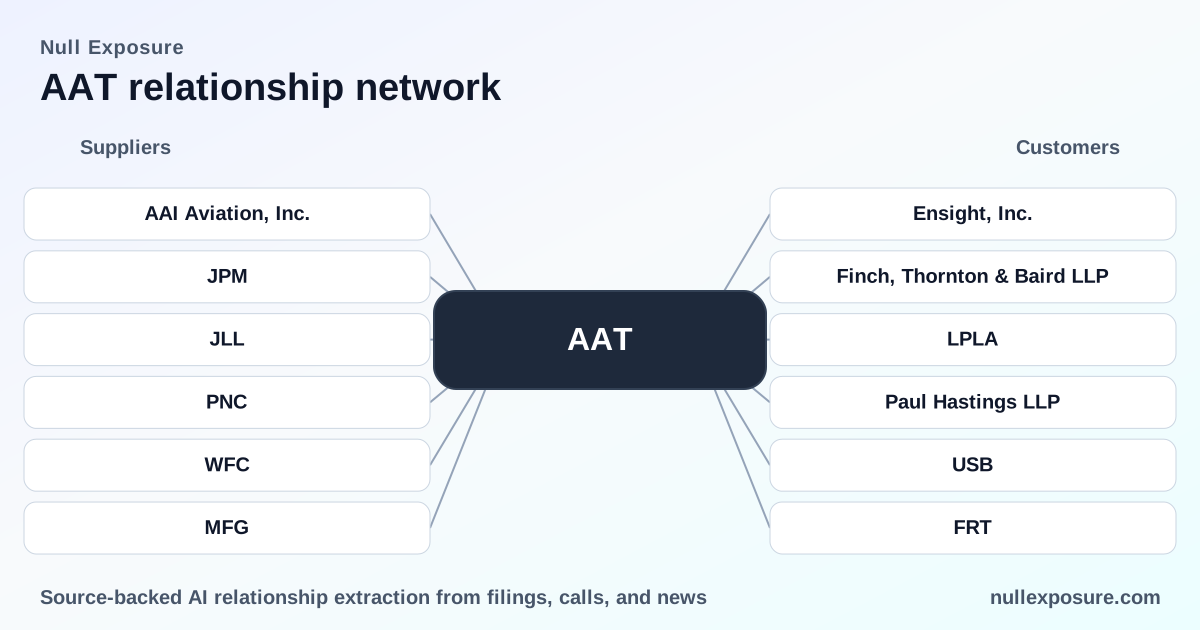
AAT customer relationships: who pays the rent and what it says about risk and upside
American Assets Trust (AAT) operates as a vertically integrated REIT that acquires, develops, leases and selectively sells office, retail, multifamily and mixed‑use properties across high‑barrier U.S. markets. The company monetizes primarily through base rents and recoveries on long‑term office and retail leases, supplemented by short‑term revenue from multifamily and hotel operations and transactional gains from selective property dispositions. For investors, key drivers are lease maturity profiles, tenant mix by size and sector, geographic concentration, and the occasional earnings impact from asset sales. Learn more at https://nullexposure.com/.
Quick read: the operating model distilled for investors
AAT’s landlord model combines long‑dated commercial leases (3–10+ years) and shorter residential/hospitality contracts (monthly/nightly). This dual posture yields steady base rent with pockets of volatility coming from short‑term units and percentage rent exposure in retail. The company is vertically integrated and actively manages leasing and dispositions, which creates optionality but also concentrates execution risk in asset management.
- Contracting posture: A mix of long‑term commercial contracts for predictability and short/spot contracts (multifamily, hotel) that drive nearer‑term cash flow variation. The company also recognizes usage‑based (percentage) rents in retail leases. (Company disclosures, FY2025)
- Concentration: Geographic concentration in Southern California (~44% of revenue) increases sensitivity to regional cycles. (FY2025)
- Counterparty mix and criticality: Tenants range from very large enterprises and government agencies to retail chains and individual consumers; no single tenant exceeded 10% of total rental revenue in recent years, which limits single‑tenant revenue shock but does not eliminate portfolio concentration risk. (FY2025)
- Maturity and liquidity posture: Active lease portfolio with scheduled expirations across the next decade and an active disposition program that contributes to capital recycling. (FY2025)
These characteristics make AAT a cash‑flow‑driven real estate operator with predictable base income tempered by localized concentration and retail/residential tenancy dynamics. For additional background, visit https://nullexposure.com/.
Customer relationships — line by line
Ensight, Inc.
AAT leases space to Ensight, Inc. at the Coastal Collection at Torrey Reserve at an average annual rental of roughly $0.1 million; the arrangement is disclosed in AAT’s FY2025 10‑K as a leased space to an entity majority owned by an affiliated individual. (AAT FY2025 10‑K, filed Dec 31, 2025)
Federal Realty Investment Trust (FRT)
Federal Realty is reported as the buyer of Del Monte Shopping Center from American Assets Trust for approximately $120–123.5 million, indicating a completed sale of retail inventory to a large public REIT buyer. (SimplyWall.St news note, FY2026; JLL press release, Mar 2026)
Finch, Thornton & Baird LLP
Finch, Thornton & Baird is listed as a major tenant in an office tower within the UTC office complex that AAT acquired, occupying part of a ~303,000 sq ft tower that was ~72% leased at the time of reporting. (ConnectCRE story on the UTC acquisition, FY2019)
LPL Financial (LPLA)
LPL Financial is the sole tenant of one UTC tower (roughly 421,000 sq ft) under a credit‑rated, full‑building lease noted in acquisition coverage—an example of an anchor, single‑tenant office lease. (ConnectCRE, FY2019)
Paul Hastings LLP
Paul Hastings is another named tenant in the UTC tower mix, contributing to the multi‑tenant profile of AAT’s office holdings at the time of the acquisition. (ConnectCRE, FY2019)
U.S. Bank National Association (USB)
U.S. Bank is represented among the major tenants occupying the other tower in the UTC office complex, forming part of the office portfolio’s tenant base. (ConnectCRE, FY2019)
Discount Tire
Discount Tire is mentioned in AAT commentary as a former tenant whose vacated space contributed to a modest decline in same‑store cash NOI, highlighting retail vacancy impacts on short‑term performance. (InsiderMonkey transcript of AAT Q1 2026 earnings call)
FRT-P-C
FRT‑P‑C is cited in coverage of the Del Monte disposition, where reporting notes American Assets Trust as the seller; the mention underscores the transaction counterparties and potential capital recycling outcomes. (ConnectCRE coverage of the Del Monte sale, FY2025)
Genentech
Genentech occupied about 67,000 sq ft at Lloyd District but reversed a short‑term renewal commitment and elected to vacate in Q4 (as disclosed during AAT’s Q1 2026 commentary), creating an upcoming vacancy to be re‑leased. (InsiderMonkey transcript of AAT Q1 2026 earnings call)
CLEAResult
CLEAResult’s lease at First & Main expired in April 2025 and was noted as a driver of office same‑store NOI flatness; this is an example of expirations that can transiently depress property income before re‑leasing. (InsiderMonkey Q1 2026 commentary)
Party City
Party City vacated two retail spaces (noted as contributing to temporary vacancy pressure), demonstrating how retail tenant turnover, even from smaller chains, can affect same‑store NOI in the near term. (InsiderMonkey Q1 2026 earnings call transcript)
What investors should take away
AAT is a landlord that balances predictable, long‑dated leases with higher‑turnover residential and retail revenue streams. The portfolio’s strength is its mix of credit tenants and anchor leases (for example, full‑building or multi‑floor commitments), but regional concentration in Southern California and episodic retail vacancies are material risk vectors. Notable implications:
- Predictable base rent offset by short‑term volatility. Long commercial leases underpin cash flow, while multifamily/hotel and percentage rents introduce nearer‑term variation.
- Portfolio concentration is geographic rather than single‑tenant. No tenant exceeded 10% of total rental revenue, but almost half the revenue is tied to Southern California markets, amplifying regional downturn exposure. (FY2025)
- Active asset rotation provides capital flexibility. Dispositions like Del Monte demonstrate the firm’s willingness to sell assets to recycle capital, which supports balance sheet management but can mask underlying operational trends. (JLL; ConnectCRE, FY2025–FY2026)
- Near‑term leasing risk visible. Recent vacancy events (Genentech vacating; expirations such as CLEAResult; retail vacates like Party City and Discount Tire) are the primary operational risks to short‑term NOI. (Q1 2026 earnings commentary)
Investors evaluating AAT should weigh the combination of stable commercial cash flows and execution risk on leasing and regional exposure. For a concise intelligence package and monitoring of tenant events, visit https://nullexposure.com/.
Conclusion: AAT’s landlord economics create a reliable base income profile, but regional concentration and retail/residential turnover are the levers that will drive near‑term variance in operating performance.