Asbury Automotive Group (ABG): Relationship Map and What Recent Deal Flow Means for Investors
Asbury Automotive Group is a U.S. auto retailer that monetizes through vehicle sales (new and used), parts & service, and finance & insurance (F&I) products, augmented by periodic portfolio acquisitions and divestitures to optimize franchise mix and geographic footprint. The company’s economics are a mix of transaction-driven margins on vehicle flows and recurring, higher-margin services and F&I revenue that are being restructured during an active integration phase. For more structured coverage and signal-driven monitoring, visit https://nullexposure.com/.
Deal activity is driving structural change — and cash flow volatility
Asbury’s public disclosures and recent press coverage show an active program of acquisitions and disposals across 2024–2026 that reshapes retail market exposure and real estate holdings. These transactions reduce geographic concentration in target markets while unlocking capital that supports balance-sheet flexibility and share repurchase or reinvestment in higher-return franchises. News flow in early 2026 documents several discrete divestitures alongside prior acquisitions disclosed in the FY2024 10‑K.
Relationship snapshots — concise summaries for each counterparty
Below are one‑to‑two sentence plain-English summaries for every relationship captured in the source results, with natural source citations.
-
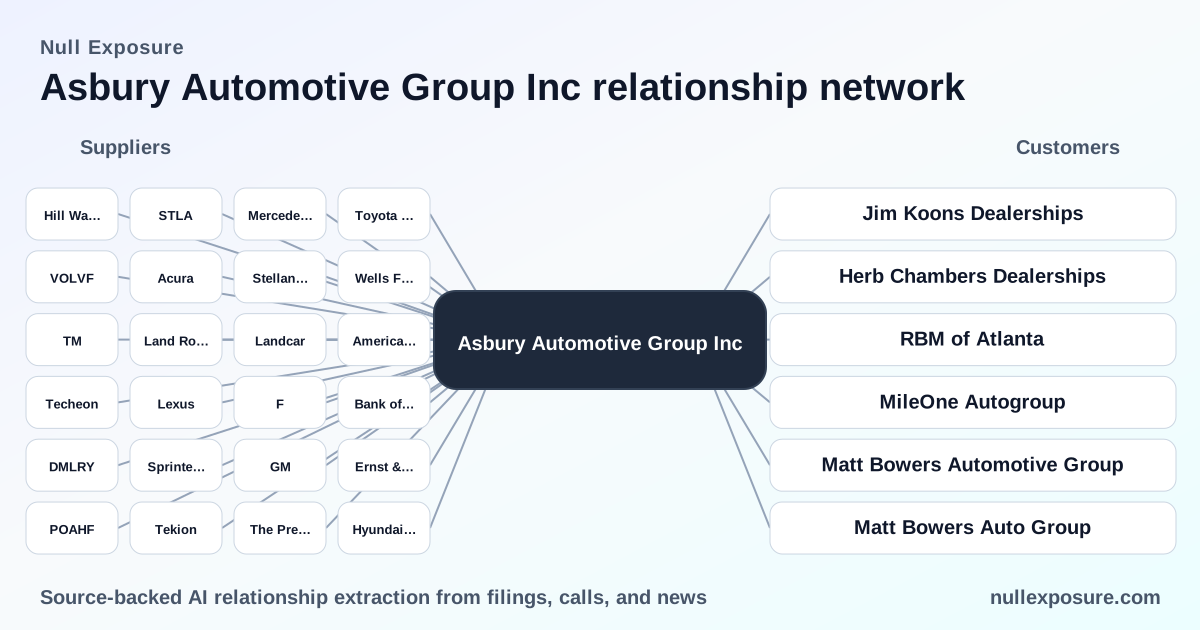
Jim Koons Dealerships — Asbury completed the acquisition of the Jim Koons Automotive Companies as disclosed in its FY2024 Form 10‑K, adding scale and integration complexity to the dealer portfolio. According to Asbury’s 2024 10‑K filing, the transaction was completed as part of the company’s growth strategy (FY2024 10‑K).
-
Herb Chambers Dealerships — Asbury entered into a Purchase and Sale Agreement with entities comprising the Herb Chambers automotive group, per its FY2024 10‑K, reflecting continued targeted portfolio expansion through negotiated transactions (FY2024 10‑K).
-
MileOne Autogroup — Asbury sold six Plaza Motors dealerships and an associated collision center in St. Louis to MileOne Autogroup on February 23, 2026, marking a strategic exit from that market and a reallocation of capital (AutoNews and StockTitan coverage, Feb 2026).
-
RBM of Atlanta / RBM Automotive Group — Asbury sold three Greenville, South Carolina dealerships (including related real estate) to RBM on February 23, 2026; trade press highlights this as part of Asbury’s portfolio optimization and RBM’s geographic expansion (Intellectia, StockTitan, and WardsAuto reporting, Feb–Mar 2026).
-
Matt Bowers Automotive Group / Matt Bowers Auto Group — Asbury sold the Bill Estes Chrysler Dodge Jeep Ram dealership in Brownsburg, Indiana to Matt Bowers Automotive Group in February 2026, representing another marketed disposition of non‑core assets (WardsAuto, AutoNews and Investing.com reporting, Feb–Mar 2026).
-
JAKK (Jakks Pacific) — A 2026 earnings transcript referenced seasonal product placements “with ABG” (elements including Elements, Roxy, Quiksilver), citing ABG as a commercial partner in retail rollouts; the mention comes from comment in a Jakks/seasonal business context (The Globe and Mail / related transcript, FY2026).
-
AREN (The Arena Group) — Press reporting describes The Arena Group as the publisher that held publishing rights for Sports Illustrated under a license from Authentic Brands Group (ABG in that context), which highlights ABG’s licensing relationships with media partners (Hollywood Reporter and AwfulAnnouncing coverage, FY2023–FY2024 reporting).
-
IPAR (Interparfums) — Interparfums and press coverage note multiyear, worldwide fragrance agreements tied to David Beckham and Nautica that are described as co‑owned and managed by Authentic Brands Group (ABG), indicating long-term licensing revenue streams for the brand manager (WWD and The Globe and Mail transcripts, FY2026).
-
VNCE (Vince) — Industry reporting documents that Vince transferred intellectual property ownership to Authentic Brands Group in 2023, a transaction noted in later commentary and cataloged in 2025–2026 coverage of ABG’s brand holdings and licensing strategy (Ouispeakfashion report, FY2025).
How the company-level constraints shape the commercial model
The relationship evidence and constraint excerpts collectively describe an operating model that is U.S.-centric, retail‑facing, and a mix of short‑cycle transactional sales with multi‑year F&I contracts:
-
Contracting posture and revenue recognition: Long‑term contract language (VOBA amortized over five years and TCA F&I revenue recognized over product contract periods) signals that a meaningful portion of F&I income is recognized over time, creating timing differences between cash and reported revenue. This is a structural element of earnings quality and margin visibility (company disclosure on VOBA and TCA, FY2024).
-
Counterparty composition: The commercial book is heavily retail‑oriented: the company explicitly sells used and new vehicles to individual consumers and also transacts wholesale with other dealers, so counterparties are predominantly individual retail customers, with dealer‑to‑dealer flows as a secondary channel (10‑K excerpts on used/new sales).
-
Geographic concentration and scale: Asbury operates across 14 U.S. states and is one of the largest U.S. automotive retailers; this North American focus constrains macro exposure to U.S. demand cycles and state‑level regulatory differences (10‑K, Dec 31, 2024).
-
Role complexity: Asbury functions as both seller (new and used vehicles) and service provider (parts, maintenance, collision centers), while also arranging third‑party financing and distributing aftermarket protection products—creating diversified revenue streams but also cross‑business integration risk (10‑K service and F&I descriptions).
-
Integration and ramping risks: Public filings signal an active integration phase—rollouts of the TCA platform and integration of acquisitions (e.g., Koons) create temporary margin pressure as F&I recognition and platform harmonization occur, implying near‑term F&I revenue compression but potential medium‑term efficiency gains (company comments on TCA and Koons rollout).
Investment implications and red flags
-
Positive: Portfolio pruning and selective acquisitions both generate liquidity and sharpen franchise economics; recurring parts & service plus F&I product margins support cash flow stability. Asbury’s scale in 14 states and diversified revenue mix are structural strengths.
-
Watch: Integration of F&I platforms and recent divestitures create near‑term volatility in reported F&I margins and operating leverage, and the heavy retail orientation makes revenue sensitive to U.S. vehicle demand cycles.
-
Actionable intel: Monitor subsequent quarter filings for two signals — F&I gross profit trajectory as TCA integrates, and capital allocation outcomes from portfolio sales (redeployment vs. shareholder returns).
For a structured feed of relationship signals and to track future transactions or licensing shifts, explore our platform at https://nullexposure.com/.