Arbutus Biopharma (ABUS): A licensing-first biotech whose value sits in LNP IP and third‑party royalties
Arbutus operates and monetizes as an intellectual property company built around proprietary lipid nanoparticle (LNP) delivery technology. The firm licenses LNP rights, collects royalties and milestone payments from partners, and participates in litigation and settlements that can generate material non‑operating cash inflows. Investors should value Arbutus as a royalty and licensing cash‑flow story with upside driven by IP enforcement outcomes and downside concentrated in partner sales volatility and legal uncertainty. Learn more at https://nullexposure.com/.
How Arbutus makes money — licensing, royalties, milestones and legal outcomes
Arbutus’s operating model is licensor‑centric: the company grants development and commercialization rights to third parties in exchange for upfront fees, tiered royalties and milestones. Contracts span decades — the original Alnylam license dates to 2012 — and revenues are lumpy and partner‑dependent rather than recurring product sales. The company also operates as an agent in certain arrangements and records revenue on a net basis, which compresses top‑line visibility but aligns Arbutus to royalties and milestone timing. Finally, patent enforcement and settlements are an explicit and material monetization channel, as demonstrated by the recent global settlement with Moderna that delivers both an upfront cash payment and contingent upside.
Key operating characteristics:
- Contracting posture: predominantly licensor; Arbutus also functions as a licensee and occasional service provider where it manufactures under long‑term transfer agreements.
- Concentration: revenue exposed to a small set of partners (notably Alnylam and the Qilu collaboration historically).
- Criticality of IP: core asset; enforcement actions materially affect valuation and near‑term cash flows.
- Maturity: long‑standing license relationships (2012 onward) create durable but variable royalty streams.
If you want a concise view of partner exposures and enforcement outcomes, our portal updates these relationship summaries in real time: https://nullexposure.com/.
Relationship map — concise investor summaries and sources
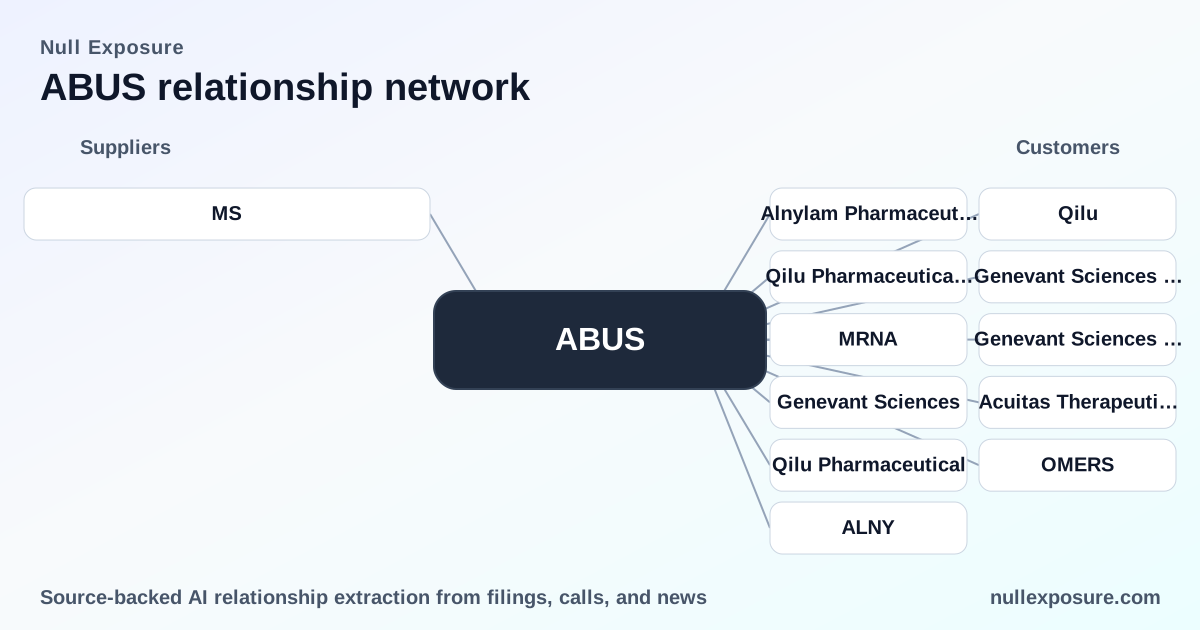
Below are the partners and counterparties mentioned in Arbutus disclosures and press reports, with a short plain‑English takeaway and a source for each.
Alnylam Pharmaceuticals, Inc. (ALNY / Alnylam)
Arbutus is a licensor to Alnylam under a 2012 license that grants Alnylam rights to develop and commercialize products using Arbutus’s LNP technology, and Arbutus receives tiered global royalties on ONPATTRO sales (1.00%–2.33% after offsets) plus a secondary royalty interest through an Acuitas settlement. According to Arbutus filings and investor releases, Alnylam‑related royalties have been a meaningful but declining component of license revenue in recent years (FY2019–FY2025 disclosures). (Source: ABUS 10‑K FY2024; GlobeNewswire FY2025/FY2026 releases.)
Qilu Pharmaceutical Co., Ltd. (Qilu)
Arbutus executed a technology transfer and exclusive license with Qilu (December 2021) for imdusiran in Greater China and Taiwan, including supply and manufacturing transition provisions; recent reporting shows recognition of previously deferred upfront fees after the strategic partnership’s conclusion. Qilu accounted for sizable license revenue swings in FY2023–FY2024 and a deferred revenue unwind into FY2025 results. (Source: ABUS 10‑K FY2024; GlobeNewswire March 2025 and March 2026 reports.)
Moderna, Inc. (MRNA / Moderna Therapeutics)
Moderna has been a sublicensee of Arbutus/Genevant LNP patents; in 2026 Moderna agreed to a global settlement that will provide up to $2.25 billion to Genevant and Arbutus — including a $950 million noncontingent payment and $1.3 billion contingent on appellate outcomes — in exchange for a global, non‑exclusive license for certain infectious disease uses. The settlement converts litigation exposure into a substantial, near‑term cash event for Arbutus/Genevant. (Source: GlobeNewswire and QuiverQuant press releases, March 2026; multiple news outlets March 2026.)
Genevant Sciences (including Genevant Sciences GmbH / Genevant Sciences Corp.)
Genevant is Arbutus’s exclusive licensee for LNP technology outside HBV and is the principal enforcement partner on LNP patent litigation; Arbutus is entitled to 20% of the noncontingent settlement payment after litigation costs under its license with Genevant. Arbutus continues to consult with and support Genevant on ongoing enforcement actions versus large vaccine makers. (Source: GlobeNewswire FY2026 press release and ABUS financial updates.)
Acuitas Therapeutics, Inc.
Arbutus retained a secondary royalty interest on ONPATTRO that originated from a settlement and subsequent license with Acuitas; that interest is smaller than the Alnylam entitlement but is part of Arbutus’s royalty stack on ONPATTRO sales. (Source: GlobeNewswire release, July 2019.)
OMERS
Arbutus sold a portion of its ONPATTRO royalty interest to OMERS effective January 1, 2019, for $20 million gross proceeds; the retained royalty interests and the sale are part of the company’s historical monetization of ONPATTRO cash flow. (Source: GlobeNewswire release, July 2019.)
Gritstone (Gritstone bio / licensee)
Arbutus granted Gritstone worldwide access to its clinically validated LNP portfolio under a 2017 license to support Gritstone’s RNA‑based immunotherapies; this is another example of Arbutus monetizing LNP through product‑focused license deals. (Source: ABUS 10‑K FY2024 licensing disclosures.)
What the relationship map means for investors — upside, risks, and revenue dynamics
- Upside: the Moderna/Genevant settlement is a transformational cash event and validates the economic value of Arbutus’s LNP IP; the company’s contractual right to a share of Genevant’s settlement proceeds creates direct balance‑sheet upside (GlobeNewswire, March 2026).
- Revenue lumpy‑ness: royalty and milestone revenue is partner‑driven and variable — declines in ONPATTRO sales directly reduce royalties, as Arbutus reported in FY2024–FY2025 updates (GlobeNewswire November 2025).
- Concentration risk: a small number of partners (Alnylam, Qilu/Genevant) produce material revenue swings; the Qilu strategic conclusion produced a one‑time recognition effect in FY2025 (GlobeNewswire March 2026).
- Legal and geographic uncertainty: patent revocations in specific jurisdictions (EU proceedings referenced in reporting) and appellate pathways (Section 1498 in the U.S.) create contingent outcomes that govern large cash flows tied to enforcement. (Source: investing.com reporting on European patent office actions; multiple March 2026 news items.)
Investor takeaway and next steps
Arbutus is a specialized IP monetization vehicle in the LNP space: its upside is litigation‑driven and partner‑dependent; its downside is concentrated partner sales volatility and patent risk. For valuation, treat recurring royalties as base case and litigation/settlement outcomes as probabilistic upside scenarios, then stress test for lower ONPATTRO volumes and delayed milestone timing.
For a structured readout of partner exposures and a searchable relationship index, visit https://nullexposure.com/ — the homepage aggregates filings and press events relevant to ABUS relationships.
If you are modeling Arbutus, prioritize (1) the timing and likelihood of contingent settlement payments, (2) Alnylam ONPATTRO sales trajectory, and (3) licensing pipeline milestones from Genevant and other licensees.