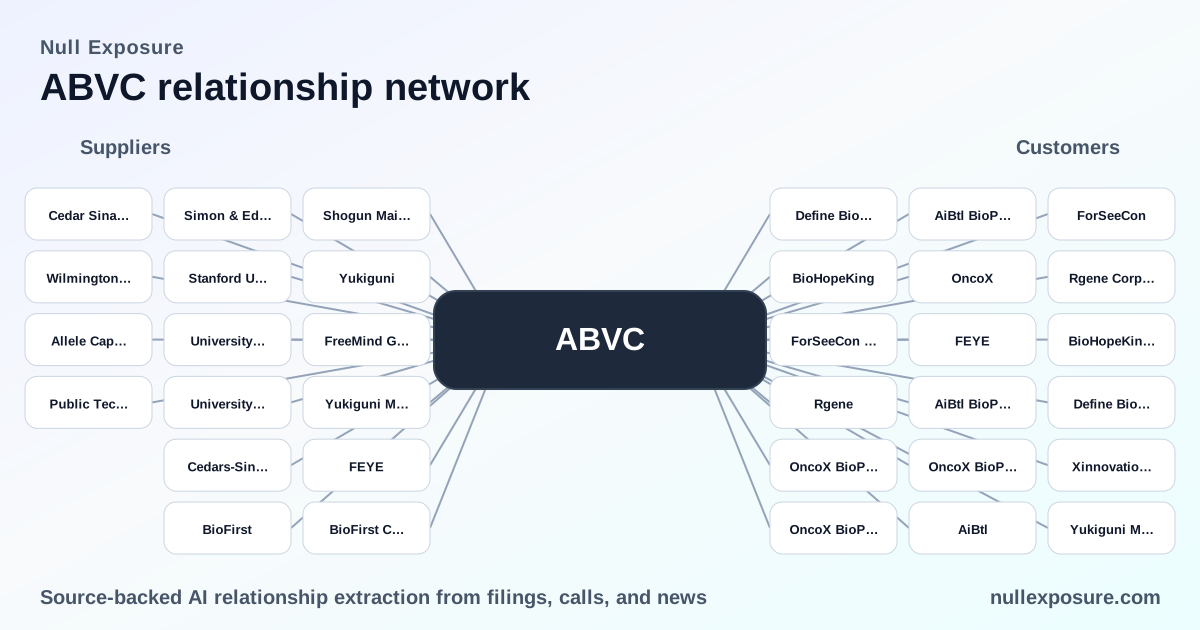
ABVC Biopharma: licensing-first model with CDMO cashflow — how its customer map funds development
ABVC Biopharma operates as a clinical-stage, IP-driven biopharma that monetizes primarily through out‑licensing of botanical and device assets and by selling CDMO (contract development and manufacturing) services via its BioKey subsidiary. The company converts R&D programs into upfront licensing fees, milestone receipts, share consideration, and small‑volume GMP manufacturing revenue, creating near‑term liquidity while retaining upside through royalties and contingent payments.
For relationship intelligence on ABVC and peer public filings, visit https://nullexposure.com/
How ABVC monetizes: a licensing engine backed by a GMP services arm
ABVC’s operating model is straightforward and capital efficient: develop or validate botanical/device assets in house, then license global or regional rights to third parties in exchange for cash, equity and future royalties. Parallel to licensing, BioKey provides CDMO manufacturing and regulatory services that create direct service revenues and strengthen commercial pathways for partners. ABVC’s recent communications show a series of long‑term, multi‑year licensing deals—some with explicit share consideration—and recurring small cash milestone receipts during FY2024–FY2025.
Relationship roll call — who pays, who develops, who distributes
The following summaries cover every partner mentioned in ABVC’s public materials and press coverage.
ForSeeCon Eye Corporation (FEYE)
ABVC granted FEYE a twenty‑year global license for its ophthalmology pipeline (including the Vitargus® vitreous substitute) with a headline transaction structure of $33.5M in fees (including a $30M upfront payable as cash or 5M FEYE shares), and ABVC recorded multiple milestone receipts from FEYE in 2025. Sources: ABVC Form 10‑K (2025 filing) and company press releases including an Oct 8, 2025 FinancialContent release reporting license payments.
OncoX BioPharma, Inc. (OncoX / Oncox)
OncoX holds exclusive North American rights to ABVC’s Maitake mushroom oncology extract under a multi‑year license, which includes sizeable upfront/share consideration and upfront cash tranches plus 5% royalties; ABVC received several cash milestone payments (including $200k initial and additional payments reported through 2025). Sources: ABVC Form 10‑K (FY2026 excerpts), DEF 14A filings, and multiple press releases (2024–2025) reporting licensing receipts.
AiBtl BioPharma / AiBtl
AiBtl secured global rights to ABVC’s CNS candidates (MDD and ADHD) under a multi‑year license reportedly worth up to $667M in potential value, and ABVC received share consideration (reported 23M AiBtl shares at $10 each in disclosure) plus cash milestone payments through 2025. Sources: ABVC Form 10‑K (FY2026 excerpts), Pharmaceutical‑Technology (coverage of the licensing deal), and press reporting of 2025 milestone receipts.
Rgene Corporation
ABVC (through BioKey) expanded a co‑development/service relationship with Rgene to guide oncology candidates through Phase II and regulatory filings; the Service Agreement includes up to $3.0M in payments over three years tied to regulatory milestones and contributed materially to contract services revenue growth. Sources: ABVC Form 10‑K (FY2026) and ABVC fiscal results press release (GlobeNewswire, FY2023 commentary).
Define Biotech Co. Ltd. / Define Biotech
BioKey entered a three‑year distribution agreement with Taiwan‑based Define Biotech granting exclusive distribution rights in China and Taiwan and a commitment to purchase $3.0M of product over three years. This is an APAC‑focused commercialization/distribution relationship that also leverages BioKey’s role as licensor/manufacturer. Sources: ABVC Form 10‑K (FY2025/2026 excerpts) and 2025 filing language describing the Define Biotech agreement.
BioHopeKing (BHK)
BioLite (an ABVC subsidiary) executed three joint‑venture agreements with BioHopeKing to co‑develop multiple programs (TNBC ABV‑1501, MDD ABV‑1504, ADHD ABV‑1505) and was paid an initial $1.0M at execution in December 2015; these JVs carry regional marketing rights for certain Asian countries. Sources: ABVC Form 10‑K (FY2024/2026 disclosures).
Xinnovation Therapeutics Co., Ltd.
A term sheet contemplates Xinnovation receiving exclusive rights in China to develop and commercialize ABV‑1504 and ABV‑1505, with Xinnovation responsible for China trial costs and ABVC set to receive an initial license fee plus tiered royalties (5%–12%) based on projected net sales. Source: ABVC Form 10‑K (FY2026 excerpts).
BioFirst Corporation (co‑developer)
BioFirst is named as a co‑development partner alongside ABVC for the FEYE ophthalmology licensing arrangements (the FEYE Licensing Agreement executed March 25, 2024), sharing in the Vitargus® transaction economics. Source: DEF 14A / Form 10‑K disclosures referencing the FEYE Licensing Agreement (March 25, 2024).
BioKey, Inc. (ABVC subsidiary — manufacturer / service provider)
BioKey operates ABVC’s GMP manufacturing facility and provides CDMO services across formulation, analytical, and regulatory support, and is the contracting party in distribution deals (for example, with Define Biotech). BioKey-generated contract services materially increased ABVC’s gross contract services revenue in 2022–2023. Sources: ABVC Form 10‑K (company description of BioKey operations) and FY2023 financial commentary.
BioLite, Inc. (ABVC subsidiary — licensor/co‑developer)
BioLite functions as ABVC’s operational vehicle for certain co‑development and licensing transactions (notably the BioHopeKing JVs and the AiBtl licensing entries), receiving consideration in several multi‑party deals. Source: ABVC Form 10‑K (FY2026/2024 excerpts).
Yukiguni Maitake
Yukiguni Maitake is referenced as a licensing partner and entrepreneur‑founder relationship connected to ABVC’s Maitake sourcing/licensing strategy (founder Yoshinobu Odaira is noted). Source: ABVC Form 10‑K (FY2026 disclosure language referencing Yukiguni Maitake).
For a consolidated partner dossier and cross‑referenced filings, see https://nullexposure.com/
What the relationship map implies about ABVC’s operating constraints and risk profile
- Contracting posture: licensing and long‑dated rights. ABVC executes long‑term licenses (many agreements are 20 years) and often accepts share consideration as part of consideration packages, aligning near‑term liquidity with long‑horizon royalties and milestone upside. (Company signal: multiple 20‑year FEYE/OncoX agreements in public filings.)
- Revenue concentration is high. ABVC reports that out‑licensing income from two major licensees dominated revenues in a reported year (company disclosure shows two licensees accounting for large shares of revenue), so near‑term cash is sensitive to a small number of partners.
- Geographic segmentation is explicit. ABVC structures deals regionally: FEYE (global ophthalmology), OncoX (North America for specific oncology product), and Define Biotech / BioHopeKing / Xinnovation focused on APAC/China channels.
- Criticality of BioKey as a commercial fulcrum. BioKey’s GMP capacity and CDMO services both generate direct revenue and materially support partner development, making it a core operational asset rather than a peripheral contractor.
- Maturity and cash profile are milestone‑driven. Much of ABVC’s reported cash flow comprises upfront and milestone payments in the low‑hundreds of thousands to mid‑millions, with headline transaction values often realized over long timelines and via equity consideration.
- Spend and purchase commitments exist at commercial scale. The Define Biotech deal includes an explicit purchase commitment of $3.0M over three years, indicating early commercial traction in APAC for certain product lines.
Investment implications — upside and risk, plainly stated
ABVC’s model delivers near‑term liquidity through licensing and CDMO revenue while preserving asymmetric upside via royalties and equity stakes. The positive case rests on partners executing clinical and regulatory programs and honoring milestone schedules; the risk case centers on concentration of licensing revenue, reliance on related‑party and small private partners, and long cash realization timelines for headline deal values.
For investors focused on partnership health, the most important indicators are cadence of licensing receipts, completion of specified fundraising triggers in counterparties (several agreements reference milestone/fundraising conditions), and BioKey utilization rates reported in future filings.
If you want a deeper partner-level breakdown tied to SEC exhibits and press releases, ABVC’s filing trail is summarized on https://nullexposure.com/ — the fastest way to cross‑check the transaction terms and payment timing documented above.