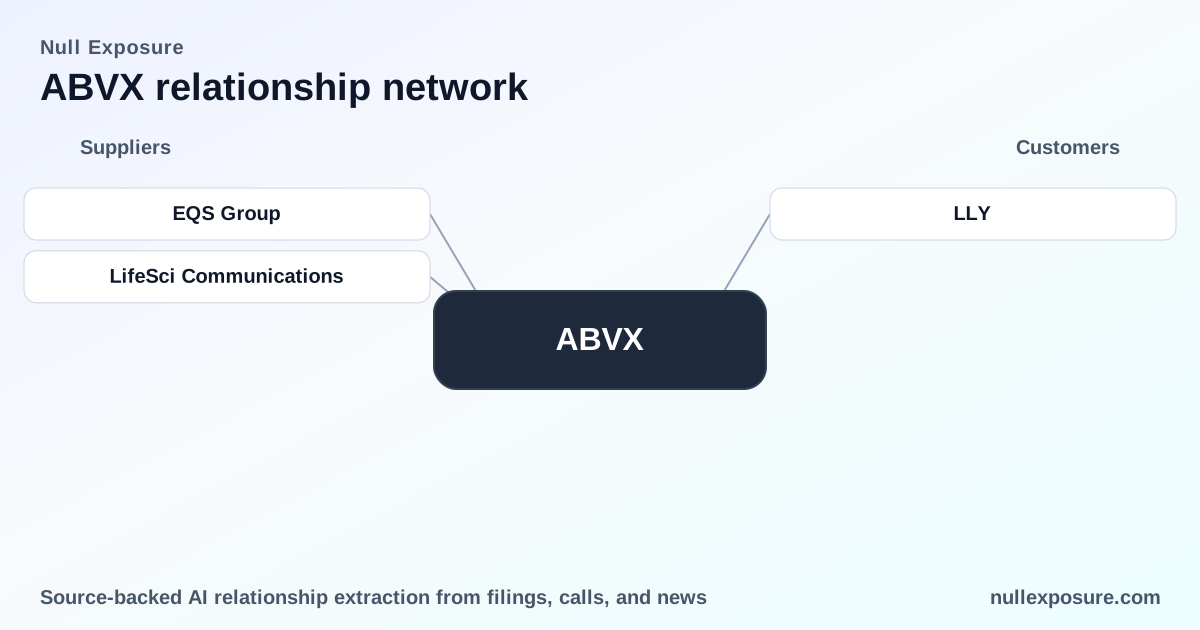
Abivax (ABVX): Clinical-stage immunotherapy with licensing and M&A optionality
Abivax is a French clinical-stage biotech developing immunotherapies anchored by the small molecule candidate ABX464 for inflammatory and viral indications; the company currently monetizes through R&D progression, milestone and licensing optionality, and the prospect of a strategic sale or collaboration around late-stage data. Investors should value Abivax as a high-conviction, outcome-driven biotech — commercial upside is large but binary, driven by clinical readouts and potential partner or acquirer activity. For a concise hub of relationship intelligence and market signals, visit https://nullexposure.com/.
How Abivax operates and where revenue would come from
Abivax runs a classic small-cap biotech operating model: heavy investment in clinical development, minimal current product revenue, and path-to-value via regulatory approvals, partnering, or M&A. The company’s reported TTM revenue is low (USD 4.57M) while market capitalization sits in the multi‑billion range, reflecting investor pricing of successful clinical outcomes or strategic takeover. Abivax finances and scales through capital markets and institutional ownership rather than operating cash flow; its economics are therefore dependent on binary clinical events and strategic deal flow.
Key financial signals:
- Market capitalization ~ USD 9.3B versus TTM revenue USD 4.57M, indicating valuation driven by future potential rather than current sales.
- Negative EBITDA and EPS underline investment-stage economics.
- High institutional ownership (~79%) signals sophisticated investor interest and a concentrated shareholder base.
Strategic relationships and market signals you must track
Below I cover every relationship our records show for Abivax; each entry includes a plain-English summary and the originating source. These are the direct customer/partner suitors and material market signals that influence deal probability and valuation.
Eli Lilly — strategic acquisition interest reported (entry 1)
A March 2026 blog report states Eli Lilly is considering acquiring Abivax in a deal that could value the company at roughly €15 billion, reflecting large-cap pharma appetite for late-stage immunology assets. Source: NAI500 blog post on Abivax’s 2026 rally (March 2026).
LLY — duplicate record of acquisition interest (entry 2)
The same NAI500 item is recorded again under the LLY ticker, reiterating that Lilly’s potential bid has been a recurring market narrative and an input into Abivax’s re-rating in 2026. Source: NAI500 blog post on Abivax’s 2026 rally (March 2026).
(These two entries are the full set of third‑party relationship signals captured in the sample; both reference the same reported suitor activity.)
What these relationship signals mean for investors and operators
The single, repeated signal — serious acquisition interest from a global pharma player — is materially relevant for valuation and strategic posture. Large‑cap suitors pursue small biotech targets for several reasons: portfolio fit, acceleration of the buyer’s pipeline, and the cost-efficiency of acquiring clinical-stage assets versus internal discovery. For Abivax, the Lilly headlines convert clinical progress into immediate strategic optionality and justify premium valuation assumptions while the dialogue is live.
Operationally, this implies:
- Contracting posture: Abivax’s likely counterparty interactions will be negotiation-heavy and focused on milestone structuring, IP protections, and retention/earnout terms if an acquisition progresses.
- Concentration and criticality: With one headline suitor dominating public discourse, deal concentration risk exists — both upside (a single buyer paying a premium) and downside (if talks collapse, sentiment could reprice).
- Maturity: Clinical-stage assets sit mid‑maturity; the company is not yet a commercial operator and thus remains dependent on partner or acquirer capitalization to de‑risk late-stage development.
Risk profile and operational constraints (company-level signals)
Because the constraints feed returned no discrete third‑party restrictions, the practical operating constraints for Abivax are company-level and derive from its financial and clinical profile:
- Binary outcome dependency: Revenue and value creation are concentrated on successful clinical readouts and regulatory approvals; clinical failure would substantially impair valuation.
- Funding cadence vulnerability: Negative EBITDA and minimal revenue require continued access to capital markets or partner funding to sustain trials.
- Concentration of investor base: High institutional ownership supports liquidity and informed debate but also means price action can be amplified by a relatively small set of large holders.
- Deal-flow sensitivity: Observed market chatter about a single potential acquirer intensifies short-term valuation sensitivity to rumor, press coverage, and any confirmation of talks.
Investment implications: where upside meets concentrated risk
For institutional investors and corporate development teams evaluating Abivax relationships, the investment thesis breaks into two levers:
- Clinical and regulatory de‑risking: Near-term data releases that materially upgrade the probability of approval are the primary value drivers for both licensing and M&A outcomes.
- Strategic interest realization: Reported suitor activity (Lilly) converts scientific progress into a near-term monetization path; however, that pathway is binary and subject to negotiation, exclusivity windows, and due diligence outcomes.
Operational actors — business development teams, potential partners, and acquirers — should focus on:
- Assessing the structure of potential deals (upfront vs. milestone balance).
- Mapping IP and manufacturing readiness to gauge integration cost if acquisition occurs.
- Monitoring clinical timelines closely because timing compresses negotiating leverage.
Bottom line: actionable takeaways
- Abivax is a high-upside, high-binary biotech story: limited current revenue but large valuation premised on clinical success and strategic M&A interest.
- Eli Lilly headlines are material to valuation; treat them as a driver of near-term price action until formal confirmation or denial is published (NAI500, March 2026).
- Institutional concentration and weak operating cash flows make the stock sensitive to news flow and financing events.
- For deal teams, the present environment favors diligence on milestone structures and integration costs; for investors, position sizing should reflect binary clinical and transaction risk.
For more granular tracking of relationship signals, corporate filings, and market commentary on Abivax’s partners and suitors, explore the research hub at https://nullexposure.com/.