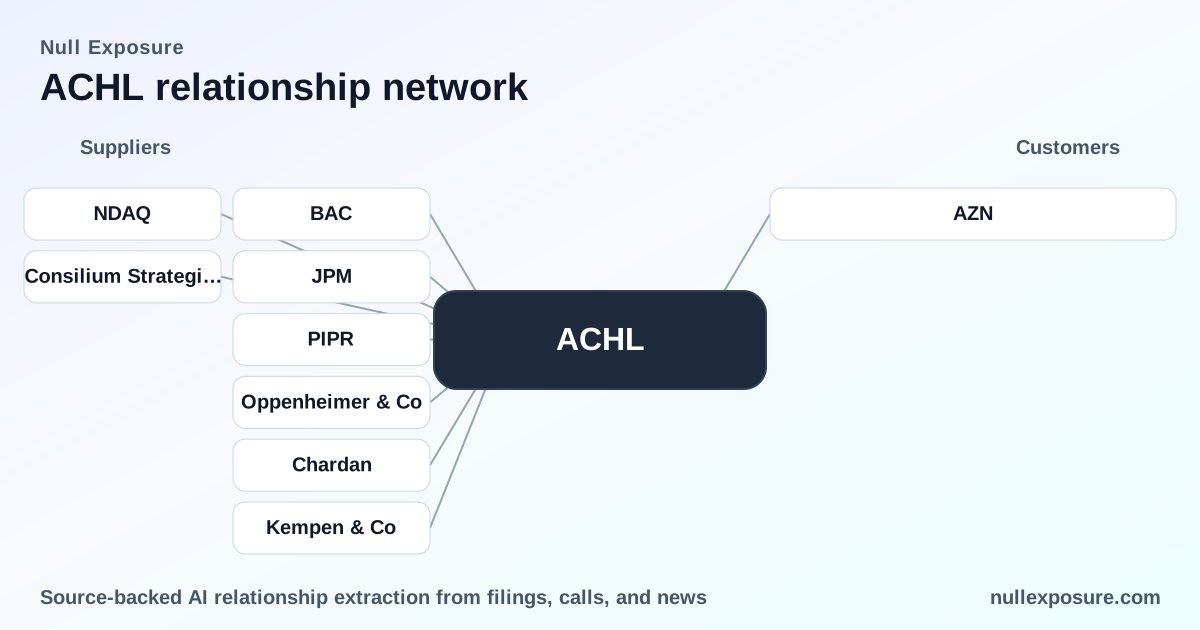
Achilles Therapeutics’ customer signal: monetizing translational assets through a focused data sale to AstraZeneca
Achilles Therapeutics develops precision T‑cell therapies for solid tumors and monetizes its intellectual property and translational assets primarily through strategic collaborations and occasional asset transfers rather than product revenue; the company has converted research assets into cash via a recent transfer of commercial rights and samples from the TRACERx NSCLC program to AstraZeneca for $12 million. That transaction reframes Achilles as a small clinical‑stage biotech willing to monetize non‑core data and sample inventories to shore up runway and advance its core T‑cell programs. For a quick view of relationship signals and sourcing, visit https://nullexposure.com/.
Why the AstraZeneca deal matters to investors
Achilles’ sale of TRACERx and MAP-related assets to AstraZeneca is a concrete instance of non-dilutive monetization: the company converted curated clinical samples and associated commercial rights into upfront cash. According to a GlobeNewswire press release (24 December 2024), AstraZeneca agreed to pay Achilles $12 million for the assets; that sum is a meaningful one‑time inflow relative to the firm’s reported market capitalization and cash dynamics, and it signals an operating posture that prioritizes targeted asset monetization alongside clinical development.
This transaction also demonstrates a commercial partnership profile with a large pharmaceutical counterparty rather than recurring product sales: Achilles transfers sponsorship and rights around a research network (MAP) and tumor samples, while AstraZeneca assumes broader control and future exploitation of those assets. That structure reduces Achilles’ ongoing operational burden for those assets while preserving focus on its T‑cell therapeutic pipeline.
Line‑by‑line: every public mention and what it says
AstraZeneca — BiopharmaAPAC news report (first seen 2026‑05‑02; FY2024)
Achilles transferred the commercial license to TRACERx NSCLC data and samples to AstraZeneca for a total consideration of $12 million, per the BiopharmaAPAC summary. (Source: BiopharmaAPAC news, first seen 2 May 2026 — https://biopharmaapac.com/news/56/5717/achilles-therapeutics-transfers-tracerx-and-map-data-to-astrazeneca-in-12m-deal.html)
AstraZeneca — StockTitan news brief (first seen 2026‑03‑09; FY2021)
A StockTitan news brief reported that Achilles sold key technology assets to AstraZeneca for $12 million, framing the transaction as a straight asset sale. (Source: StockTitan news, 9 Mar 2026 — https://www.stocktitan.net/news/ACHL/)
AstraZeneca — StockTitan duplicate mention (first seen 2026‑03‑09; FY2021)
A second StockTitan entry repeats the same $12 million sale language, reinforcing that market aggregates picked up the announcement in March 2026. (Source: StockTitan news, 9 Mar 2026 — https://www.stocktitan.net/news/ACHL/)
AstraZeneca — GlobeNewswire press release (first seen 2026‑05‑02; FY2024)
Achilles’ formal press release distributed via GlobeNewswire on 24 December 2024 disclosed the transfer of TRACERx NSCLC data and MAP assets to AstraZeneca and confirmed the $12 million consideration. (Source: GlobeNewswire press release, 24 Dec 2024 — https://www.globenewswire.com/news-release/2024/12/24/3001719/0/en/achilles-therapeutics-announces-sale-of-technology-assets-to-astrazeneca.html)
AstraZeneca — StockTitan company overview (first seen 2026‑03‑09; FY2025)
An overview item on StockTitan described the transaction as transferring commercial rights to TRACERx NSCLC data and samples and indicated AstraZeneca would take over sponsorship of the MAP network. (Source: StockTitan overview, 9 Mar 2026 — https://www.stocktitan.net/overview/ACHL/)
AstraZeneca — StockTitan duplicate overview entry (first seen 2026‑03‑09; FY2025)
A duplicate StockTitan overview entry reiterates that AstraZeneca assumes MAP sponsorship and will receive tumor samples and related data collected in the network. (Source: StockTitan overview, 9 Mar 2026 — https://www.stocktitan.net/overview/ACHL/)
What the public relationship set reveals about Achilles’ operating constraints
The relationship records contain no explicit contractual constraints returned in this query, which is itself an informative company‑level signal: Achilles’ disclosed public posture is that of a clinical‑stage biotech willing to transfer rights and sponsorship for specific translational assets rather than lock them into long, encumbering alliances. From those entries we infer these operating and business model characteristics:
- Contracting posture: Tactical asset‑level transfers and licensing to large pharma; Achilles executes one‑off monetizations to convert research assets into near‑term cash.
- Concentration: The available public mentions show a single major counterparty — AstraZeneca — dominating the observed customer flow, indicating high counterparty concentration for the monetized asset.
- Criticality: The assets transferred (TRACERx NSCLC data, MAP samples, and MAP sponsorship) are strategic for translational research but not core to Achilles’ T‑cell therapeutic manufacturing or clinical program execution after the transfer.
- Maturity: Selling accumulated clinical samples and associated commercial rights signals portfolio pruning and balance-sheet pragmatism typical of early clinical companies managing runway and focus.
Because constraints returned were empty, these are company‑level signals inferred from the nature of the disclosed transaction rather than contract text.
Investment implications — what to watch next
- Near‑term liquidity boost: The $12 million inflow is a clear non‑dilutive cash event that improves near‑term runway and reduces immediate financing pressure. Monitor filings for realized cash receipt and accounting treatment (press release cited above).
- Reduced operational burden on MAP assets: With AstraZeneca assuming sponsorship, Achilles removes some ongoing operational and regulatory obligations tied to the MAP network, allowing capital and management attention to refocus on therapeutic programs.
- Single‑buyer concentration risk: Reliance on a single large pharma counterparty for monetization of translational assets is a concentration risk; investors should track whether future transactions diversify counterparties or repeat the same pattern.
- Catalyst pathway: The transaction clarifies Achilles’ optionality to monetize non-core rights. Future deal flow and any milestone or royalty structure (if disclosed) will materially affect valuation trajectories beyond one‑time consideration.
Final read: practical next steps for analysts
- Pull Achilles’ most recent SEC/UK filings and cash‑flow statements to verify how the $12 million was recorded and whether there are contingent milestones or royalties referenced in related notes. The press release is explicit on consideration, but filings will show the accounting and any deferred components (GlobeNewswire, 24 Dec 2024).
- Evaluate clinical program timelines versus remaining cash and potential future asset sales; the company’s willingness to monetize TRACERx/MAP assets is an operational lever that can be used again.
- Subscribe to ongoing relationship monitoring to detect any additional AstraZeneca interactions or new counterparties.
For deeper relationship intelligence and to track similar counterparty movements across the sector, see https://nullexposure.com/.
Overall, the AstraZeneca transaction is a decisive signal: Achilles is exercising strategic disposals of translational assets to fund its core therapeutic ambitions while shifting the burden of sample sponsorship to a large pharma partner. Investors should treat this as both a liquidity event and a structural indicator of Achilles’ operating playbook going forward.