ACM Research (ACMR): Customer Map, Concentration Risks, and Strategic Takeaways
ACM Research develops and sells single-wafer wet-cleaning and front-end capital equipment to semiconductor fabricators and monetizes through high-value hardware sales plus extended maintenance contracts. Its commercial model combines a demo-to-sales pipeline—placing evaluation “first tools”—with follow-on repeat orders and service agreements that convert pilot deployments into durable revenue. For investors, the relevant trade-offs are clear: robust product-market fit and repeatability versus concentrated customer exposure and geopolitical/regulatory sensitivity. For a concise company-wide view, see https://nullexposure.com/.
How ACMR actually makes money and signs deals
ACM sells capital equipment (primarily single-wafer cleaning tools) and captures aftermarket services. According to ACM’s 2024 Form 10‑K, hardware accounts for the bulk of revenue (single-wafer cleaning and related equipment were 74.0% of revenue in 2024), and the company also offers extended maintenance contracts beyond initial warranties (12–36 months) to monetize installed bases. The sales process is explicitly “demo‑to‑sales”: ACM places evaluation tools with selected customers and converts a substantial portion into repeat orders—ACM has delivered more than 1,120 tools since 2009, with more than 920 repeat orders, demonstrating both a mature installed base and a clear pathway to recurring service revenue (ACM 2024 Form 10‑K).
Where customers are located and why it matters
ACM’s revenue profile is APAC‑centric and highly concentrated. The company discloses that a substantial majority of operations and revenue are sourced from mainland China (consolidated mainland China revenue in 2024 was $775.8 million versus $6.4 million in other regions in the disclosures) and that four customers accounted for 52.2% of 2024 revenue. That concentration raises a combined commercial and geopolitical risk profile: strong demand from leading Chinese fabs provides scale and repeatability, but it also exposes ACM to export controls and regulatory scrutiny. These are company-level facts drawn from the 2024 Form 10‑K.
Customer snapshots investors should track now
Below are the named relationships surfaced in public filings and media coverage. Each is summarized in plain language with a source reference.
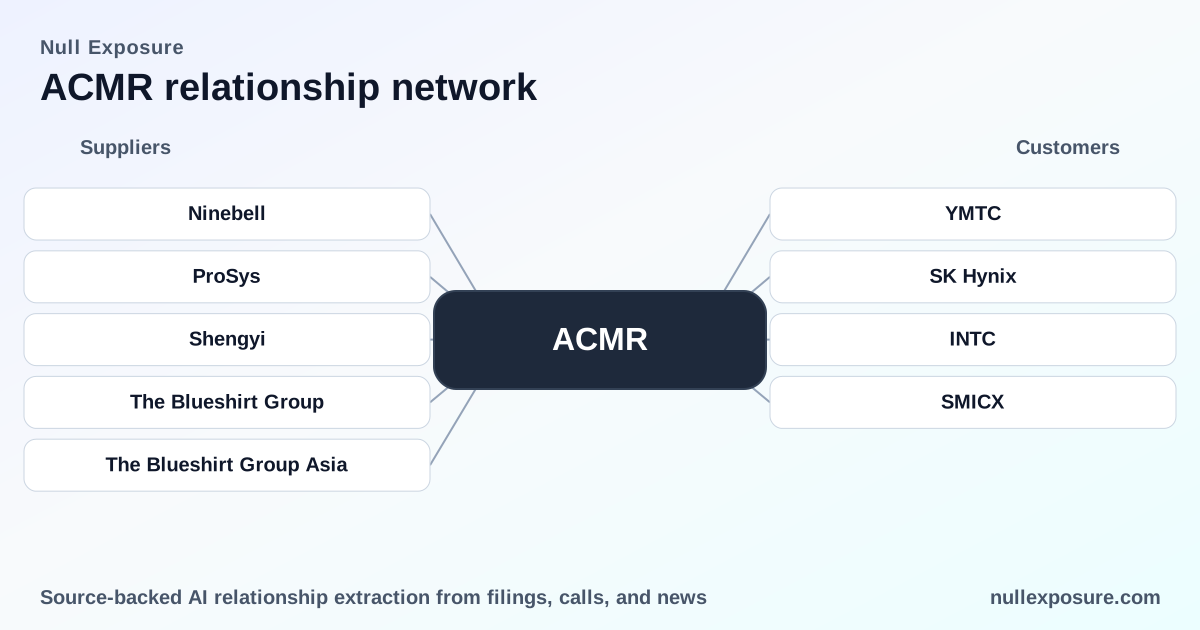
YMTC — a named Chinese memory customer with regulatory attention
YMTC was identified in ACM’s 2024 Form 10‑K as “a leading mainland China memory chip company and one of our key customers,” and was noted as having been added to the U.S. Export Administration Regulations Unverified List in October 2022. This positions YMTC as both a material client and a regulatory sensitivity for ACM. (Source: ACM Research 2024 Form 10‑K)
SMIC — large mainland China fabricator and a material revenue contributor
ACM’s 2024 Form 10‑K explicitly names SMIC as one of the largest chip manufacturers in mainland China and one of our key customers, and notes SMIC’s addition to the U.S. Entity List in December 2020; SMIC accounted for 13.6% of ACM’s 2024 revenue within a four-customer concentration that totaled 52.2%. SMIC is therefore both commercially significant and a central vector for export-control risk. (Source: ACM Research 2024 Form 10‑K)
SK Hynix — an established international repeat customer
Management confirmed on the Q3 2025 earnings call that SK Hynix is a long‑running customer, engaged for multi‑tool cleaning platforms and other products, underscoring ACM’s traction with major global DRAM players outside China. SK Hynix represents strategic diversification of end‑market demand and validates multi‑tool product acceptance. (Source: Q3 2025 earnings call transcript reported by AlphaStreet)
Intel — U.S. testing has drawn congressional scrutiny
Multiple news outlets reported that Intel tested ACM Research’s chipmaking tools, provoking attention from a bipartisan group of U.S. lawmakers concerned about national security and export-control exposure. Congressional inquiries and press coverage (Reuters reported via CNN/TipRanks, and commentary appeared in IndexBox and TradingKey in March 2026) put Intel‑testing activity into the spotlight and create a potential regulatory overhang for ACM’s access to U.S.‑based testing and qualification activity. (Sources: Reuters coverage as summarized by CNN/TipRanks Feb 26, 2026; IndexBox and TradingKey commentary March 2026)
Operational constraints and what they signal about the business model
ACM’s customer and contracting characteristics create a mixed operational profile:
- Contracting posture — demo‑to‑sales and long lifecycle engagements. The company places evaluation first‑tools to prove yield improvements and then converts to commercial deployments; extended maintenance contracts provide recurring service revenue. (ACM 2024 Form 10‑K)
- Concentration and credit risk are material. Four customers generated 52.2% of 2024 revenue; the company discloses this level of concentration and attendant credit exposure in its filings. (ACM 2024 Form 10‑K)
- Geographic concentration is APAC‑heavy. Substantially all operations and a majority of revenue come from mainland China, which amplifies exposure to regional policy shifts and export controls. (ACM 2024 Form 10‑K)
- Customer criticality is high. ACM’s wet‑cleaning and front‑end tools are used to improve yield at advanced nodes, making the tools operationally important to fabricators’ cost and yield curves; this underpins repeat orders. (ACM 2024 Form 10‑K)
- Relationship maturity is mixed. Evidence of a large installed base and 920+ repeat orders signals mature, sticky relationships, while continued placement of first‑tools shows the company also runs active pilots that feed growth. (ACM 2024 Form 10‑K)
These constraints form the commercial levers and risk vectors investors must monitor: customer concentration, APAC footprint, regulatory exposure, and conversion of evaluations into repeat sales.
For a consolidated, investor‑grade parse of ACM’s customer exposures and regulatory headlines, visit https://nullexposure.com/.
Investment implications and near‑term watchlist
- Regulatory headlines around Intel testing ACM tools and the presence of customers on U.S. Entity/Unverified lists translate into execution risk on U.S. sales and on servicing some Chinese customers; monitor export‑control developments and any changes to licensing policy.
- The material concentration of revenue in a handful of customers and mainland China means earnings volatility will track wins and losses with those accounts; quarterly customer contributions will move margins and cash conversion.
- Positive readthroughs include strong repeat orders and healthy gross margins from hardware sales; if ACM continues converting first-tools to commercial deployments, aftermarket services will expand and increase lifetime value per customer.
- Watch for signs of broader geographic diversification (more orders from non‑China fabs) and updates on long‑term service contracts; both would materially reduce geopolitical risk and improve revenue resilience.
Bottom line
ACM Research is a capital‑equipment vendor with proven product fit and high repeatability, but its earnings and strategic optionality are tightly coupled to a concentrated set of large APAC customers and evolving export‑control dynamics. Investors should value ACM’s installed base and service monetization while actively monitoring regulatory headlines and customer diversification metrics.
For ongoing tracking of ACM customer developments and regulatory signals, see the company overview and relationship feed at https://nullexposure.com/.