Aclaris Therapeutics (ACRS) — royalties, licensing and a services wedge that shapes revenue volatility
Aclaris Therapeutics is a clinical‑stage biopharmaceutical company that monetizes its science through out‑license agreements (milestones and royalties), opportunistic royalty monetization, and a smaller but recurring contract research/services business. For investors, the relevant thesis is straightforward: near‑term cash flow and valuation are driven by partner milestones and selective capital transactions (royalty sales and ATM offerings), while long‑term value depends on clinical progress of internal programs such as ATI‑2138 and bosakitug.
If you want a concise dashboard view and relationship mapping for due diligence, visit https://nullexposure.com/ for the underlying signals and source links.
How Aclaris converts science into dollars — the operating model in plain language
Aclaris operates on three commercial levers. First, the company licenses assets to large pharma partners and receives upfronts, milestone payments and royalties tied to regulatory and commercial events. Second, management uses royalty sale transactions to convert future cash flows into immediate capital — a tool that smooths funding needs but reduces future headline royalties. Third, Aclaris runs a contract research services segment that provides laboratory work to third parties and produces modest, recurring revenue. These service activities are an integral operational signal rather than the primary valuation driver.
Company‑level operating characteristics that matter for investors:
- Contracting posture: License agreements and milestone structures dominate cash flow timing; revenue is event‑driven rather than calendarized.
- Concentration: Licensing and milestone revenue is concentrated around a handful of partners and discrete milestones, producing high quarter‑to‑quarter volatility.
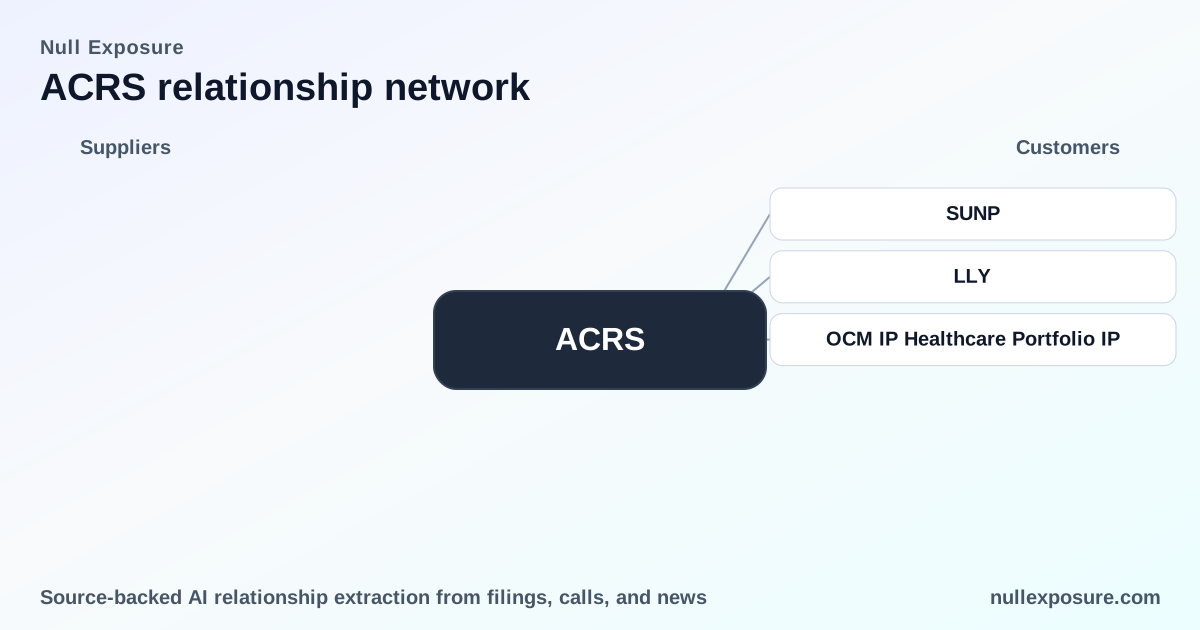
- Criticality: Relationships with large partners (notably Eli Lilly and Sun Pharma) are material to revenue recognition and the company’s near‑term cash profile.
- Maturity: Aclaris is clinical‑stage with negative operating margins and limited commercial revenue, so partner milestones and financing transactions drive the funding runway.
The partner map investors should read closely
Below I cover every relationship surfaced in public reporting and recent press — each entry includes a short plain‑English summary and the reporting source.
OCM IP Healthcare Portfolio IP
Aclaris sold a portion of its Eli Lilly royalties in July 2024 to OCM IP Healthcare Portfolio IP, an investment vehicle associated with OMERS, converting future royalty streams into immediate cash. This transaction reduced future licensing receipts but strengthened near‑term liquidity. According to Aclaris’s Q3 2025 commentary reported by InvestingNews, the partial royalty sale to OCM IP occurred in July 2024.
Sun Pharma (SUNP)
Sun Pharma is a licensee under which large milestones were achieved in 2024, driving comparably higher licensing revenue in prior periods and contributing to year‑over‑year timing effects. InvestingNews’ Q3 2025 financial report links the revenue fluctuations in FY2025 to sizable milestone recognition under the Sun Pharma license agreement for the quarter and nine‑month comparative periods ending September 30, 2024.
Eli Lilly and Company (LLY)
Eli Lilly is a major licensing partner whose commercial milestone achievement in Q4 2024 materially impacted reported revenue; together with the partial sale of Lilly royalties, these events explain meaningful revenue declines year‑over‑year. The company’s FY2026 filings and press releases—including an 8‑K referenced by StockTitan and a FY2025/FY2026 press release on GlobeNewswire—explicitly attribute decreases in licensing income to the Lilly commercial milestone and the prior royalty monetization.
Deep Track Capital
Deep Track Capital participated as an institutional buyer in Aclaris’s ATM share sales, indicating institutional demand in Aclaris equity offerings and contributing to capital market activity in FY2026. TradingView’s coverage of the ATM placement notes institutional participation, including Deep Track Capital.
What the relationship list implies for risk and upside
- Revenue volatility is structural: Because licensing revenue is milestone‑based, quarter‑to‑quarter swings are the norm; Aclaris’ FY2025 and FY2026 results were materially shaped by milestone timing and the strategic sale of royalty rights.
- Monetization trades liquidity for future upside: The July 2024 royalty sale to OCM IP improved cash but reduces Aclaris’s exposure to future Lilly upside, concentrating future revenue risk elsewhere.
- Services provide a floor but not scale: The contract research/services segment delivers laboratory revenue and a steadier but small cash contribution; it is important for operational diversification but not a substitute for milestone and royalty income. This is consistent with company disclosures that contract research earns laboratory services revenue and that the firm provides contract research enabled by early‑stage R&D expertise.
- Capital‑markets engagement matters: ATM offerings and institutional buyers (e.g., Deep Track Capital) are active levers for funding; investors should treat equity issuance as a routine component of funding clinical operations.
Catalysts and monitoring checklist for investors
- Clinical readouts for ATI‑2138 and bosakitug — these data releases are the primary long‑term value drivers cited in recent analyst and press commentary (RTTNews highlighted these programs as potential momentum drivers for 2026).
- Licensing milestone schedules from Sun Pharma and Eli Lilly — monitor partner disclosures and Aclaris’s 8‑K/press sequences for unexpected timing or new milestones. Globenewswire and company 8‑Ks repeatedly link revenue swings to these events.
- Additional royalty monetizations or equity raises — management’s use of royalty sales (OCM IP in 2024) and ATM placements suggests capital strategy will continue to affect both liquidity and future revenue capture.
- Contract research growth — watch whether the services segment scales beyond a revenue floor into a meaningful diversification channel; company statements indicate this is an active line of business.
Bottom line for investors
Aclaris is a milestone‑and‑royalty‑driven clinical biotech with a pragmatic capital strategy that blends licensing, selective royalty monetization and equity market access. Near‑term valuation is highly sensitive to partner milestone timing and any further monetization transactions, while longer‑term upside is tied to clinical progress on internal programs. For an operationally focused map of these partner relationships and the primary source documents, visit https://nullexposure.com/ to see the signal set used in this analysis.
Bold takeaways: milestone timing creates revenue volatility, royalty sales trade future upside for present liquidity, and partner execution (Lilly, Sun Pharma) is the principal determinant of Aclaris’s near‑term financial trajectory.