ACV Auctions: Marketplace economics, customer concentration, and the partnerships that matter
ACV Auctions operates a digital wholesale vehicle marketplace that earns the bulk of its revenue from auction and ancillary transaction fees, supplemented by subscriptions for data and inventory software, short-term floorplan financing, and transportation/assurance services. The company connects active buyers and sellers across the U.S., generating scale benefits from higher bid density and recurring software and data revenue tied to marketplace activity. For investors, ACV is a hybrid marketplace-business: transactional, high-volume core economics combined with growing subscription and financing streams that increase per-customer lifetime value. Explore deeper profiles at https://nullexposure.com/.
Customers that drive the thesis: who ACV names on the record
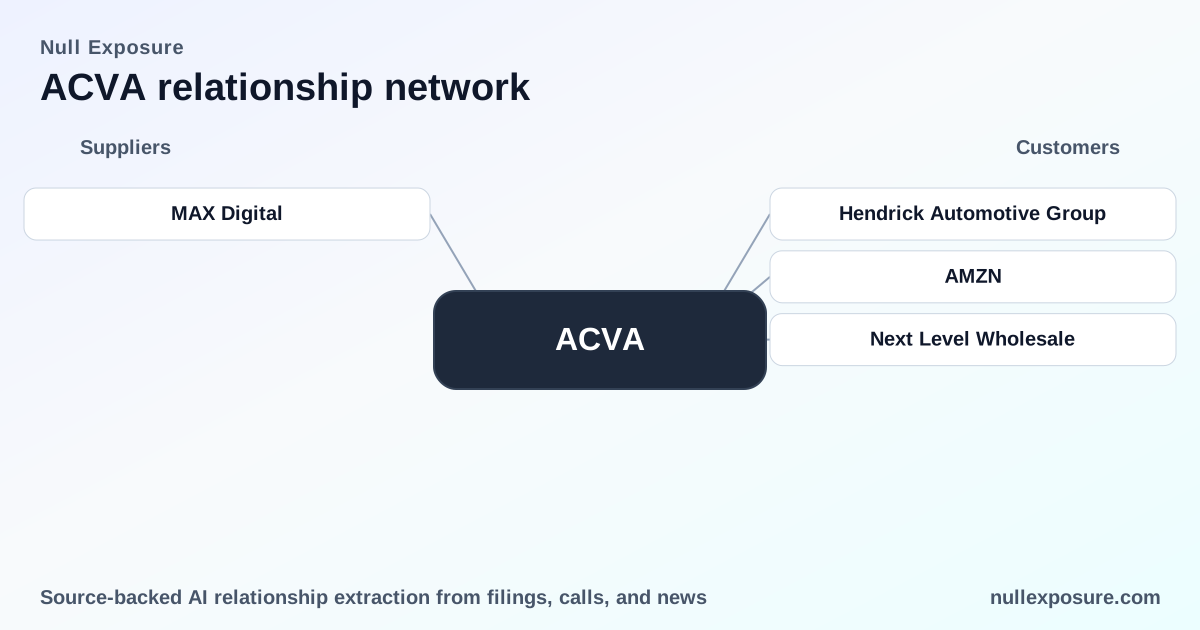
ACV’s public commentary and press coverage identify both marquee dealer groups and smaller wholesale participants that illustrate how the business is used in practice. The three relationships below are mentioned in ACV’s Q4/FY2025 materials and related press.
Hendrick Automotive Group — a large dealer partner using the full stack
ACV publicly highlighted Hendrick Automotive Group during its Q4 2025 earnings call as a dealer partner that is using ACV’s “full suite of offerings,” signaling adoption of auctions, data, and services by a top-tier operator. The company reiterated this point in transcripts distributed to media in March 2026. (ACV Q4 2025 earnings call; March 2026 transcripts via InsiderMonkey and The Globe and Mail.)
Amazon / Amazon Autos — a strategic alliance to leverage ACV’s data services
Media coverage reported an alliance between Amazon Autos and ACV Auctions designed to leverage ACV’s expanding data services capabilities and extend marketplace reach. This tie-up positions ACV’s valuation and data products for broader distribution and confirms demand for its condition- and value-oriented services outside traditional dealer channels. (SahmCapital coverage on the Amazon–ACV alliance; October 2025.)
Next Level Wholesale — a user example demonstrating marketplace liquidity effects
Independent wholesale operator Next Level Wholesale and its owner Iggy Cherkashyn were quoted describing ACV’s “No Reserve” sale, saying vehicles get “triple and sometimes quadruple the amount of views,” which underscores the platform’s ability to materially increase bidder interest and sell-through rates for smaller sellers. This anecdote illustrates how auction formats and promotional cadence drive bid density. (SahmCapital and Quiver Quant coverage on ACV’s No Reserve Sale expansion; August 2025.)
How these relationships map to ACV’s operating model
ACV’s public disclosures and the relationship mentions combine to form a clear operating profile:
- Contracting posture: predominantly transactional with layers of recurring commitments. The core marketplace is spot/auction-driven: sellers and buyers transact on a per-unit basis and ACV collects fees only on successful auctions. The company layers short-term inventory financing (floorplan loans) and subscriptions (ACV MAX, True360 reports) that convert some transactional relationships into recurring revenue streams.
- Revenue mix and pricing mechanics: usage and subscription blended. Buyer fees vary with vehicle price and seller fees include fixed components plus elective fees for condition reports; subscription revenue is ratable over contract terms, and financing introduces interest and fee income.
- Counterparty concentration and scale dynamics: heavy exposure to large dealers. ACV reports that a majority of the top 100 used-vehicle dealers are customers, indicating concentration among large enterprise buyers and sellers—a positive for unit economics but a source of counterparty concentration risk.
- Geographic focus and operational footprint: North America-first. Services are delivered primarily in the United States with operations supported in North America and India; this makes ACV’s performance tightly correlated with U.S. used-vehicle flows.
- Roles and criticality: marketplace operator, service provider, and lender. ACV acts as an agent for auctions, a principal for transport arrangements, and a credit provider through ACV Capital floorplan products—making it integral across sourcing, pricing, transport and payment for dealers.
- Relationship maturity and activity: predominantly active customers with material contribution. In 2024 ACV reported roughly 20,975 active buyers and 14,377 active sellers generating $9.5 billion in marketplace GMV; the marketplace historically produces the majority of revenue, so customer relationships are operationally material to the business.
Key operational takeaway: ACV combines volume-driven marketplace economics with higher-margin software and financing products that deepen engagement and increase lifetime value, but its revenue is still fundamentally tied to successful auction transactions.
Contract types, segments and revenue implications (company-level signals)
- Spot/auction transactions drive the volume engine and immediate fee recognition; buyer auction fees are usage-based and seller fees blend fixed and elective components.
- Short-term financing (floorplan loans) is provided on eligible purchases and generates incremental interest and fee income.
- Subscriptions (ACV MAX inventory management, True360 reports) generate ratable recurring revenue and anchor dealers to the platform.
- Service segment revenues include transportation, assurance, and title/arbitration processing; these services increase wallet share per transaction and create stickiness.
- Software segment products are strategically important to improve dealers’ inventory turns and pricing accuracy, reinforcing ACV’s role beyond a pure auction venue.
Risks, concentration and competitive considerations
- Customer concentration: A majority-of-top-100-dealers customer base accelerates growth but intensifies counterparty risk should a handful of large dealers shift sourcing strategies.
- Cyclicality and execution: Auction-driven revenue is exposed to used-car market cycles and bid density; sustaining buyer participation is essential to pricing power.
- Geographic concentration: Heavy U.S. focus concentrates macro and regulatory risk domestically.
- Margin pressure and scale needs: ACV reported negative operating margins and EBITDA in the trailing period even as revenue grows, making continued scaling and subscription upsell critical to reaching consistent profitability (Revenue TTM ~$759.6M; Operating Margin TTM -13.9%; EBITDA negative).
What investors and operators should watch next
- Adoption of ACV MAX and True360: Growth in subscription penetration will materially improve revenue visibility and margins; track subscription ARR and churn as leading indicators.
- Financing book health: Monitor growth, underwriting metrics, and losses in ACV Capital floorplan loans to assess earnings quality.
- Bid density and GMV trends: Sustained growth in active buyers and sellers and higher bidders-per-car are the primary drivers of auction fee growth.
- Strategic partnerships: Alliances like the Amazon Autos tie indicate pathways to non-traditional distribution and expanded data monetization.
For a concise profile and ongoing monitoring of ACV’s customer relationships and their implications for revenue and risk, visit https://nullexposure.com/.
Bold takeaway: ACV’s value proposition is clear — a high-volume U.S. auction marketplace with layered subscriptions and financing that increase per-customer revenue; the investment case depends on converting transactional participants into recurring, higher-margin customers while managing concentration and cycle risk.