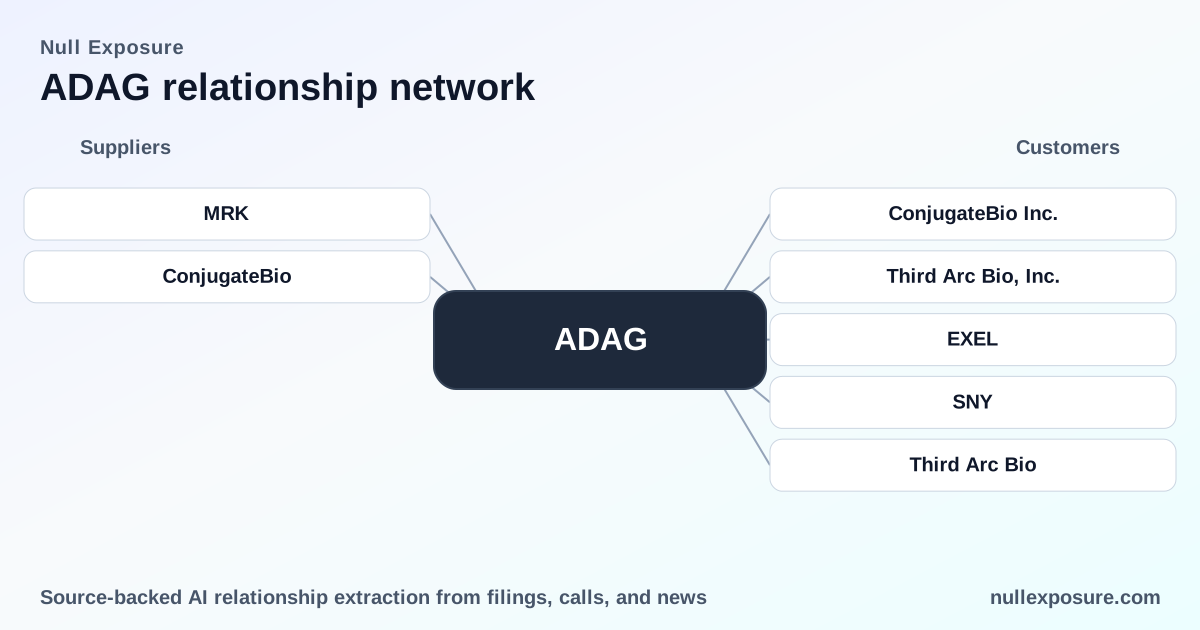
Adagene (ADAG) — Partner Map and Revenue Drivers for Investors
Adagene is a clinical-stage biopharma that monetizes primarily through licensing its SAFEbody platform, collaboration and clinical-supply agreements, milestone receipts, and downstream royalties tied to partner development and commercialization. Its model converts platform IP into upfront payments and performance-based revenue while retaining upside through milestones and royalties; cash and balance-sheet flexibility are supplemented by equity capital raises. For a concise vendor and counterparty view, see more at https://nullexposure.com/.
How ADAG generates commercial value — the operating thesis
Adagene packages a protected antibody-masking technology (SAFEbody) and partner-ready candidates, then captures value through three levers: technology licenses and discovery collaborations (upfronts + milestones + royalties), clinical supply agreements (service revenue), and equity financing to fund clinical progression. The company sits at the intersection between discovery-stage IP licensing and clinical-stage product support, which creates a cashflow profile that is lumpy and milestone-driven rather than steady recurring revenue.
Partner map: every commercial relationship in the public record
Below are all counterparties referenced in public disclosures and media tracked for ADAG; each entry includes a concise plain-English summary and source reference.
Third Arc Bio, Inc.
Third Arc Bio licensed Adagene’s SAFEbody technology to develop two masked CD3 T‑cell engagers; Adagene received a $5 million upfront and is eligible for up to $840 million in development and commercial milestones plus royalties on sales. This is a pure technology-licensing arrangement that converts IP into near-term non-dilutive cash and long‑term contingent upside (GlobeNewswire, Nov 13, 2025; FierceBiotech, Nov 2025).
Sanofi (SNY)
Sanofi exercises options and continues to sponsor programs using ADAG’s SAFEbody platform; Sanofi will receive clinical supply of Adagene’s lead candidate muzastotug for combination studies and ADAG will supply material for a Phase 1/2 trial of over 100 patients. Sanofi has previously invested in Adagene and executed discovery program options, representing a strategic, high‑value pharma collaboration (Adagene corporate update, Jan–Apr 2026; Citeline, FY2025).
ConjugateBio Inc.
Adagene granted ConjugateBio access to proprietary antibody assets to develop novel bispecific antibody‑drug conjugates (ADCs), a collaboration that translates platform antibodies into partner-directed ADC programs and provides ADAG with development/corporate revenue triggers and future royalties (GlobeNewswire release on partnership, Jul 8, 2025; Adagene FY2025/2026 reporting).
Exelixis (EXEL)
Exelixis amended its SAFEbody collaboration to generate a masked monoclonal antibody from Adagene’s pipeline for an ADC targeting a nominated solid tumor antigen; Adagene will receive development and commercialization milestones plus royalties on net sales. This is an expanded discovery-to-development collaboration with a major oncology developer (StockTitan/QuiverQuant coverage; MarketScreener reporting, FY2025–FY2026).
Incyte Corp. (INCY)
Incyte will sponsor and conduct a clinical trial in which Adagene will provide the clinical supply of muzastotug to evaluate combination therapy in microsatellite-stable colorectal cancer; the study places ADAG in a clinical-supply role supporting an external sponsor’s trial operations (SahmCapital summary; InsiderMonkey/coverage, April–May 2026).
Janus Henderson Investors
Janus Henderson participated as an investor in ADAG’s US public offering that priced in April 2026; the transaction was part of a $70.0 million ADS offering that brought new and existing institutional support to the cap table (GlobeNewswire, Apr 2, 2026).
Deerfield Management
Deerfield Management participated in the April 2026 public offering, representing continued institutional interest from specialty healthcare investors and providing near-term balance-sheet support for clinical activities (GlobeNewswire, Apr 2, 2026; BitGet coverage, May 2026).
Invus
Invus joined the syndicate of investors in the April 2026 offering, contributing to the tranche of institutional capital that financed ADAG’s near-term clinical and development programs (GlobeNewswire Apr 2, 2026; BitGet reporting, May 2026).
Sirenia
Sirenia appeared among investors participating in the April 2026 offering, reinforcing the impression of diversified institutional participation in ADAG’s financing round (GlobeNewswire Apr 2, 2026; BitGet coverage, May 2026).
Columbia Threadneedle Investments
Columbia Threadneedle participated in the April 2026 offering, signaling asset-management interest from large global investment firms in ADAG’s clinical and platform value proposition (GlobeNewswire Apr 2, 2026; BitGet reporting, May 2026).
(For the corporate release that ties together revenue recognition and partner revenues, see Adagene’s April 1, 2026 full-year financial results and corporate update.)
You can review these partner links and the underlying coverage in more depth at https://nullexposure.com/ if you need direct access to consolidated counterparty intelligence.
What the relationship mix signals about ADAG’s operating model
- Contracting posture: ADAG operates primarily as a licensor and co-developer, structuring deals with upfront payments, option exercises, and milestone/royalty economics. The company also accepts clinical-supply obligations that convert R&D assets into service revenue streams.
- Revenue profile and concentration: Revenue is highly lumpy and milestone-driven; Adagene reported a dramatic net‑revenue increase reflecting recognition upon fulfillment of performance obligations tied to collaborations with Sanofi, ConjugateBio and Third Arc Bio (Adagene full‑year results, Apr 1, 2026). This pattern creates episodic revenue visibility tied to partner activities.
- Criticality and counterparty risk: Relationships with large pharmas (Sanofi, Exelixis, Incyte) are strategically critical—these partners sponsor trials and exercise opt‑ins that materially affect ADAG’s near-term cash inflows and development cadence.
- Maturity and commercialization pathway: The company is clinical-stage; partner-led trials and ADC/engager programs define the timeline to potential commercial revenue, so upside is conditional on partner development success rather than internal commercialization to date.
- Capital posture: ADAG supplements collaboration cashflows with equity capital; the April 2026 $70M offering drew multiple institutional investors and strengthened the balance sheet to fund clinical commitments (GlobeNewswire, Apr 2, 2026).
Investment implications: what investors should watch next
- Monitor milestone timelines and opt-ins from Sanofi and Exelixis because those events will drive the next material revenue recognitions. Adagene’s income is directly coupled to partner decision points and trial initiation/completion milestones.
- Track clinical supply and Incyte trial deliverables since supply obligations translate into short-term revenue and operational burden; successful execution reduces commercialization friction downstream.
- Watch cash runway post-offering and potential dilution: the April 2026 offering provided $70M, but continued program spending and milestone dependencies require vigilant cash management.
- Balance risk vs. asymmetric upside: ADAG’s model concentrates risk in a few high-value partnerships, but successful partner development events produce outsized milestone and royalty upside.
Bottom line
Adagene has structured its business to extract value from platform IP through licenses, strategic pharma collaborations, clinical-supply deals, and institutional financing. The partner roster—Sanofi, Exelixis, Incyte, ConjugateBio and Third Arc Bio—gives ADAG meaningful clinical and development optionality while institutional investor participation in April 2026 strengthens funding for near-term programs. For a focused review of these relationships and their likely near-term commercial triggers, visit https://nullexposure.com/ for consolidated counterparty intelligence and deal chronologies.
Sources referenced include Adagene corporate press releases and full‑year reporting (GlobeNewswire, Apr 1–2, 2026), press coverage in FierceBiotech and MarketScreener (FY2025–FY2026), and secondary summaries of partner transactions (QuiverQuant, StockTitan, InsiderMonkey, May 2026).