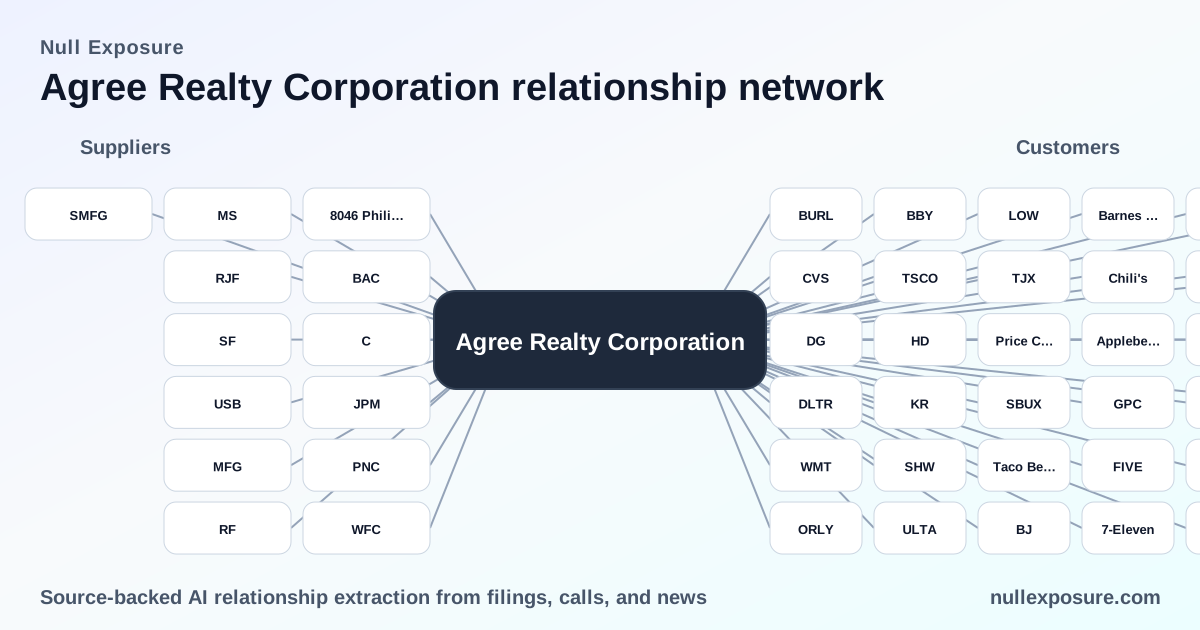
Agree Realty's tenant ecosystem — dependable rent roll built on national retail anchors
Agree Realty (ADC) acquires, develops and manages net‑leased retail properties and monetizes primarily through long‑term net leases that generate rental income and strong recurring cash flow; its portfolio is nearly fully leased and weighted to investment‑grade national tenants, supporting the REIT’s dividend and valuation multiple. For primary coverage and sourcing on tenant exposures, visit https://nullexposure.com/.
How Agree makes money from retailers — the operating model in plain English
Agree Realty operates a classic net‑lease retail REIT: it buys or develops real estate, structures long‑term net leases where tenants shoulder most operating expenses, and collects stable, often inflation‑linked rent streams. Company filings show the portfolio totaled roughly 2,674 properties and ~55.5 million square feet as of December 31, 2025, with approximately 99.7% occupancy and a weighted average remaining lease term near 7.8 years, which underpins current AFFO generation and dividend distributions (company filings, FY2025–FY2026 disclosures).
Tenant roster: who pays the rent and why each relationship matters
Below I catalogue every tenant relationship surfaced in coverage and filings in the provided results, with a short plain‑English note and the source.
- Walmart — Top anchor tenant contributing meaningful base rent and scale to the portfolio; referenced among ADC’s national tenant list and listed at $41,155 (5.6%) in ADC filings (MarketScreener, StockTitan; Mar–May 2026).
- Dollar General — Large discount retailer cited as a named tenant and a top rent contributor in ADC disclosures (MarketScreener, StockTitan; Mar–May 2026).
- Tractor Supply — Identified as a key specialty retail tenant and one of the larger single‑tenant exposures by square footage and rent (MarketScreener, StockTitan; Mar–May 2026).
- Best Buy — National electronics retailer named among ADC tenants and quantified in SEC‑filing summaries as a top holder (MarketScreener, StockTitan; Mar–May 2026).
- Dollar Tree — Included in the tenant list for FY2026 coverage and listed among top tenants in filings (MarketScreener, StockTitan; Mar–May 2026).
- TJX Companies — Identified as a national off‑price tenant in recent project leasing and top‑tenant disclosures (MarketScreener, StockTitan; Mar–May 2026).
- O’Reilly Auto Parts — Named among national tenants and called out in SEC filing metrics (MarketScreener, StockTitan; Mar–May 2026).
- CVS — National pharmacy chain listed in ADC tenant roll and top‑tenant disclosures (MarketScreener, StockTitan; Mar–May 2026).
- Kroger — Grocery anchor included in the FY2026 tenant roster and quantified in filings (MarketScreener, StockTitan; Mar–May 2026).
- Lowe’s — Home‑improvement national tenant referenced repeatedly in leasing activity and ground‑lease acquisitions (InsiderMonkey, StockTitan; May–Mar 2026).
- Hobby Lobby — Named among national tenants with rental and square‑footage exposure disclosed in filings (MarketScreener, StockTitan; Mar–May 2026).
- Burlington — Cited as both a tenant on new projects and as a top tenant in SEC summaries (InsiderMonkey, StockTitan; Mar–May 2026).
- Sherwin‑Williams — Listed among national tenants and included in top‑tenant rollups (MarketScreener, StockTitan; Mar–May 2026).
- Sunbelt Rentals — Identified as a project tenant in transactional reporting and the earnings summary (MarketScreener, StockTitan; Mar–May 2026).
- Wawa — Included in the tenant list and in top‑tenant metrics disclosed by ADC (MarketScreener, StockTitan; Mar–May 2026).
- Home Depot — Frequently referenced as a “great retail partner”; called out in conference‑call and local transaction reporting, including a Home Depot asset in Michigan (MarketScreener, Investing.com, Berkshire Eagle; Mar–May 2026 & FY2020).
- TBC Corporation — Listed among ADC’s tenant roster in earnings coverage (MarketScreener; May 2026).
- Gerber Collision — Noted as a tenant exposure and included in filing‑level top‑tenant line items (MarketScreener, StockTitan; Mar–May 2026).
- Advance Auto Parts — Management commentary noted a reduction in exposure to Advance Auto Parts during portfolio activity (InsiderMonkey earnings call transcript; May 2026).
- Boot Barn — Called out as a counterparty on new development projects (InsiderMonkey; May 2026).
- Five Below — Listed among new projects and pipeline leasing activity (InsiderMonkey; May 2026).
- Ross Dress for Less — Included in the list of new development projects and leasing (InsiderMonkey, StockTitan; May–Mar 2026).
- Ulta — Cited as a tenant on recent projects and in filings (InsiderMonkey, StockTitan; May–Mar 2026).
- 7‑Eleven — Appears on project leasing lists and in SEC filing summaries of project tenants (InsiderMonkey, StockTitan; May–Mar 2026).
- Wells Fargo — Mentioned as a ground‑lease tenant at a specific retail node (InsiderMonkey; May 2026).
- Wendy’s — Identified as a ground‑lease tenant in asset‑level commentary (InsiderMonkey; May 2026).
- McDonald’s — Noted in filings as a ground‑lease acquisition; cited in asset acquisition descriptions (InsiderMonkey, StockTitan; May–Mar 2026).
- Olive Garden — ADC acquired an Olive Garden ground lease during the quarter (InsiderMonkey earnings call transcript; May 2026).
- Goodyear — Management remarks referenced a disposition involving a Goodyear store (InsiderMonkey; May 2026).
- Family Dollar — Management noted dispositions related to Family Dollar (InsiderMonkey; May 2026).
- Walgreens — Historical context discussed Walgreens exposure during the REIT’s earlier acquisition platform (InsiderMonkey; May 2026).
- Panda Express — Cited as a ground‑lease tenant at a specific site (InsiderMonkey; May 2026).
- BJ / BJ’s Wholesale Club — ADC’s public holdings include multiple BJ’s locations across northeastern states, shown on the company site and local transaction reporting (JaxDailyRecord, agreerealty.com; FY2023 reporting).
- Applebee’s — Listed among tenants at the Berkshire Crossing shopping center sold to an ADC subsidiary (Berkshire Eagle; FY2020 reporting).
- Barnes & Noble — Included in Berkshire Crossing tenant line‑up in local sale coverage (Berkshire Eagle; FY2020).
- Chili’s — Named among restaurant tenants at an acquired shopping center (Berkshire Eagle; FY2020).
- Price Chopper (Market 32) — Noted as the regional supermarket tenant in local reporting on Berkshire Crossing (Berkshire Eagle; FY2020).
- Starbucks — Included among national tenants at Berkshire Crossing in regional reporting (Berkshire Eagle; FY2020).
- Taco Bell — Listed as a restaurant tenant in the Berkshire Crossing portfolio sale (Berkshire Eagle; FY2020).
- Staples — Named in local transaction reporting as part of a shopping‑center tenancy mix (Berkshire Eagle; FY2020).
- Sheetz — Identified as a ground‑lease acquisition in filing‑level transaction disclosures (StockTitan; Mar 2026).
- LongHorn Steakhouse — Included in descriptions of ground‑lease acquisitions (StockTitan; Mar 2026).
- Genuine Parts Company (NAPA Auto Parts) — Quantified in filings as a named tenant with square‑footage/rent metrics (StockTitan; Mar 2026).
- Sunbelt Rentals (duplicate mention) — Also appears in earnings and filing summaries showing recurring project-level leasing (MarketScreener, StockTitan; Mar–May 2026).
(Reporting sources: MarketScreener earnings coverage, StockTitan SEC/8‑K extracts, InsiderMonkey earnings call transcripts, Berkshire Eagle local reporting, Investing.com transcript coverage, TradingView investor commentary and JaxDailyRecord property reporting — dates Mar–May 2026 and FY2020–FY2023 where noted.)
What the relationship constraints tell investors about ADC’s risk and resilience
- Contracting posture: long‑term, net leases. Company disclosures state leases are typically long‑term net leases where tenants pay property operating costs; this structure shifts operating risk to tenants and stabilizes landlord cash flows (company filings, FY2025–FY2026).
- Counterparty quality: concentrated toward very large, investment‑grade tenants. ADC reports that roughly 66.8% of annualized base rent comes from tenants or parents with investment‑grade ratings, which materially reduces credit risk exposure versus a small‑tenant portfolio (company filings, FY2025).
- Geography: U.S. national footprint. The portfolio spans all 50 states (~55.5M sq ft), which diversifies location risk while exposing ADC to U.S. retail cycle dynamics (company filings, Dec 31, 2025).
- Materiality and maturity: rent is a material, mature cash flow. Rental income drives most cash from operations, the portfolio is ~99.7% leased, and WALE is ~7.8 years—a mature, predictable revenue base that supports the dividend (company filings, FY2025–FY2026).
- Relationship roles: owner/operator and seller of real estate services. ADC functions as an integrated REIT—owner, developer and manager—so counterparty interactions include long‑term landlord obligations, development contracts and occasional dispositions (company disclosures).
Bottom line and key takeaways for investors
- Agree Realty’s business is a scale play on long‑term, net‑leased national retailers; its tenant roster reads like a who’s‑who of investment‑grade retail, which materially supports recurring rent and dividend coverage.
- Concentration in large national tenants and near‑complete occupancy reduce downside but leave exposure to U.S. retail macro trends and sector‑specific tenant stress. Management commentary and recent filings confirm active asset management, portfolio pruning and selective new developments with national brands (InsiderMonkey, StockTitan, MarketScreener; Mar–May 2026).
For a closer look at sourcing and tenant‑level citations, visit https://nullexposure.com/ — the page aggregates reporting used for the tenant roll and disclosure summaries.