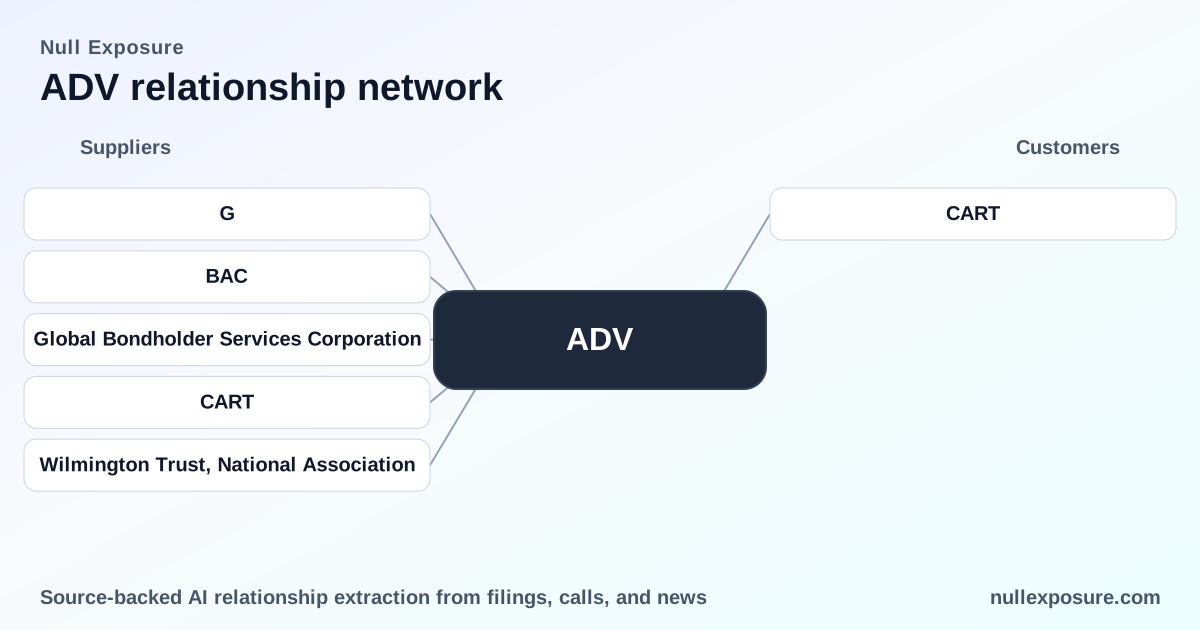
Advantage Solutions (ADV): Customer Relationships, Concentration and Contracting Signals
Advantage Solutions operates as an outsourced sales, merchandising and experiential services platform that monetizes through a mix of commissions, fee-for-service and cost‑plus arrangements, with a meaningful portion of revenue tied to variable, usage‑based consideration. The company sells labor, program execution and brokerage services into large retail chains and CPG manufacturers, generating scale from volume of store locations and client portfolios rather than long-term, locked contracts. For investors, the thesis is simple: ADV delivers essential, high-frequency retail execution services with structurally variable revenue and client concentration that drive both upside in growth cycles and downside in weaker CPG spending environments. Visit https://nullexposure.com/ for additional company coverage and research.
How ADV gets paid and why contract terms matter
Advantage breaks revenue into Branded, Experiential and Retailer Services, each monetized differently but consistently built around labor and performance. Branded Services pays commissions and fee-for-service; Experiential Services runs large sampling programs on a cost‑plus basis; Retailer Services mixes consulting and execution fees. This structure produces steady topline throughput but introduces high sensitivity to client ordering patterns and retailer shelf economics.
Two operating model characteristics are decisive for valuation and risk assessment:
- Contracting posture: Substantially all client contracts are short‑term or cancelable on 30–120 days’ notice, and the company recognizes revenue over time for hours/events or as variable consideration is realized. This produces revenue visibility that is operational rather than contractual.
- Variable, usage‑based economics: A material share of consideration is contingent on client sales, hours worked, event count or performance bonuses, which creates revenue variability aligned with CPG sell-through and retailer promotions.
These characteristics make ADV a playbook stock for investors who value volume leverage and margin expansion when CPG spending accelerates, but it also requires active monitoring of retail macro trends and client concentration. For further context on how these dynamics affect deal sourcing and risk, see https://nullexposure.com/.
What the customer map reveals about scale and exposure
The relationships captured in recent public sources illustrate ADV’s dual exposure to large retailers (distribution channels) and major CPG manufacturers (clients that pay commissions or program fees). Below I review every named relationship in the available results with a concise takeaway and source.
Walmart
ADV executes in‑store sales and merchandising programs across large national retailer footprints, explicitly including Walmart as one of the retail locations where ADV deploys field execution and merchandising services. Source: TradingView idea citing ADV reach (May 2, 2026), which references 100,000+ retail locations including Walmart.
SC Johnson
SC Johnson is listed among the 4,000+ CPG brands ADV serves, indicating ADV provides merchandising, sampling or brokerage services to household goods manufacturers. Source: TradingView idea (May 2, 2026).
Target
Target is named among national retailers where ADV provides in‑store execution, underscoring dependence on big‑box distribution channels for program reach. Source: TradingView idea (May 2, 2026).
Unilever
Unilever is cited as one of the large consumer goods manufacturers served by ADV, reflecting relationships with global CPG brands that pay commission‑style or performance incentives. Source: TradingView idea (May 2, 2026).
Costco
Costco is identified as another core retail partner location where ADV runs merchandising and experiential programs, contributing to distribution scale. Source: TradingView idea (May 2, 2026).
Kroger
Kroger is included in the retailer list and represents grocery‑channel exposure for ADV’s in‑store and retail media services. Source: TradingView idea (May 2, 2026).
Mars Wrigley
Mars Wrigley appears among the CPG brands served, indicating ADV works with confectionery and snack manufacturers on merchandising and promotional execution. Source: TradingView idea (May 2, 2026).
McCormick
McCormick is listed among manufacturer clients, highlighting ADV’s reach into food and spice brands that use in‑store and sampling programs. Source: TradingView idea (May 2, 2026).
Instacart
Management referenced a partnership with Instacart during the Q4 2025 earnings call, describing a collaboration that combines Instacart’s audit and consumer insight capabilities with ADV’s retail execution network to improve on‑shelf performance for CPG brands. Source: ADV 2025 Q4 earnings call (transcript dated March 7, 2026).
CART
The ticker CART (Instacart) is also referenced in the same earnings call excerpt, confirming the company categorizes the relationship with Instacart in investor communications and sees it as an advancing commercial partnership tied to in‑store audits and shopper insights. Source: ADV 2025 Q4 earnings call (March 7, 2026).
Bayer
Bayer is included among the 4,000+ CPG brands ADV serves, confirming exposure to pharmaceutical and consumer health manufacturers that use retail merchandising and sales execution. Source: TradingView idea (May 2, 2026).
Operational constraints that drive risk and opportunity
The company disclosures present a consistent set of operational signals that should factor into valuation and portfolio risk allocation:
- Short‑term, cancelable contracts: Most client agreements have terms under one year or include 30–120 day cancellation provisions, creating limited contractual revenue visibility. This is a company‑level signal based on filing language.
- Variable/usage‑based pricing is material: Contracts explicitly include variable consideration — commissions tied to client retail sales, hourly fees, per‑event fees and cost‑plus arrangements — which aligns ADV revenues with client activity and promotions.
- Large‑enterprise counterparties: ADV operates against a concentrated set of national retailers and major CPGs; this creates both scale and counterparty concentration risk, with the top five clients generating ~21.8% of 2024 revenues (none >10% individually).
- Geographic profile: The business is North America‑centric (U.S. revenues dominate) with an international presence operating through ~70 offices; exposure to Canadian and international FX exists but scale is U.S.‑driven.
- Service‑provider posture and maturity: ADV functions as a service provider across its segments—brokerage, merchandising, sampling—operating mature, active relationships while also recording intentional client resignations that can produce revenue step‑downs.
- Spend bands: The company reports client revenues that fall in the $1m–$10m band and in higher $10m–$100m ranges for certain consolidated affiliates, signaling a mix of mid‑sized and material clients that drive revenue chunks.
These constraints combine into a clear operating profile: high operational leverage to CPG demand, limited contractual protection, and meaningful client concentration. Investors should underwrite cyclical revenue swings and prioritize monitoring of retailer shelf dynamics, CPG promotional budgets and the pace of any multi‑year replatforming of services.
Conclusion — what investors should watch next
Advantage’s customer map confirms the business is embedded with major retailers and large CPG brands, delivering scalable but operationally sensitive revenue flows. Key near‑term indicators for investors: same‑store CPG promotional spend, renewal activity with national retailers, and progress on partnerships that convert on‑shelf data (Instacart) into measurable execution wins. ADV scores as a high‑beta exposure to CPG cycles: attractive on an upside in promotional activity, but vulnerable to spending pullbacks given short contracts and variable consideration.
For deeper, structured coverage and continuous tracking of ADV customer relationships, visit https://nullexposure.com/ for research updates and model implications.