Advanced Biomed (ADVB): Customer relationships that define an early commercial biotech pivot
Advanced Biomed develops microfluidic biochip hardware and associated testing services for precision oncology, monetizing through device and service commercialization and through strategic disposals of non-core subsidiaries. The company is at an early commercial inflection point: product validation work with clinical partners is the revenue precursor, while corporate restructurings and asset sales are driving near-term cash and balance-sheet simplification. For ongoing monitoring of these customer and partner dynamics visit https://nullexposure.com/.
What the relationship map tells investors in plain English
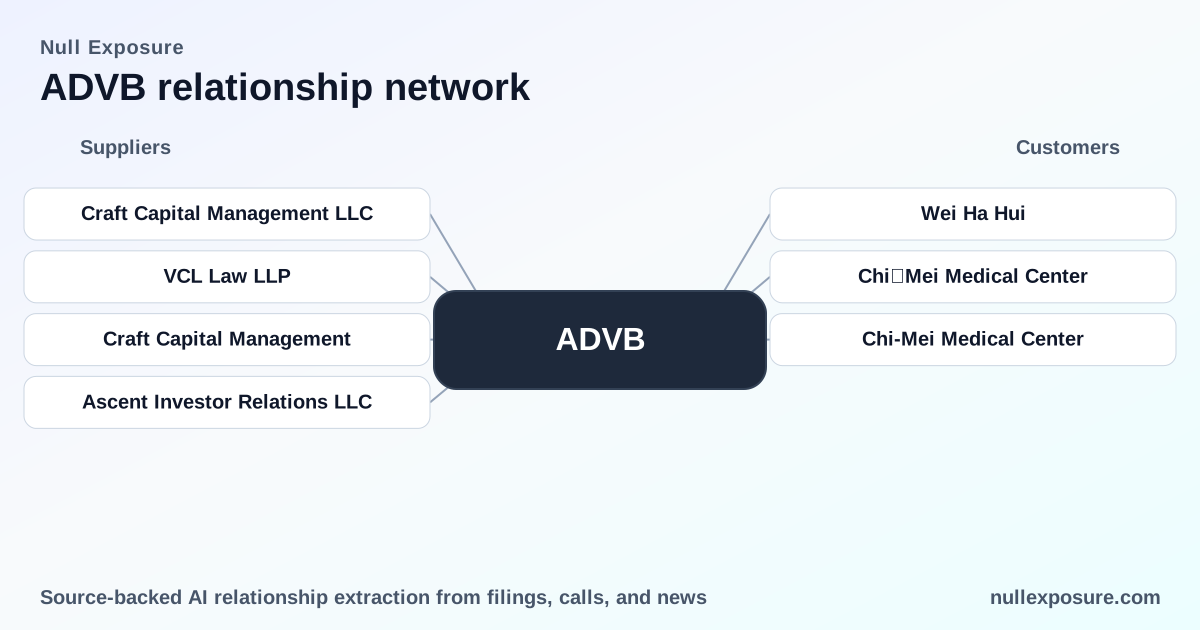
Advanced Biomed’s public filings and press releases reveal three relationship vectors that together explain the company’s immediate commercial trajectory: (1) disposal and amendment activity around its Hong Kong subsidiary and the buyer Wei Ha Hui, (2) an acknowledged intra-group receivable tied to Advanced Biomed (HK) Limited, and (3) an active clinical collaboration with Chi‑Mei Medical Center to validate the company’s A+PerfusC™ platform. These interactions signal a company shifting from R&D and holding-company complexity toward focused clinical validation and balance-sheet simplification.
Relationship-by-relationship: the facts investors need
-
Wei Ha Hui
Advanced Biomed sold 100% of Advanced Biomed (HK) Limited to Wei Ha Hui, with closing recorded on December 23, 2025; the published purchase price was US$23,000 based on a company-commissioned valuation. According to a GlobeNewswire disclosure dated December 30, 2025, the sale was to an unrelated third party, Wei Ha Hui. Additional reporting notes a supplemental agreement executed subsequently related to the spin-off transaction (TradingView, March 9, 2026; Investing.com May 2026). -
Advanced Biomed (HK) Limited
The supplemental agreement executed January 26, 2026, formally acknowledges that the Hong Kong subsidiary owed Advanced Biomed Inc. US$6,925,549; this indebtedness is central to the amended spin-off terms. Investing.com’s SEC-filing summary (May 2026) records the amended agreement and the debt acknowledgment, while the December 2025 GlobeNewswire release documents the original share disposal. -
Chi‑Mei Medical Center
Advanced Biomed entered a clinical research collaboration with Chi‑Mei Medical Center to run a 120‑case feasibility study validating the A+PerfusC™ perfusion-based 3D cell culture platform, with the arrangement described as non‑commercial clinical research that will inform subsequent commercial development. The company announced the study in a GlobeNewswire release on February 13, 2026, and earlier disclosures around the IPO timeframe referenced the same prospective collaboration (GlobeNewswire March 6, 2025; Sahm Capital and Futunn coverage, early 2026).
How these relationships shape the operating model
-
Contracting posture: short-term and flexible. Public filings show non-trade, unsecured, interest‑free receivables repayable on demand, a signal that Advanced Biomed’s contractual posture favors short-term, flexible arrangements over long-term, lock‑in commercial contracts. This reduces capital commitment but increases volatility in cash recoverability.
-
Counterparty mix leans toward individuals and institutions in early commercialization roles. The firm targets hospitals, physicians, patients and pharma as buyers for its diagnostic hardware and services; the constraints data flags individual counterparty types and unsecured loans, indicating a mix of institutional clinical partners and individual-level financial relationships.
-
Geographic focus is APAC with near-term NA and EMEA expansion plans. Management commentary and filings place initial market development in Taiwan and China, with regulatory and localization plans for Europe and North America in parallel—this positions the company’s customer development efforts across APAC initially, then NA/EMEA as regulatory clearance progresses.
-
Role orientation: both seller of hardware/services and buyer in corporate restructurings. Advanced Biomed acts as a seller to healthcare customers for diagnostic platforms and as a corporate seller in the Hong Kong subsidiary disposal; filings also document the company as a creditor in intra-group lending.
-
Relationship maturity: predominantly prospect-stage for commercial revenues. The firm has not yet reported product revenue and defines itself as early-stage commercializing; the Chi‑Mei feasibility study is a validation step that precedes revenue-generating contracts.
Investor implications: concentration, criticality, and timing
Advanced Biomed is highly concentrated and early-stage: insiders control 55% of the float, institutional ownership is minimal, and the company reports no revenue to date. Clinical validation with credible hospital partners such as Chi‑Mei is critically important—successful validation will unlock regulatory filings and commercialization pathways in APAC, then NA and EMEA. The sale of the Hong Kong subsidiary and the related receivable acknowledgement are material near-term balance sheet events that reduce operating complexity but require monitoring for cash recovery and legal execution.
Risk profile distilled for allocators
- Execution risk on commercialization: The company’s products require regulatory clearances before sales; the current relationship map centers on feasibility and validation rather than revenue contracts.
- Balance-sheet and counterparty risk: The Hong Kong subsidiary carried a substantial payable to the parent; the sale price set at US$23,000 contrasted with a nearly US$7.0 million intra‑group receivable introduces recoverability and governance questions. (See GlobeNewswire Dec 30, 2025; Investing.com May 2026.)
- Concentration and governance: Insider ownership above 50% elevates control risk and potentially limits minority-holder influence as the company executes disposals and strategic pivots.
- Geographic regulatory complexity: Simultaneous APAC commercialization and planned NA/EMEA registrations create regulatory sequencing risk and resource strain.
What to watch next
- Clinical readouts and operational milestones from the Chi‑Mei 120‑case study will determine commercial lift; expect regulatory filing timelines to follow validated results (GlobeNewswire Feb 13, 2026).
- Cash flow impact and legal closing mechanics of the Hong Kong subsidiary sale, together with any repayments tied to the US$6.9M intra‑group balance, will be central to near‑term solvency signals (GlobeNewswire Dec 30, 2025; Investing.com May 2026).
- Management commentary on North America and Europe site selection and registration pacing will reveal whether market expansion is adequately funded and resourced.
For a consolidated feed of ADVB relationship signals, governance items, and event-driven alerts, visit https://nullexposure.com/ and subscribe to company coverage.
Bottom line
Advanced Biomed is executing a two-track strategy: clinical validation to enable future device and testing revenues, and corporate disposals to simplify the balance sheet and focus resources. Investors should treat current customer relationships as validation-stage partnerships rather than revenue drivers, while monitoring the legal and cash implications of the Hong Kong disposal and the acknowledged intra‑group indebtedness.