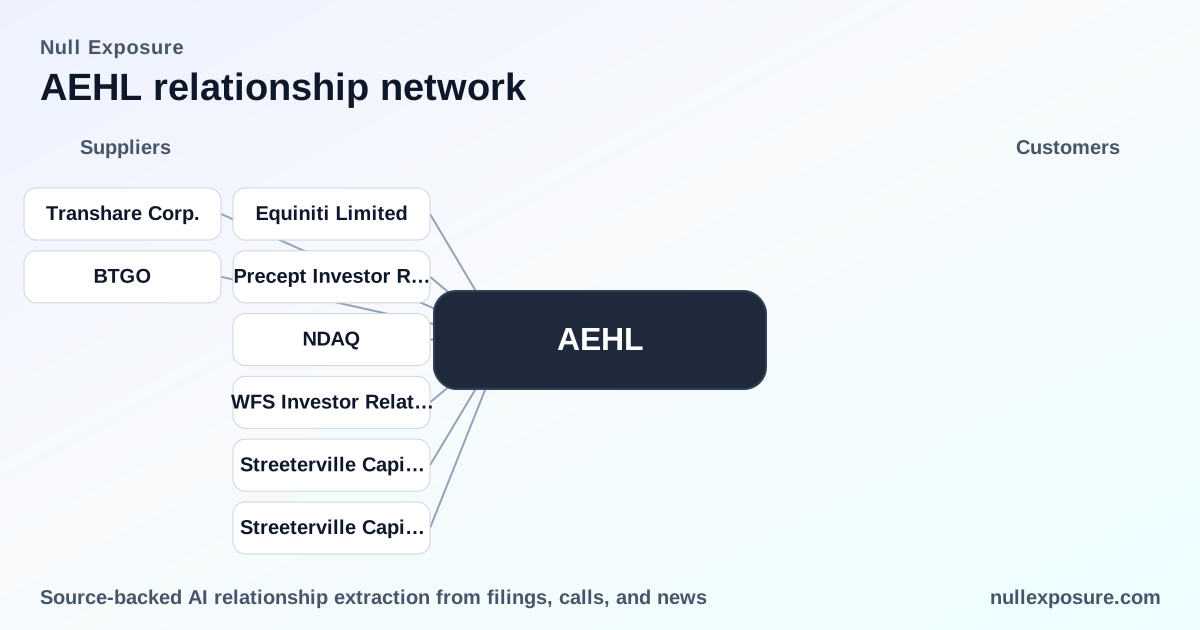
Antelope Enterprise Holdings (AEHL): Capital moves that change the credit and treasury profile
Antelope Enterprise Holdings (AEHL) manufactures and sells ceramic tiles for exterior cladding and interior flooring in China and monetizes through product sales to residential and commercial construction clients. Revenue comes from manufacturing and building-product distribution, while recent financing actions show the company is actively using capital markets and non‑traditional asset purchases to manage liquidity and balance‑sheet risk. Investors evaluating AEHL customer and counterparty relationships should treat the company as an industrial operator that is simultaneously executing aggressive financing and treasury strategies.
For a concise corporate snapshot and to review primary filings cited in this note, visit the company home page: https://nullexposure.com/
Business snapshot — what AEHL sells, and what the balance sheet now signals
AEHL is a Jinjiang, China‑headquartered manufacturer of ceramic tiles for interior and exterior applications and derives cash flow from product sales to construction and design projects. The company reported TTM revenue of $81.1 million with negative EBITDA of $14.4 million and diluted EPS of -167.87 through the latest reported quarter (2025-12-31), indicating operating stress despite continued sales. Market capitalization at the time of the latest public data is approximately $2.62 million, with modest institutional ownership and limited analyst coverage.
These numbers frame the strategic context for recent financing transactions: AEHL is not a cash‑rich industrial growth story but a turning company that is using capital markets to shore up liquidity and reposition its treasury. That posture influences counterparty dynamics, credit terms, and the nature of customer relationships going forward.
Material relationship disclosed: Streeterville Capital — what was announced
According to an amended F‑3 filing in FY2026, AEHL entered a securities purchase agreement with Streeterville Capital that allows Streeterville to provide up to $50 million over 24 months for AEHL to purchase Bitcoin, and AEHL agreed separately to sell 12,000,000 Class A shares at $0.207 per share subject to closing conditions. The disclosure was published to SEC‑related feeds and surfaced via a StockTitan posting in May 2026.
- In plain English: AEHL contracted with Streeterville Capital for a large, staged funding facility explicitly to acquire Bitcoin, while arranging a backstop or companion equity sale of 12 million shares at $0.207 each. This is both a funding and treasury‑management arrangement executed through securities agreements disclosed in FY2026. (Source: amended F‑3 filing reported on StockTitan, May 2026.)
Why a tile manufacturer is executing a crypto purchase and equity sale
This is a structural shift in AEHL’s operating posture: rather than relying solely on operational cash flows or traditional bank debt, management is using equity issuance and third‑party capital to accumulate a volatile financial asset—Bitcoin. The move accomplishes several objectives for AEHL:
- Immediate liquidity and capital runway: The staged $50 million facility provides capital on demand over two years.
- Alternative asset allocation: Purchasing Bitcoin transforms parts of the balance sheet from operating assets (inventory, receivables) to financial assets, changing volatility and collateral composition.
- Dilutive financing: The concurrent share sale is a classic dilution mechanism to satisfy capital providers and align immediate funding with a fixed per‑share price.
These actions are material to customers and suppliers because treasury behavior affects vendor payment terms, contract performance risk, and counterparty confidence.
Operating model signals and company‑level constraints
AEHL’s public financials and the nature of the Streeterville transaction produce several company‑level signals about contracting posture, concentration, criticality, and maturity:
- Contracting posture: Proactive and capital‑seeking. AEHL is willing to engage in securities deals and equity issuances rather than only bank borrowing, signaling a tolerance for unconventional financing to secure liquidity.
- Concentration: Funding concentrated in a single structured relationship. The Streeterville facility potentially concentrates financing risk on one counterparty over a two‑year window.
- Criticality: High for near‑term operations. When operating cash flow is negative and EBITDA is depressed, outside funding becomes critical to meet supplier and payroll obligations.
- Maturity: Early stage for non‑core asset accumulation. The Bitcoin purchases represent a new, immature line of treasury activity that alters asset mix and increases balance‑sheet volatility versus years of manufacturing operations.
These are company‑level characteristics and should be factored into customer and supplier evaluations even if individual contracts for tiles remain operationally unchanged.
Risk profile for investors and counterparties
The Streeterville transaction changes AEHL’s risk profile in specific ways that matter for investors and commercial partners:
- Balance‑sheet volatility: Converting capital to Bitcoin increases mark‑to‑market swings and can impair AEHL’s ability to meet short‑term operating obligations in adverse markets.
- Dilution and equity economics: The proposed sale of 12 million Class A shares at $0.207 each dilutes existing shareholders and signals willingness to use equity to fund treasury strategies.
- Counterparty concentration risk: Reliance on a single named capital provider for a large funding envelope concentrates execution risk and negotiation leverage in one third party.
- Governance and strategic focus: Management’s allocation of management time and corporate capital to crypto accumulation raises questions about focus on core manufacturing operations and customer service.
Investors should reprice AEHL accordingly: discount multiples for operational risk, and apply a higher liquidity premium given funding reliance. Suppliers and customers should reassess payment and delivery terms given the elevated importance of outside financing for operational continuity.
Tactical takeaways and what to watch next
- Watch quarterly filings for actual draws against the $50 million facility and for the closing status of the 12 million share sale; those events will materially change AEHL’s cash position and EPS dilution.
- Monitor Bitcoin holdings and disclosure frequency. If AEHL recognizes large unrealized gains or losses, volatility will flow into quarterly results and potentially into covenant triggers with other lenders.
- Revisit credit terms if you are a counterparty: payment windows, advance rates, and performance guarantees are now more relevant given the company’s external funding dependence.
For a direct line to the company’s public filings and to track subsequent amendments, visit AEHL’s information hub: https://nullexposure.com/
Bottom line
AEHL remains a ceramic tile manufacturer in China, but its pivot to structured securities financing and Bitcoin purchases with Streeterville Capital is a decisive shift from pure industrial operations to aggressive treasury management. That shift increases short‑term liquidity flexibility but raises balance‑sheet volatility, dilution risk, and counterparty concentration. Investors and commercial partners should treat AEHL as an operating company whose liquidity trajectory will be shaped as much by these financing arrangements as by sales of building products.