American Eagle Outfitters (AEO): Customer Relationships and Operational Implications
American Eagle Outfitters runs a classic specialty-retailer monetization engine: it sells apparel and related merchandise directly to consumers through owned stores, licensed international locations, and digital channels, and recognizes the vast majority of its revenue at the point of sale. The company also operates a fulfillment and logistics footprint that has been positioned to support AEO brands and select third-party merchants, creating a hybrid merchant-plus-services posture that affects sourcing, cash flow timing, and counterparty exposure. For deeper coverage of corporate relationship mapping and downstream risk, visit https://nullexposure.com/.
Investment thesis — how AEO makes money and why relationships matter
AEO’s economic model is concentrated, predictable retailing. Merchandise sales represent roughly 96% of revenue, supported by nearly 1,500 stores across North America and a global direct-to-consumer e‑commerce footprint shipping to about 90 countries. That concentration in product sales gives AEO clear topline leverage to consumer demand and execution in sourcing and logistics; conversely, its logistics relationships and any changes to them are operationally consequential because they affect fulfillment speed and inventory turns, which feed margins and working capital.
How the customer and logistics model shapes risk and opportunity
AEO’s relationship signals translate directly into operating constraints and strategic priorities:
- Contracting posture — spot revenue recognition: AEO records store revenue at the time of purchase and e‑commerce revenue upon estimated customer receipt, indicating a largely transactional (spot) revenue model rather than long-term, subscription-style contracts. This improves cash conversion on sales but increases sensitivity to traffic and fulfillment disruptions.
- Counterparty concentration — individual consumers: The company sells primarily to individual consumers via owned channels and concession shops; this implies low customer concentration but high exposure to consumer trends and seasonal demand shifts.
- Geographic footprint — North America core with global reach: The U.S. is the revenue backbone, but AEO operates internationally and ships to ~90 countries, so cross-border logistics and currency dynamics are secondary levers.
- Materiality — merchandise is the business: Merchandise sales are the dominant cash generator, making supply chain and inventory policies strategically critical.
- Relationship role and maturity — seller with service-provider elements: AEO is primarily a merchant/seller, while its logistics arm (historically Quiet Platforms) has been run to serve AEO first and select third parties second; that creates both vertical control and the operational complexity of running fulfillment for outside clients.
- Operational stage — active and incumbent: Store expansion and continued digital operations reflect a mature, actively managed retail platform rather than an early-stage venture.
These constraints make the company operationally sensitive to fulfillment capacity, the economics of third‑party logistics, and consumer demand—not to mention the cyclical retail environment.
Relationship roster — the counterparties that matter now
Below I cover every named relationship surfaced in the public record and what each connection implies for AEO’s operating model.
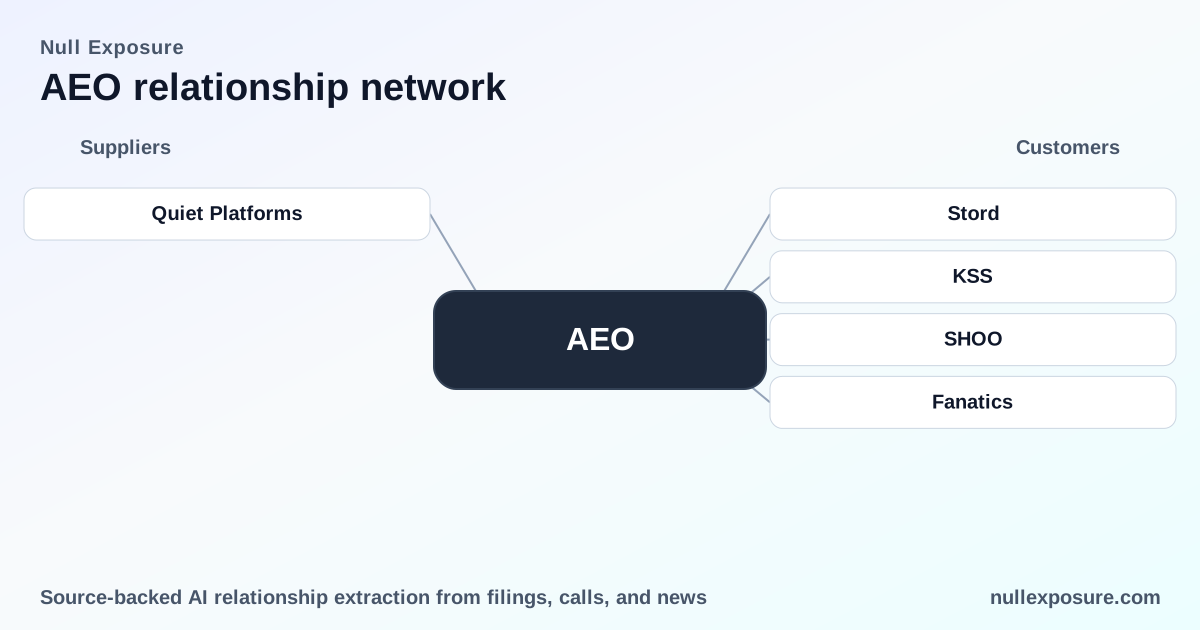
Stord — a buyer for former Quiet warehouse real estate
AEO sold a former Quiet logistics warehouse to e‑commerce fulfillment operator Stord in early February 2026, transferring real estate and potentially related capacity to a third‑party logistics specialist. This transaction signals a reallocation of fixed logistics assets away from AEO’s in‑house fulfillment footprint and into outsourced capacity, which could change cost structure and service control. (Sourcing Journal, March 9, 2026: https://sourcingjournal.com/topics/logistics/aeo-american-eagle-211-layoffs-quiet-logistics-winddown-massachusetts-california-warehouses-stord-fulfillment-center-1234815336/)
Kohl’s (KSS) — intended third‑party merchant for Quiet’s platform
When AEO moved to integrate more of its supply chain, the Quiet acquisition was framed to power same‑ and next‑day delivery for AEO brands and third‑party merchants such as Kohl’s, indicating an ambition to monetize excess fulfillment capacity by servicing other retailers. That positioning increases potential non‑retail revenue but also introduces multi‑tenant operational complexity into a business that is principally merchandise‑driven. (Sourcing Journal, March 9, 2026: https://sourcingjournal.com/topics/logistics/american-eagle-outfitters-quiet-logistics-shutters-abandons-360-million-3pl-fulfillment-centers-acquisition-1234807467/)
Steve Madden (SHOO) — named third‑party fulfillment client
Steve Madden was listed among third‑party merchants intended to use Quiet’s fulfillment network alongside AEO’s own brands, showing that AEO had planned to leverage logistics assets to generate service revenue from fashion peers. That dynamic underscores a deliberate trade between control over core fulfillment for owned brands and the incremental margin opportunity from offering logistics services externally. (Sourcing Journal, March 9, 2026: https://sourcingjournal.com/topics/logistics/american-eagle-outfitters-quiet-logistics-shutters-abandons-360-million-3pl-fulfillment-centers-acquisition-1234807467/)
Fanatics — potential third‑party merchant exposure
Fanatics was also cited as a target third‑party customer for the Quiet fulfillment network, reinforcing the point that the logistics strategy was designed to accommodate merchants beyond AEO’s own portfolios and to capture broader e‑commerce fulfillment demand. That customer mix would have diversified utilization but raised operational dependency on external contracts for margin recovery. (Sourcing Journal, March 9, 2026: https://sourcingjournal.com/topics/logistics/american-eagle-outfitters-quiet-logistics-shutters-abandons-360-million-3pl-fulfillment-centers-acquisition-1234807467/)
MAC — retail footprint expansion cited on an earnings call
In MAC’s Q3 2025 earnings call commentary, American Eagle was cited for expanding stores and opening new locations for brand extensions such as Aerie and OFFLINE, indicating that store growth and brand-extension rollouts remain active levers for foot‑traffic and sales growth. Physical expansion programs are consistent with the company’s merchant-first cash generation model and influence inventory planning and local fulfillment needs. (MAC Q3 2025 earnings call, cited March 8, 2026.)
What these relationships mean for investors
- Control versus flexibility trade-off: AEO historically leaned toward owning fulfillment capability to secure speed and customer experience; selling assets to Stord and the intended third‑party strategy indicates a pivot toward mixed-use logistics that trades some control for capital efficiency and third‑party revenue potential.
- Revenue concentration remains high: With ~96% of revenue from merchandise, third‑party service income is supplemental; logistics commercial deals are important to margins but cannot substitute for the core retail engine.
- Operational criticality: Fulfillment partners and the ability to scale same‑ and next‑day delivery are operationally critical—disruptions or misexecution would quickly affect inventory turns and customer satisfaction.
- Geographic footprint hedging: North America remains the revenue core, but global digital channels provide diversification that cushions domestic cycles.
Bottom line: operational leverage, not a structural pivot
American Eagle’s relationships reflect a mature retailer executing both core merchandising and selective logistics commercialization. The company’s strength remains direct‑to‑consumer sales and brand execution; logistics partnerships and asset dispositions are being used to optimize capital and potentially monetize spare capacity, but they do not change the fundamental merchant cash engine. For analysts and operators, the priority is monitoring how logistics realignment affects fulfillment lead times, cost per order, and inventory turnover.
If you want a structured relationship map and signal tracking tailored to investment diligence, explore the full product suite at https://nullexposure.com/ — it provides the connective context and primary‑source links that investors need.