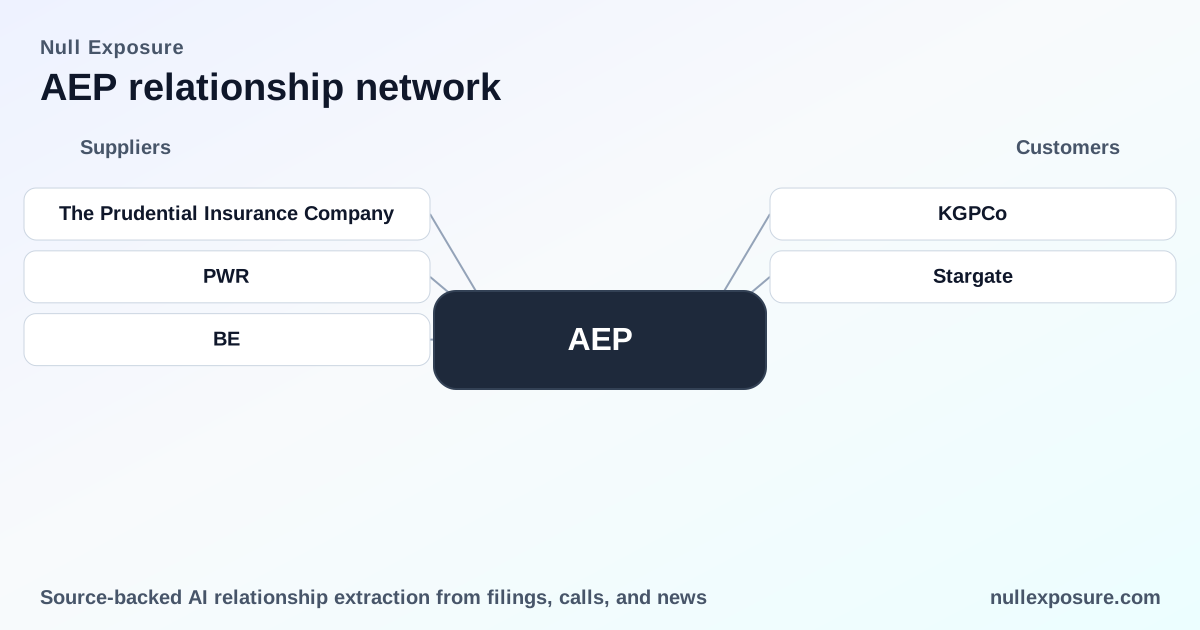
AEP’s customer footprint: how electric utility contracts and bespoke large‑load deals shape revenue
American Electric Power (AEP) monetizes through integrated utility services—generation, transmission and distribution—selling regulated retail and wholesale electricity while layering bespoke commercial solutions for data centers and large industrial loads. Revenue comes from long‑dated regulated rates and offtakes plus targeted commercial agreements that accelerate infrastructure investment and create concentrated load commitments. For a quick look at how we source this analysis, visit https://nullexposure.com/.
The business model in one line: regulated backbone, commercial overlay
AEP’s core economics are grounded in regulated utility returns across 11 states, which provide stable cash flow and predictable rate base recovery. On top of that foundation, AEP negotiates large enterprise and hyperscaler agreements and short‑term capacity arrangements that accelerate capital deployment and create episodic margin volatility. This hybrid model produces steady regulated metrics (EBITDA, ROE) while exposing the company to project‑specific execution and regulatory timing risk when serving very large customers.
Customer relationships that matter (what we found)
Below are the customer relationships identified in filings and public reports. Each entry includes a concise plain‑English description and a source reference.
KGPCo — a wholesale PPA counterparty
AEP’s filing shows that APCo (an AEP subsidiary) has a contractual performance obligation to supply wholesale electricity to KGPCo under a power purchase agreement. This is a classic long‑term wholesale offtake that feeds AEP’s generation revenue stream. According to AEP’s 2025 Form 10‑K, APCo supplies KGPCo through a PPA (FY2025 filing).
AEPPZ / Bloom Energy — fuel cell procurement tied to data‑center demand
AEP has an agreement to buy up to 1 GW of Bloom Energy fuel cells to support data center development, which AEP views as a way to deliver reliable, localized power to large customers while grid upgrades proceed. This deal represents AEP’s strategy of using behind‑the‑meter or near‑site generation to capture hyperscaler demand without waiting for long transmission builds. Utility Dive reported this arrangement and cited AEP leadership comments in May 2026.
PWR — equipment collaboration for custom transformers
Powering large loads requires custom equipment; PWR described a collaboration with AEP to build transformers to AEP’s specifications, reflecting how AEP sources critical grid hardware from industry suppliers for bespoke projects. This indicates AEP’s procurement posture — specifying custom equipment to meet unique load or reliability requirements for major customers. The detail comes from PWR’s Q4 2025 earnings call where the company referenced the collaboration.
Stargate (Abilene) — hyperscaler letters of agreement in Texas
AEP Texas holds letters of agreement that cover gigawatts of potential demand from hyperscalers and mega‑data‑center developers, including Stargate in Abilene; AEP reports that each gigawatt carries a signed customer agreement in the 56 GW pipeline. This signals concentrated pipeline exposure to a handful of very large customers whose final take‑rates and interconnection timing determine near‑term capital allocation. Coverage of these Texas arrangements appeared in a March 2026 investment blog summarizing AEP Texas’s letters of agreement.
What the relationship mix tells investors about operating constraints
AEP’s customer evidence shows several company‑level operating characteristics that drive both opportunity and risk:
- Contracting posture: a mix of long‑term offtakes and short‑term capacity sales. The 2025 filings describe 20‑year offtake agreements with investment‑grade customers for full output in some cases, alongside short‑dated capacity arrangements that expire within a few years. That split means base revenue stability but episodic churn where short contracts roll off and long contracts carry capital intensity.
- Counterparty diversity: government, retail individuals, large enterprises and wholesale cooperatives. AEP serves municipalities, cooperatives and retail customers through regulated tariffs, and offers bespoke solutions to large enterprises and hyperscalers. This diversified counterparty base reduces single‑source risk at the system level but concentrates risk at project level when a few hyperscalers represent GW‑scale demand.
- Geography and regulatory complexity: broad North American footprint with state‑level regulation. AEP operates across 11 U.S. states and participates in multiple markets (ERCOT, MISO, PJM, SPP), which creates regulatory arbitrage but requires navigating multiple commission approvals and tariff constructs.
- Role and revenue mix: primarily a seller of electricity with select service‑provider functions. Filings emphasize generation, transmission and distribution as core activities; the company also provides specialized services (e.g., barging, transloading, transmission services to affiliates) and custom solutions for data centers.
- Relationship stage: largely active, with some ramping of new offtakes. Most customer contracts are active revenue drivers, while certain offtake arrangements are conditional and scheduled to satisfy milestones in subsequent quarters.
These constraints are drawn from AEP’s FY2025 filings and related public statements and should be read as company‑level signals rather than claims about any one counterparty.
Investment implications: why these relationships matter to value
- Stability vs. concentration: Regulated retail and wholesale contracts underpin valuation multiples via predictable rate base returns, while hyperscaler agreements create optionality and concentrated upside — or downside if take‑rates disappoint or interconnection timelines slip. AEP’s multiple reflects both regulated stability (low beta) and project‑specific optionality.
- Execution and regulatory timing are the key risks: Building transmission and custom equipment on schedule determines when large commercial load becomes revenue. Collaboration with vendors like PWR and procurement of fuel cells from Bloom Energy illustrate the execution pathways AEP uses to accelerate customer hookups.
- Capital intensity and recovery mechanics: Long‑term offtakes justify capital spend when the regulatory framework assures cost recovery; short‑term sales and letters of agreement increase uncertainty around recovery and returns. Investors should watch regulatory filings and state commission outcomes for signal changes to allowed returns or cost recovery timing.
Practical due‑diligence checklist for operators and researchers
- Review AEP’s 2025 Form 10‑K and rate case filings in Texas and other high‑growth jurisdictions to confirm recovery mechanics and milestones for large‑load projects.
- Track vendor disclosures (e.g., PWR earnings calls) and public reporting (Utility Dive coverage on Bloom Energy purchases) for execution signals on equipment supply and commissioning.
- Monitor the status of letters of agreement versus executed customer agreements in AEP Texas, since pipeline conversion will materially affect capital expenditure timing.
For further, structured customer‑level discovery and to cross‑reference filings and media coverage used here, visit https://nullexposure.com/ — the gateway we used to collate filings, earnings calls and targeted news sources.
Bottom line
AEP’s revenue model remains anchored in regulated utilities while increasingly relying on large bespoke commercial agreements to capture hyperscaler and data‑center demand. That combination produces low volatility core cash flows with episodic upside and execution risk tied to customer onboarding, procurement and regulatory approvals. Investors should value AEP as a regulated utility with embedded project optionality — and prioritize monitoring contract execution, state regulatory outcomes and large‑customer conversion rates when updating forecasts.