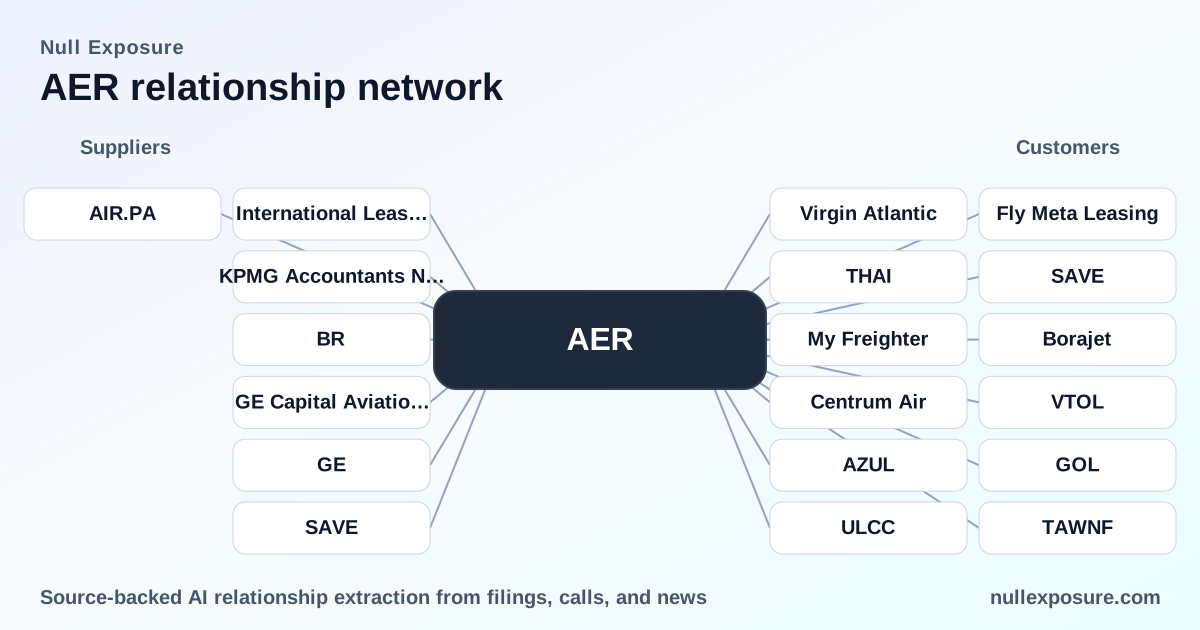
AerCap’s Customer Footprint: Where the Lessors’ Cash Flows Come From
AerCap operates as the world’s largest commercial aircraft lessor, monetizing a global portfolio of owned and managed aircraft and engines through long-term operating leases, sale‑leasebacks and targeted freighter conversions. Revenue is driven by lease rents and sale-leaseback financings with established carriers, supplemented by ancillary sales and a growing cargo-conversion pipeline. For a concise map of AerCap’s recent customer activity and what it implies for credit and earnings durability, visit https://nullexposure.com/.
Why customer relationships define AerCap’s balance sheet
AerCap’s business model is contract‑driven: cashflow depends on multi‑year leases, staggered delivery schedules and the residual value of aircraft. That contracting posture produces predictable rent streams but concentrates risk in airline credit cycles, aircraft type demand and timing of repossessions or early lease terminations. The recent deal flow highlights three operating characteristics: broad customer diversification across geographies and segments, increasing exposure to cargo conversions (higher-capex, longer payback), and active use of sale‑leasebacks to convert airline orderbooks into lessor assets and cash.
What to watch in AerCap’s customer roster
Below I catalogue every customer relationship surfaced in the source set and translate each into investor‑relevant takeaways. Each entry is a 1–2 sentence plain‑English summary with its source.
Virgin Atlantic
AerCap signed purchase-and-leaseback agreements for six new Airbus A330-900 (A330neo) aircraft, with deliveries scheduled between Q2 2026 and Q4 2027, reflecting a capital-light way for Virgin to monetize its orderbook while AerCap secures mid‑life widebodies. Source: AerCap press release via PR Newswire and Q4 2025 earnings commentary (Jan–Mar 2026).
My Freighter / Centrum Air
AerCap agreed leases for two new Airbus A321neo aircraft with My Freighter (operating passenger services as Centrum Air), marking AerCap’s first customer placement in Uzbekistan and a strategic expansion into niche regional markets. Source: CAAS International and media coverage summarizing AerCap announcements (FY2025 reporting).
Thai Airways (THAI / Thai Airways International)
AerCap delivered the first of ten Airbus A321neo aircraft to Thai Airways as part of a fleet renewal program, underlining AerCap’s role in regional fleet modernization and steady, contracted deliveries through 2028. Source: TravelAndTourWorld and AerCap press summaries (FY2025–FY2026).
Ethiopian Airlines
AerCap signed lease agreements for two Boeing 777-300ERSF converted freighters to Ethiopian Airlines, introducing that freighter type into Africa and expanding AerCap’s freighter footprint in emerging cargo markets. Source: AirCargoWeek, CAAS International and Airways Magazine (reported May 2026).
Frontier Group / Frontier Airlines (ULCC)
AerCap and Frontier agreed a fleet optimization arrangement that includes a non‑binding pact for early return/termination of 24 A320neo leases and broader aircraft reallocations, signaling active portfolio management in response to ULCC fleet strategy changes. Source: Frontier filings and multiple press reports summarizing the Feb 11, 2026 transaction (FY2026 coverage).
Spirit Airlines (SAVE)
AerCap reported downtime and repossession activity tied to aircraft taken back from Spirit Airlines, with some assets expected out of service into 2027, illustrating the earnings hit and redeployment lag that follows airline restructurings and repossessions. Source: Q4 2025 earnings commentary and transcript coverage (Mar 2026).
Azul (AZUL)
Azul’s restructuring listed AerCap as its largest lessor and a key financial stakeholder, indicating AerCap’s significant secured position in the company’s lease liabilities and influence in workout outcomes. Source: restructuring coverage aggregated by Intellectia and related FY2026 reporting.
Fly Meta Leasing
AerCap delivered the first Boeing 777-300ERSF freighter to Fly Meta Leasing as part of its cargo push and announced a parallel $1 billion share buyback authorization, underlining management’s dual focus on capital returns and cargo growth. Source: SimplyWall.St and SahmCapital summaries (FY2025–FY2026).
Borajet
AerCap placed five Embraer E-Jets E2 with Borajet, expanding regional jet placements and broadening its exposure to smaller narrowbody operators. Source: AeroMorning summary of AerCap’s FY2025 placements.
Bristow Group / VTOL
AerCap signed lease agreements for five Airbus H160 helicopters with Bristow Group, part of a broader 71‑agreement run with 23 helicopter customers, highlighting AerCap’s diversification into rotorcraft leasing and specialty aviation segments. Source: AerCap earnings call transcript and related FY2025 reporting (Mar 2026).
GOL Airlines (GOL)
AerCap supported GOL during a period of distress by providing engines and taking over parts of its orderbook, demonstrating AerCap’s role as a stabilizing counterparty for carriers through asset provision and orderbook flexibility. Source: Q4 2025 earnings commentary and transcript coverage (Mar 2026).
Interpreting the dealbook: portfolio and risk signals
-
Contracting posture: long‑duration, asset-backed — The mix of operating leases, purchase‑and‑leasebacks and freighter conversions confirms AerCap’s preference for contracts that produce steady rent with collateralized downside. That structure supports EBITDA visibility but exposes AerCap to timing risk on repossessions and redelivery downtime (Spirit example).
-
Concentration vs. diversification: diversified but with large creditor footprints — AerCap’s customer list spans full‑service carriers, ULCCs, regional operators and cargo lessees. Diversification reduces single‑customer revenue concentration, yet AerCap also holds concentrated creditor positions in restructurings (Azul) that increase counterparty exposure.
-
Criticality: essential asset supplier — Airlines depend on AerCap both for incremental capacity (sale‑leasebacks) and turnaround solutions (engines, orderbook takeovers). This gives AerCap negotiating leverage on lease terms and remarketing pathways.
-
Maturity and growth: established market leader expanding into cargo and helicopter sectors — AerCap’s push into freighter conversions and rotorcraft reflects strategic product diversification aimed at capturing higher‑margin niches while recycling older passenger jets into cargo assets.
Bottom line for investors
AerCap’s commercial relationships are the core revenue engine and the primary source of operational risk. Recent buybacks and steady EBITDA suggest management confidence, but lease concentration in restructurings (Azul) and repossession-related downtime (Spirit) are active variables for cash generation and asset redeployment. Monitor: delivery schedules for sale‑leasebacks (Virgin Atlantic), freighter conversion rollouts (Ethiopian, Fly Meta), and any material workout announcements tied to large lessor exposures.
For a deeper dive into AerCap’s customer links and how they affect credit and valuation, see the full coverage at https://nullexposure.com/.