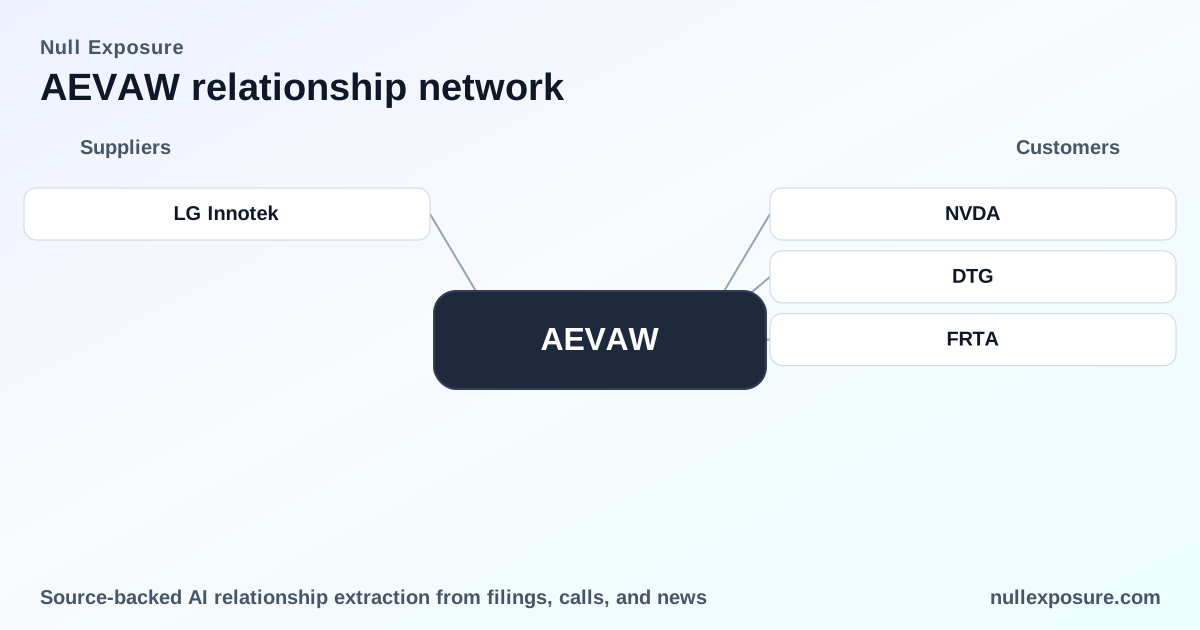
AevaW Customer Map: NVIDIA, Daimler Truck, Forterra — What Investors Should Know
Aeva builds and sells 4D LiDAR sensing systems, accompanying perception software, and non‑recurring engineering (NRE) services, monetizing through a mix of prototype and engineering contract revenue today and per‑unit production contracts as customers design the sensors into final vehicle programs. The company’s economics hinge on converting NRE‑led pilots into long‑term, per‑unit design‑in agreements with OEMs and defense contractors while managing high customer concentration in North America. For an at‑a‑glance counterparty view, see NullExposure for related relationship intelligence: https://nullexposure.com/.
How Aeva sells and how that shapes risk and upside
Aeva’s commercial model combines two distinct revenue streams that drive investor outcomes:
- Short‑term NRE and prototype sales are the primary historical source of revenue and fund product development and validation.
- Long‑term, per‑unit production contracts emerge once a customer selects Aeva as the designed‑in reference sensor for a vehicle program, locking in unit pricing for the lifetime of that program.
These dual modes create a predictable pattern: near‑term revenue volatility while the firm demonstrates product performance, followed by potential multi‑year recurring revenue once a production design‑win is secured. Company disclosures indicate that customers are predominantly large multinational enterprises with substantial negotiating leverage, which creates margin pressure on contract terms. Geographically, North America accounts for the overwhelming share of revenue (about 86% in the most recent period), with Europe and Asia modest contributors.
Customer relationships disclosed in the 2025 Q4 earnings call
NVIDIA (NVDA)
NVIDIA selected Aeva as the reference LiDAR sensor for its DRIVE Hyperion development platform, a platform that is being adopted by an expanding set of major OEMs pursuing Level 3+ automation — a textbook path to broad OEM exposure if Hyperion adoption translates into production specs. This detail was disclosed in Aeva’s 2025 Q4 earnings call (first reported March 7, 2026).
Daimler Truck (DTG)
Aeva reported that it is delivering on milestones for existing production customers such as Daimler Truck, signalling at least one named OEM engagement that has moved beyond pure prototyping toward production milestones. This update was made in the 2025 Q4 earnings call (March 2026).
Forterra (FRTA)
Aeva announced its first defense win with Forterra, indicating diversification into defense programs where procurement cadence and contracting can differ materially from automotive channels. This was disclosed in the company’s 2025 Q4 earnings call (March 2026).
(Note: the 2025 Q4 earnings call contains multiple mentions of the same relationships; the repeated entries reflect emphasis and distinct excerpt captures in the source documentation.)
Constraints and what they signal about operating posture
Aeva’s public disclosures present several company‑level signals that shape how investors should underwrite revenue:
- Contracting posture is mixed: the company explicitly reports widespread use of prototype and NRE agreements for R&D and testing, while also describing scenarios where solutions are designed into final product models and sold at agreed per‑unit rates for the lifetime of customer programs. This creates a two‑stage revenue model — pilot → production — and requires monitoring conversion rates.
- Customer sophistication and bargaining power: many counterparties are large enterprises with internal resources and substantial negotiating leverage relative to Aeva, which constrains pricing and contract terms.
- Geographic concentration: North America dominates revenue (c.86% reported), with Europe and Asia each representing single‑digit percentages in recent years; global revenue outside the U.S. has been between the mid‑teens and mid‑thirties percent historically. This concentration raises exposure to North American OEM production cycles and policy/regulatory shifts.
- Relationship maturity: historically, nearly all revenue derived from prototypes/NRE, though the company confirms a move toward production customers; the reported relationship stages include a mixture of pilot engagements and prospects, with a growing set of production milestones.
- Product mix: Aeva operates across hardware (Aeries II LiDAR), related perception software, and NRE services, so margin dynamics depend on hardware scale and software/service attach rates.
Investment implications: runway, concentration, and leverage
The path from engineering engagements to multi‑year production revenue is the primary value driver. Design wins such as NVIDIA’s reference designation and a named production customer like Daimler Truck materially de‑risk the commercial roadmap if they convert to volume programs. Simultaneously, investor returns will be constrained unless Aeva expands beyond North America and secures favorable unit economics against large OEM bargaining power.
Key strategic tradeoffs for investors:
- Securing hyper‑scale OEM programs yields recurring, high‑visibility revenue and more predictable margins.
- Reliance on NRE and prototype revenue keeps the top line variable; failure to convert pilots reduces long‑term revenue visibility.
- Entry into defense work (Forterra) provides program diversification and different contracting dynamics that can stabilize revenue cadence.
What to watch next (catalysts and red flags)
- Production ramp with Daimler Truck: monitor milestone deliveries, timing of volume shipments, and per‑unit pricing disclosures.
- NVIDIA/Hyperion adoption: track announcements from OEMs adopting DRIVE Hyperion and whether Aeva remains the specified production sensor.
- New defense contract awards or scaling of Forterra program: defense contracts can provide long‑duration revenue if awarded at scale.
- Geographic revenue mix shifts: any material growth outside North America will reduce concentration risk.
- Conversion metrics: management disclosures on the percentage of pilots converting to production and expected revenue per designed‑in vehicle program.
For ongoing monitoring and a consolidated view of counterparty disclosures, visit NullExposure: https://nullexposure.com/.
Bottom line for investors
Aeva operates a two‑tier monetization engine: near‑term NRE/prototype revenue and longer‑term per‑unit production contracts. Recent public disclosures position the company at a pivotal commercialization inflection: an NVIDIA reference designation and named production customer milestones are material de‑risking events, while the Forterra defense win signals diversification. The core investment thesis hinges on pilot‑to‑production conversion and the company’s ability to negotiate sustainable unit economics with large OEM and defense customers, all while addressing North America revenue concentration.