AudioEye’s customer footprint: what investors need to know
AudioEye sells digital accessibility as a subscription software-and-services bundle. The company monetizes primarily through recurring SaaS subscriptions for its accessibility platform, supplemented by human audits, custom fixes and legal support services; AudioEye reported approximately 127,000 customers and $40.3M in trailing revenue, while one large customer represented roughly 15–17% of revenue in recent years. For investors, the investment case is straightforward: highly recurring revenue pervasively distributed across a very large customer base, but with concentration and unit-economics pressure reflected in negative EPS and modest operating margins. Visit https://nullexposure.com/ for deeper relationship analytics.
How AudioEye sells and why it matters to revenue durability
AudioEye’s operating model is subscription-first. Public filings and company disclosures state that solutions are sold on a month-to-month subscription basis or via one- to multi-year contracts, and that the company derives revenue predominantly from subscription sales of its accessibility platform. That structure produces predictable recurring receipts, but the company also sells professional services—audits, custom remediation and legal support—that add one-time and higher-margin revenue when customers require remediation work.
- Contracting posture: a mix of short-term (month-to-month) and longer-term multi-year subscriptions gives go-to-market flexibility but increases churn sensitivity when short-term contracts dominate.
- Counterparty breadth: AudioEye serves government agencies, small- and mid-sized businesses, large enterprises and non-profits, which spreads demand drivers across regulated public sector and private compliance buyers.
- Product mix: core software subscription plus professional services implies a blended margin profile—software drives scale; services create upsell but require labor.
- Concentration and criticality: the company discloses one major customer that accounted for ~15–17% of revenue in 2023–24, so customer concentration is meaningful even with a large installed base.
- Maturity signal: the business reports material scale in customer count (127k) but still operates at negative EPS and negative operating margin, indicating the company is in a scaling phase rather than a steady cash-generative stage.
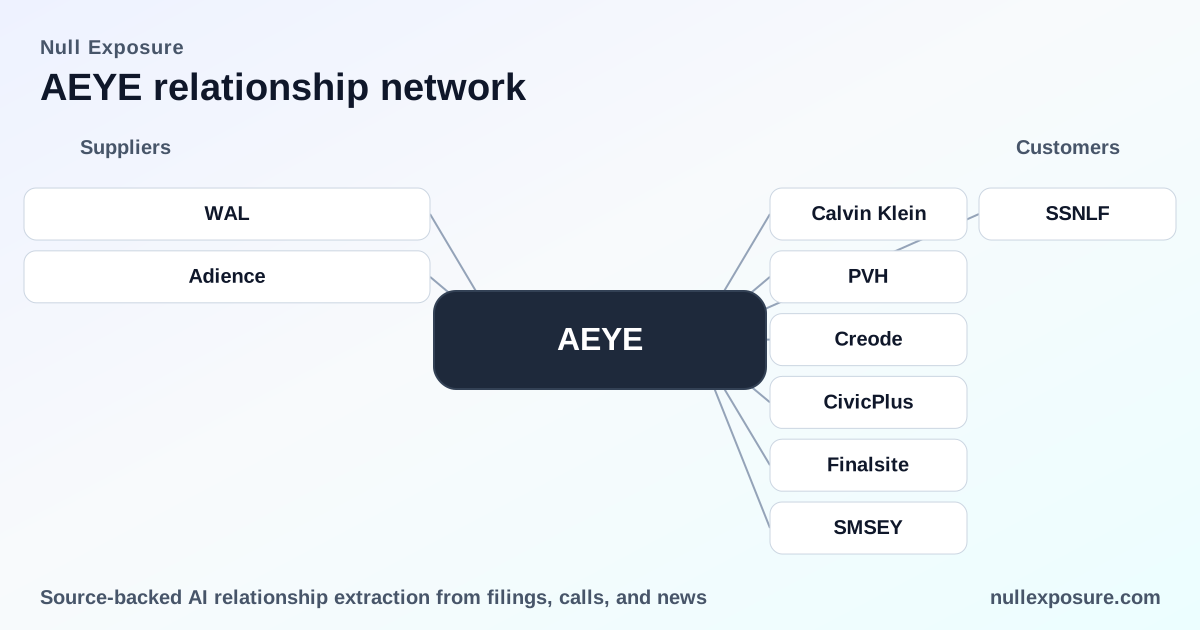
Client roster that shows market reach (each relationship found in public reporting)
Below are each of the relationship entries surfaced in public releases and media coverage. Each short item cites the original reporting.
Calvin Klein
AudioEye’s public releases list Calvin Klein among the company’s high-profile customers, cited repeatedly as part of a >120,000–131,000 customer base in PR Newswire and related press in 2026. (Source: PR Newswire / AudioEye press releases, March–May 2026.)
Samsung
Multiple company statements and press placements name Samsung as a customer in AudioEye’s >127,000–131,000 client base, used by the company to illustrate enterprise adoption and product robustness. (Source: Finance Yahoo and PR Newswire coverage of AudioEye’s 2026 reports, May 2026.)
Samsonite
AudioEye identifies Samsonite repeatedly in 2025–2026 press materials as a named enterprise customer within its six-figure customer roster, showcasing retail and global-brand penetration. (Source: PR Newswire / company press releases, 2025–2026.)
Creode
Creode is described as a partner that will integrate AudioEye’s accessibility platform into its digital services in Europe, effectively functioning as a channel partner and reseller for AudioEye products. (Source: PR Newswire announcement of a Creode partnership, March 2026.)
Lands’ End
Lands’ End appears in third-party coverage listing AudioEye’s notable commercial clients; references are used to emphasize cross-industry uptake among retail brands. (Source: Intellectia.ai coverage citing AudioEye’s 2026 product recognition, May 2026.)
Finalsite
Management commentary during earnings referenced Finalsite as a partner with momentum, and characterized the relationship as an addressable channel opportunity where AudioEye can penetrate partner customer bases. (Source: Q4 2025 earnings call transcript coverage, InsiderMonkey reporting, March 2026.)
CivicPlus
CivicPlus is named alongside Finalsite in management remarks as a partner showing strong momentum and representing an avenue to unlock additional customer conversions over the next two to three years. (Source: Q4 2025 earnings call transcript coverage, InsiderMonkey reporting, March 2026.)
SSNLF
The string “SSNLF” appears in media reports and inferred-symbol tags associated with Samsung references in several October–May press items; in context SSNLF is used by publications as an identifier for Samsung-related mentions tied to AudioEye’s customer statements. (Source: Trading and news platforms (TradingView, Intellectia) citing AudioEye press content, March–May 2026.)
SMSEY
The identifier “SMSEY” shows up in articles linked to Samsonite coverage of AudioEye’s customer-count disclosures; publications sometimes use this ticker-like label when reporting multinational corporate customers. (Source: Trading and news platforms referencing AudioEye PR material, March–May 2026.)
(If you want consolidated source links for every cited press release and article, detailed document mapping is available at https://nullexposure.com/.)
What constraints tell investors about risk and upside
Company-level signals from filings and press coverage illuminate several operational dynamics relevant to valuation and risk:
- Recurring subscription economics dominate (high confidence): subscriptions are the primary revenue engine, enabling predictable top-line but exposing the company to churn and pricing pressure.
- Contract mix is mixed-term: evidence supports both month-to-month and multi-year contracts, implying flexibility for customers and variable revenue visibility.
- Diverse counterparty profile: AudioEye sells to government agencies, enterprises, mid-market and SMBs and non-profits, which reduces single-sector cyclicality but increases go-to-market complexity.
- Material customer concentration exists: one major customer accounted for ~15–17% of revenue in 2023–24, signaling single-account concentration risk despite a large customer count.
- Product and service strategy: the firm is a seller and service provider—software subscriptions provide scale; professional services deliver upsell and remediation revenue.
- Active relationships and acquisition-led expansion: recent acquisitions and partner integrations are actively being converted into revenue and customer migrations, supporting near-term growth but carrying integration execution risk.
- Global addressable market: language in filings and marketing positions the offering for global reach, which supports TAM expansion but brings localization and regulatory complexity.
Investment implications — concise takeaways
- Revenue base is recurring and broad but not immune to concentration risk; one customer materially impacts results even as the company touts >127k customers.
- Margin improvement depends on converting service-led wins into scalable subscription revenue and managing cost of human remediation.
- Regulatory-driven demand (public sector and enterprise compliance) provides structural upside, but execution on partner channels and migration of acquired customers will determine near-term growth acceleration.
- Analysts list a target price near $15 and consensus ratings tilt positive, but the company still reports negative EPS and modest operating margins; investors should weigh growth runway against profitability execution.
For a structured relationship map and source-level tracing you can act on, see the resources at https://nullexposure.com/.