AGIQ: Distribution Relationships and What They Mean for Investors
Thesis — AGIQ is an exchange-traded product that monetizes through standard ETF economics (listing on an exchange and collecting fund expense income) and distributes broadly through retail broker-dealers; the fund’s commercial value to operators is primarily tied to its presence on exchanges and its accessibility through mass-market brokerage platforms. For investors and operators evaluating AGIQ customer relationships, the relevant signal is distribution reach and the low-touch, open marketplace contracting posture that accompanies ETF listings. If you want a concise platform-level view, visit https://nullexposure.com/ for portfolio and distribution intelligence.
How AGIQ operates in the market — simple, open distribution
AGIQ is listed on NYSE Arca and functions as a tradable ETF unit. The product’s revenue model is the standard ETF model: the sponsor earns management and expense fees while distribution happens through exchanges and brokerage platforms that route retail and institutional order flow. Listing on NYSE Arca places the fund in the same operational bandwidth as other ETFs: exchange custody, a creation/redemption mechanism with authorized participants, and open retail distribution through broker-dealers.
From an operating-model perspective, that structure creates several company-level characteristics worth noting:
- Contracting posture: low-touch and standard. ETFs trade openly on exchanges; commercial relationships with brokerages are non-exclusive and transactional rather than bespoke contracts.
- Concentration: low distribution concentration. The phrase “and other brokerage platforms” in public reports signals broad availability across retail broker networks rather than dependence on a single distribution partner.
- Criticality: moderate to low for individual platforms, higher for the exchange. Individual broker-dealers do not hold unique vendor leverage over the fund; NYSE Arca is a central infrastructure dependency.
- Maturity: product-level maturity is immediate on listing. Once live on an exchange the ETF is fully operational; distribution scale then becomes the execution variable rather than product development.
What the public evidence shows about AGIQ’s customer relationships
The available signals in public press coverage identify specific broker channels that list AGIQ. Below I cover each relationship found in the public record, with a short take and the source.
SoFi (corporate channel)
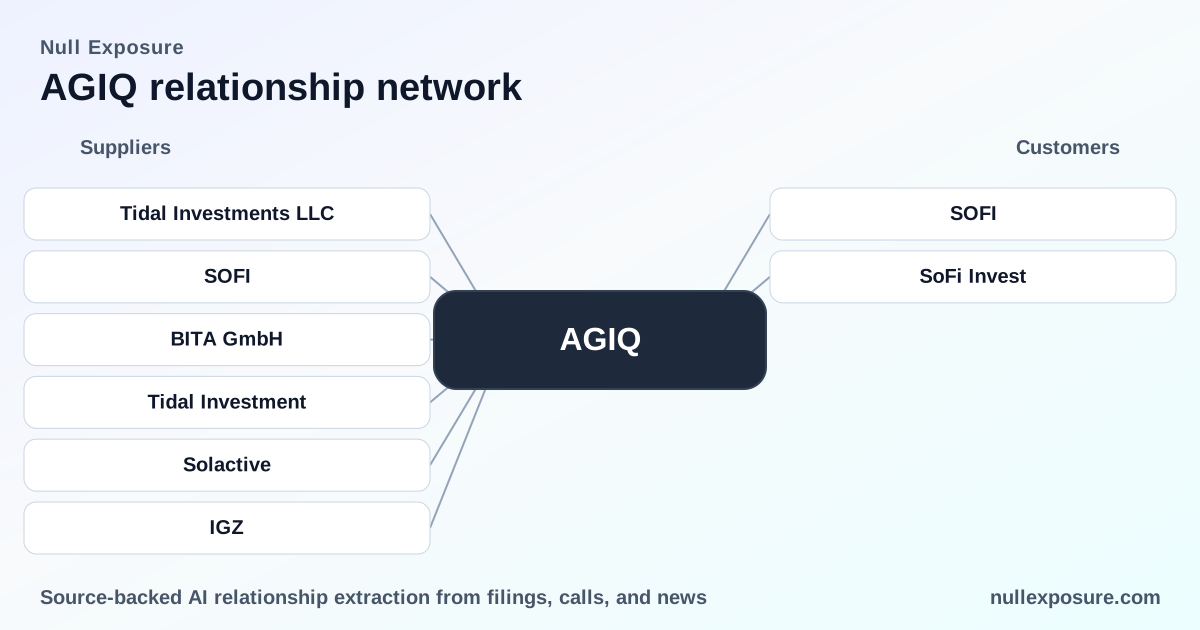
SoFi is listed as a platform where AGIQ can be purchased, indicating that the fund is available to SoFi’s retail customer base and routing network. According to a GlobeNewswire press release on September 3, 2025, AGIQ is listed on NYSE Arca and can be purchased through SoFi and other brokerage platforms. This positions SoFi as a distribution endpoint rather than a strategic partner with unique contractual rights.
Source: GlobeNewswire press release, September 3, 2025.
SoFi Invest (retail brokerage channel)
SoFi Invest is called out specifically as a retail brokerage through which investors can buy AGIQ, confirming retail distribution access for the ETF on mainstream retail platforms. Trade publication coverage reiterated the same point, noting the fund’s availability on SoFi Invest and other brokerages following the ETF’s NYSE Arca listing in 2025.
Source: TradeTech / FFNews coverage of the ETF launch, reporting September 2025.
What these relationships imply for operators and investors
The relationship set is narrow in named partners but functionally broad in implication: public references to “SoFi Invest and other brokerage platforms” demonstrate an intentionally open-distribution model. For risk and operations analysis that matters in several ways.
- Distribution risk is low in concentration because an exchange-listed ETF lives on multiple retail trading platforms; the sponsor does not rely on a single brokerage for access to end investors.
- Counterparty risk is concentrated on market infrastructure (NYSE Arca, clearinghouses, authorized participants) rather than on retail broker counterparts. Those infrastructure relationships are the primary operational dependencies.
- Commercial upside scales with retail adoption and secondary-market liquidity rather than bespoke partnerships; therefore sales and marketing focus is on visibility and ETF flows, not on negotiating exclusive shelf-space deals.
Practical takeaways for premium finance and counterparty assessment
- Credit/settlement exposure: Focus credit and settlement assessment on the exchange and clearing counterparties, since broker-level listings are distributive and non-exclusive.
- Operational diligence: Ensure custody, NAV calculation, and creation/redemption mechanics are robust; these functions determine fund reliability once listed on NYSE Arca.
- Commercial monitoring: Track retail platform listings and promotional activity (e.g., feature placement on prominent broker apps) because these drive flow more than named strategic deals.
If you need a quick due-diligence snapshot of product distribution or a map of platform listings for trade and credit teams, see practical resources at https://nullexposure.com/.
Constraints and company-level signals
There are no explicit contractual constraints disclosed in the relationship records reviewed. That absence itself is informative as a company-level signal: AGIQ’s public record shows marketplace-style distribution without disclosed exclusivity or bespoke contractual restrictions. Investors should therefore treat the fund as operating with typical ETF governance and market-access mechanics—liquidity and flows will determine commercial success rather than bespoke counterparty commitments.
Final assessment
AGIQ’s named customer relationships are straightforward: the fund is distributed through standard retail broker channels such as SoFi/SoFi Invest and through other brokerage platforms via its NYSE Arca listing. For investors and operators, the most salient factors are exchange-level dependencies, secondary-market liquidity, and the visibility the fund receives across retail platforms. Evaluate operational and settlement counterparties first; treat named broker relationships as distribution endpoints rather than contractual anchors.