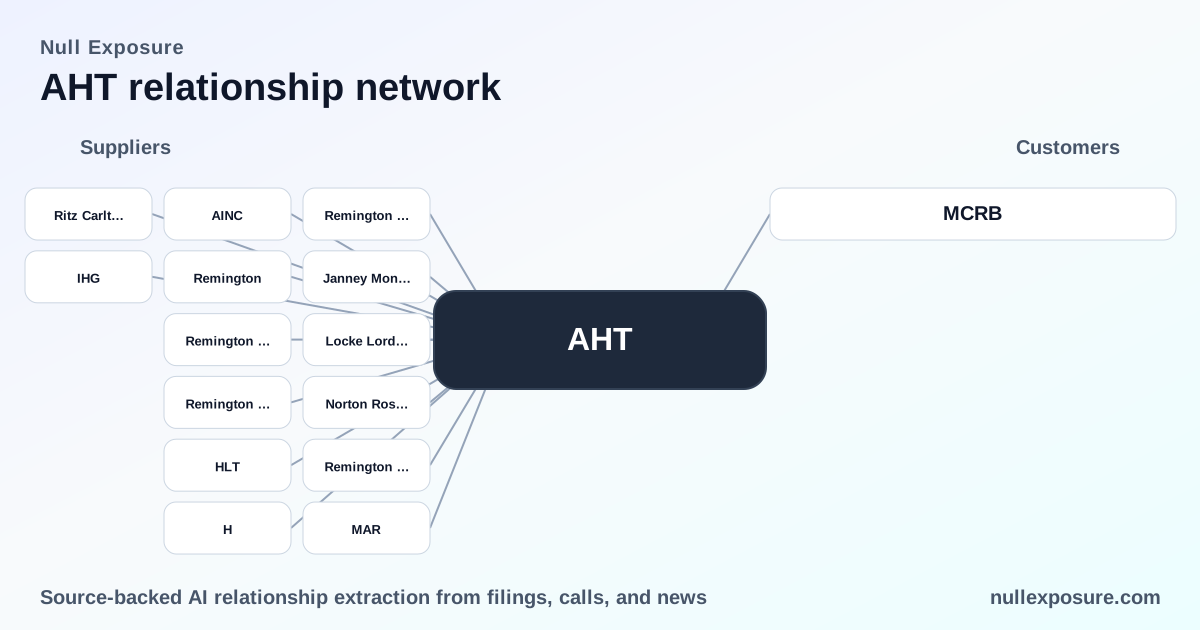
Ashford Hospitality Trust (AHT): Customer Relationships and Operational Constraints that Drive Value
Ashford Hospitality Trust is a hotel-focused REIT that acquires and manages upper-upscale and upscale full-service hotels across the United States, generating income through room revenues, event and food & beverage operations, and value creation via active asset management and selective dispositions. For investors, the business is a classic real estate cash-flow play: asset income and capital recycling delivered through concentrated hotel ownership and active repositioning strategies. For an operator or vendor evaluating AHT as a customer, the company’s contracting posture and geographic footprint define where revenue and operational leverage materialize.
If you want a concise, relationship-level view with source links, visit https://nullexposure.com/ for our relationship intelligence and document references.
How AHT monetizes hospitality assets and where cash flow comes from
AHT’s operating model is straightforward: own full-service hotels, operate them either directly or through third-party managers, extract operating cash flow, and sell non-core assets to recycle capital. The company reports a single business segment—direct hotel investments—and derives substantially all revenue from hotel operations (rooms, food & beverage, and related services). Fiscal metrics show more than $1.1 billion in trailing revenue and positive operating margin on a TTM basis, underscoring that property-level operations are the primary cash engine rather than diversified service lines.
Key business model drivers:
- Concentrated product set: upper-upscale and upscale full-service hotels across primary, secondary, and resort markets in the U.S.
- Asset management focus: value created through repositioning, operational improvements and strategic dispositions.
- Cash generation profile: room and F&B operations drive most revenue; liquidity and capital recycling are managed through property sales and portfolio pruning.
Geographic and segment constraints that shape contracting and counterparty risk
AHT’s decisions about where to contract and whom to pay are driven by the company’s concentrated footprint and single-segment focus. The constraint evidence in filings is explicit:
- All properties are located in the United States. Management states that as of December 31, 2024 and 2023, every hotel property was in the U.S. or its territories, and revenue tables are broken out by U.S. markets. This is a company-level signal that AHT’s counterparty exposure is geographically domestic and localized to U.S. market dynamics.
- Single reportable segment: direct hotel investments. The firm operates within one business line, which concentrates operational, vendor and customer risk around hotel operations rather than diversified services or products.
- Revenue is overwhelmingly hotel-related. Disclosures confirm that substantially all revenue comes from the operation of hotels and that the investment strategy targets full-service upper-upscale properties with specific RevPAR characteristics.
Operational implications for counterparties:
- Contracting posture tends to be standardized, hotel-focused contracts (property management agreements, vendor supply contracts, capital expenditure schedules) rather than bespoke cross-industry deals.
- Concentration increases counterparty criticality. Vendors that supply services to multiple AHT properties have meaningful scale exposure to the REIT’s operational decisions.
- Maturity and predictability are mid-cycle. Hotels are steady cash generators but sensitive to macro tourism and corporate travel cycles; capital recycling via dispositions is a regular part of the playbook.
For a deeper view of relationship-level signals and source material, see https://nullexposure.com/.
Customer relationships documented in public reporting and press
Below I cover every relationship recorded in the provided search results and the supporting source text.
MCR (MCRB) — purchaser of a former AHT property
A press article reported that New York-based MCR purchased the Chambers Hotel from Ashford Hospitality Trust for $7.9 million earlier in the year, documenting a direct divestiture by AHT to MCR as part of portfolio pruning. This sale is consistent with AHT’s active disposition strategy to recycle capital from underperforming or non-core assets. Source: TCB Magazine, March 9, 2026 — “Chambers Hotel Rebrands Independently” (https://tcbmag.com/chambers-hotel-rebrands-independently/).
MCR (MCRB) — duplicate mention of the same disposition
The same TCB Magazine item appears again in the record set with an identical excerpt noting that MCR purchased the property from Ashford Hospitality Trust for $7.9 million. The duplicate entry reinforces the transaction’s coverage in trade press and confirms the buyer identity and sale price. Source: TCB Magazine, March 9, 2026 — “Chambers Hotel Rebrands Independently” (https://tcbmag.com/chambers-hotel-rebrands-independently/).
What these relationship entries tell investors and operators
The two relationship records—both pointing to the Chambers Hotel sale to MCR—signal active portfolio turnover rather than ongoing operating partnerships. For investors, the transaction is evidence that AHT exercises capital recycling to optimize portfolio composition; for suppliers and operators, it indicates that service relationships tied to sold assets terminate or transfer when properties change hands.
Practical takeaways:
- Asset sales to third-party hotel owners are a standard part of AHT’s playbook and can affect future revenue streams and vendor contracts tied to specific properties.
- Vendors servicing AHT properties should anticipate contract review or replacement upon disposition; operators evaluating partnerships should factor in transition risk when pricing multi-property service arrangements.
- Counterparty concentration is domestic and hotel-specific, so vendors with exposure to AHT will face clustered regional demand rather than global diversification.
Investment implications: risk, optionality, and operational considerations
AHT’s profile combines steady hotel operating cash flows with portfolio-level volatility driven by macro travel cycles and disposition timing. Key investor implications:
- Revenue concentration by sector and geography is a double-edged sword. Concentration in U.S. full-service hotels gives management control and operational focus, but exposes earnings to domestic travel cycles and regional RevPAR dynamics.
- Disposition activity is a lever for capital returns and balance-sheet management. Sales like the Chambers Hotel transaction to MCR generate liquidity but also reduce revenue base, so investors must monitor the cadence and economics of disposals.
- Vendor relationships are strategic and potentially critical. Suppliers of F&B, maintenance, and property-level services play a direct role in margin outcomes and are sensitive to ownership changes.
Final judgment for investors and operators
Ashford Hospitality Trust operates a focused, U.S.-centric hotel REIT model with clear operational drivers: property-level revenue, active asset management, and portfolio recycling via sales. The recorded relationship evidence is transactional—an asset sale to MCR—rather than a long-term operating partnership, which reinforces AHT’s posture as an asset manager and acquirer/disposer of hotels. Investors should price in U.S. travel cycle sensitivity and disposition execution risk; vendors and operators should treat AHT contracts as strategically important but contingent on portfolio composition.
For ongoing coverage of AHT’s counterparties, documented transactions, and to access original reporting links, visit https://nullexposure.com/.