AHT-P-D (Ashford Hospitality Trust Series D): Brand exposure, operating posture, and what investors need to know
Ashford Hospitality Trust’s 8.45% Series D cumulative preferred (AHT-P-D) is an income-oriented claim on a REIT concentrated in premium U.S. hotels; the preferred shares monetize through fixed cumulative dividends backed by the company’s hotel portfolio and cash flow priorities embedded in REIT capital structures. For investors and operators evaluating counterparty risk, the most material commercial relationships are brand and franchise ties that determine operating economics and guest mix—specifically exposure to Marriott and Ritz-Carlton flags. Explore this profile further at https://nullexposure.com/.
How the security is backed and how the business makes money
AHT-P-D is a preferred-equity instrument of a hotel-focused REIT that extracts value through leased or owned hotel real estate, management and franchise agreements, and the cyclical recovery of room rates and occupancy. The preferred’s primary cash support is the REIT’s operating cash flow from hotel operations and chartered dividend priority—dividends are cumulative at an 8.45% coupon. Public profile fields available for this issue include issuer name and dividend feature, but the public snapshot lacks granular balance-sheet metrics and routinely reported operating KPIs in the provided profile.
What the relationships in the record say — brand exposure is explicit
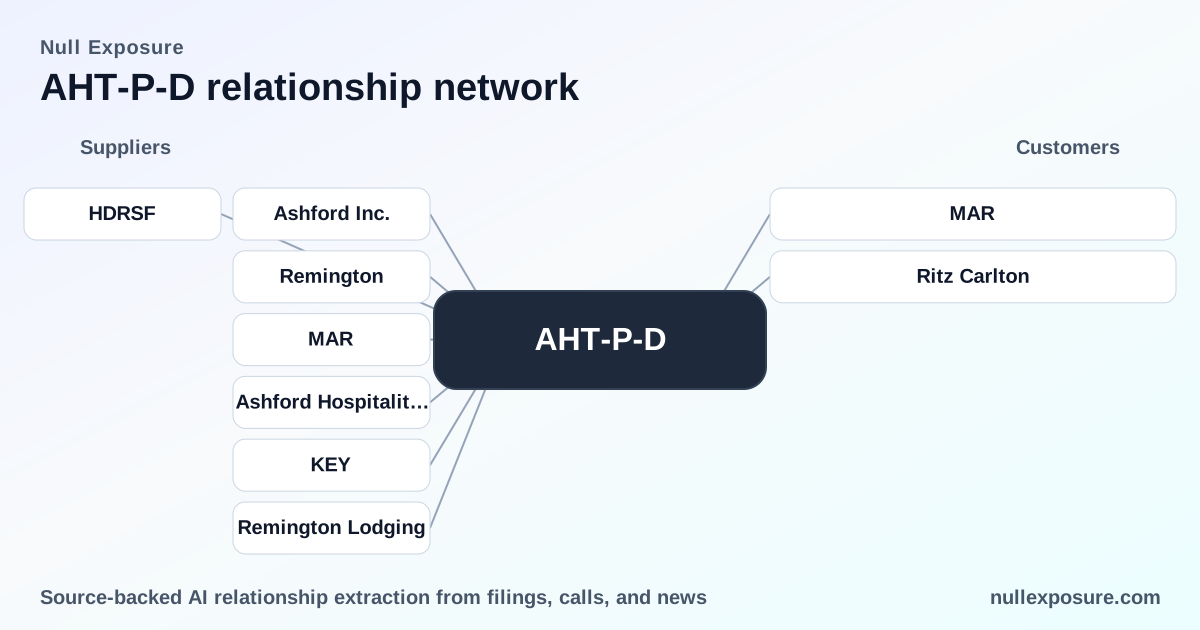
The dataset identifies three related name-strings pointing to the same news report that links Ashford’s hotel portfolio to upscale flags. Each relationship below is summarized in plain language with the original source.
MAR
The record links Ashford’s properties to the Marriott portfolio, noting the company owns upscale hotels that include Marriott-branded assets. A CBS News article referencing FY2020 hotel ownership and PPP loan coverage recorded this association (CBS News, March 9, 2026: https://www.cbsnews.com/news/paycheck-protection-program-loans-hotel-sec/).
Marriott
Marriott appears as a named commercial brand connected to Ashford’s portfolio, indicating franchise or flag-level relationships where hotels operate under Marriott management or branding. This connection is cited in the same CBS News piece covering FY2020 hotel ownership and loan programs (CBS News, March 9, 2026: https://www.cbsnews.com/news/paycheck-protection-program-loans-hotel-sec/).
Ritz Carlton
The dataset explicitly lists Ritz Carlton as one of the upscale flags under which Ashford-owned properties operate, underscoring exposure to a luxury brand and the attendant operating standards and fee structures. The reference comes from the CBS News article that discussed hotel ownership across upscale brands in FY2020 (CBS News, March 9, 2026: https://www.cbsnews.com/news/paycheck-protection-program-loans-hotel-sec/).
Key takeaway: All three relationship entries point to the same factual claim: Ashford’s portfolio includes properties operating under Marriott and Ritz-Carlton flags, which is material for revenue per available room (RevPAR) sensitivity, franchise fee structure, and brand-dependent demand resilience.
Operating model and business-model characteristics that matter to investors
The available information does not include explicit contractual constraints, but company-level signals and the brand relationships above allow confident operational characterizations:
- Contracting posture: As a hotel REIT with branded assets, the company likely engages in a mix of franchise agreements and management contracts rather than direct national marketing; this implies revenue is partially shared through brand/management fees, which reduce gross margin but provide distribution and loyalty-system demand.
- Concentration: Presence of upscale flags increases exposure to a specific demand segment—corporate and premium leisure—creating concentration risk tied to business travel recovery and luxury travel trends.
- Criticality: Brand relationships are operationally critical; loss of a flagship franchise or material changes to franchise terms would directly affect operating results and the preferred’s dividend coverage.
- Maturity: The issuer is positioned as a traditional property-owning REIT with legacy hotel assets; capital structure sophistication is typical of REITs that use preferred shares to manage cash flow priorities and preserve common equity flexibility.
Note: The constraints payload included with the relationship data is empty; no additional contractual constraints or vendor-customer exclusivity clauses were provided in the available record to alter the above company-level signals.
What this means for credit and dividend stability
- Brand affiliation gives pricing power but also a fee drag. Marriott and Ritz-Carlton flags support demand and ADR (average daily rate) resilience, which underwrites cash flow in recoveries—but they also impose franchise and quality costs that reduce free cash flow available to pay preferred dividends.
- Sector cyclicality is the dominant risk. Hotel cash flow is correlation-sensitive to travel trends and macro cycles; preferred dividends are cumulative, which protects investors from omission but accumulates obligations if cash flow weakens.
- Transparency gaps increase analytical friction. The profile lacks standard market metrics (market cap, EBITDA, dividend yield), so credit assessment requires access to issuer financial statements and tenancy/franchise contracts to validate dividend coverage ratios.
Practical considerations for operators and investors
- Review management and franchise agreements for hotels operating under the Marriott and Ritz-Carlton brands to quantify fee schedules, termination provisions, and required capital standards.
- Stress-test cash flow under RevPAR scenarios that reflect differing recovery paths for luxury and upper-upscale demand.
- Track upcoming covenant dates, call or conversion features on the preferred, and any issuer liquidity events that would affect cumulative dividend accrual.
Risks summarized
- Brand concentration risk: Heavy exposure to upscale brands ties payouts to luxury demand cycles.
- Cash-flow sensitivity: Hotel revenue volatility can compress coverage for the preferred coupon.
- Information asymmetry: Public profile lacks standard financial metrics, increasing reliance on primary filings and management disclosures.
Bottom line and next steps
AHT-P-D is an income-oriented claim backed by a hotel REIT whose most consequential third-party relationships are with Marriott and Ritz-Carlton, according to reporting linking Ashford’s portfolio to those flags. For investors focused on preferred-credit durability, the core questions are franchise economics, operational cash-flow resilience, and the issuer’s balance-sheet buffer against cyclical troughs. For an extended view of counterparties and relationship reporting, consult the full profile at https://nullexposure.com/.
If you want a concise relationship map or need a custom briefing on franchise economics and dividend coverage for AHT-P-D, the issuer profile and relationship detail are available at https://nullexposure.com/.