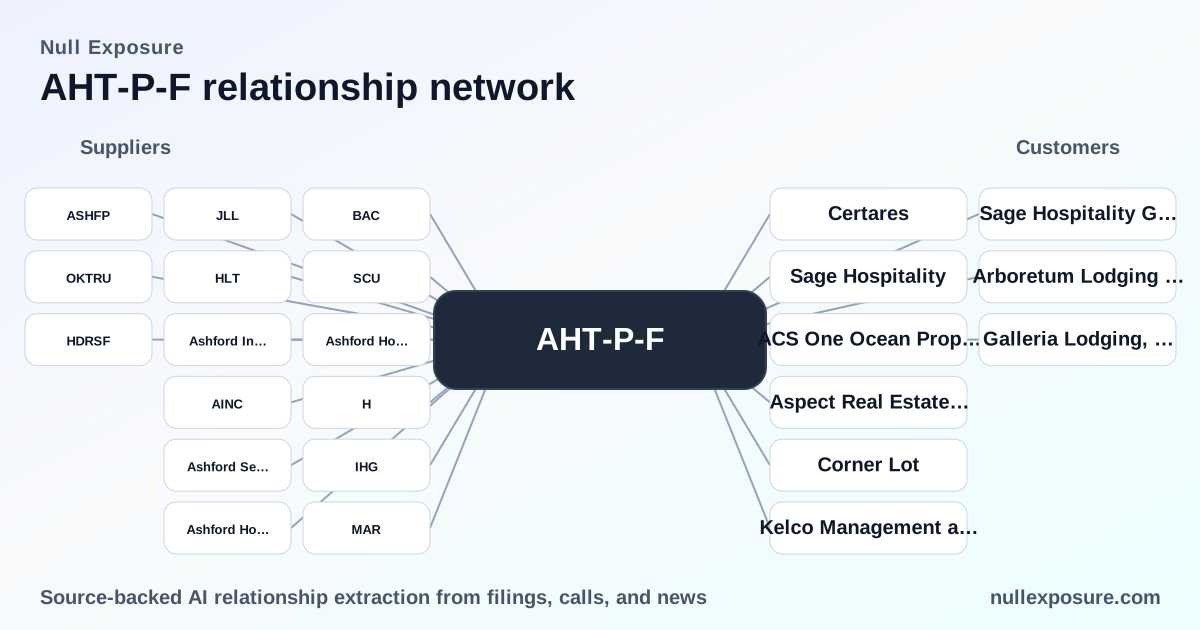
Ashford Hospitality Trust (AHT-P-F): Customer relationship map and what it means for preferred holders
Ashford Hospitality Trust issues the 7.375% Series F cumulative preferred (AHT-P-F) as an income vehicle for institutional and yield-seeking investors. The company operates as a hotel REIT that generates cash from operations and strategically monetizes assets through dispositions, using sale proceeds to reduce leverage and preserve preferred dividends. The flow of buyers in recent years is the clearest lever for liquidity: third-party purchases of individual hotels have been the primary source of near-term cash. Learn more about data coverage and relationship signals at https://nullexposure.com/.
How Ashford runs the business and funds preferred dividends
Ashford’s operating posture is that of a portfolio owner-manager who tilts toward opportunistic asset sales to manage balance-sheet stress. The company retains operating control where useful but has been active in trimming holdings to raise cash—an explicit monetization strategy rather than passive portfolio drift. Key features investors should internalize:
- Contracting posture: Ashford sells single assets to specialist buyers and joint ventures, indicating tactical, deal-by-deal contracting rather than long-term lockups with a small number of strategic partners.
- Concentration and criticality: The buyer list is diversified across private-equity, regional hospitality operators, family offices and management firms, which reduces counterparty concentration risk for liquidity events.
- Maturity and cash priority: Sales cited in filings and press releases are positioned to pay down financing and protect distributions to preferred shareholders; preferred dividends are cumulative and legally senior to common equity.
- Operational implication: Frequent asset rotations mean that cash available for servicing the preferred will be influenced by timing and pricing of future disposals as much as by hotel operating metrics.
Deal log: each buyer and the transaction that matters
Below are all counterparties identified in the coverage for AHT-P-F, with a concise plain-English note on the relationship and a compact source citation.
- Corner Lot — Named as a joint-venture participant that bought the One Ocean Resort as part of a consortium; the purchase was reported in July 2024. (Jax Daily Record, July 11, 2024).
- Kelco Management and Development Inc. — Identified as another JV partner in the transaction for One Ocean Resort; the sale was disclosed in Ashford’s filings in mid‑2024. (Jax Daily Record, July 11, 2024).
- Sage Hospitality Group / Sage Hospitality — Denver-based Sage purchased the One Ocean Resort for $87 million as part of Ashford’s portfolio divestment program; the sale is cited in industry press covering Ashford’s debt-reduction plan (HotelInvestmentToday, FY2024; Jax Daily Record, July 2024).
- Certares — New York-based Certares acquired the Hilton Boston Back Bay in a high-profile sale that Ashford referenced in its financing plan, demonstrating institutional demand for large city assets (HotelInvestmentToday, FY2024).
- ACS One Ocean Propco LLC — Cited as the purchasing vehicle for One Ocean Resort in SEC disclosures and local reporting; the buyer structure shows Ashford transacting with single-purpose propcos for asset exits (Jax Daily Record, July 2024).
- Aspect Real Estate Group — Listed as a participant in the joint-venture that bought One Ocean Resort, showing regional real-estate operators are active acquirers of Ashford assets (Jax Daily Record, July 11, 2024).
- Galleria Lodging, LP — Reported as the purchaser (alongside Arboretum Lodging) of the Embassy Suites by Hilton Houston Near the Galleria for roughly $13 million, signaling demand in secondary-market assets (MarketScreener, FY2025).
- Arboretum Lodging LP — Co-buyer on the Houston Embassy Suites deal; this shows a pattern of smaller, regional buyers taking mid‑market hotels from Ashford (MarketScreener, FY2025).
- Abo Empire — Named in reporting on a package of sales that included a Santa Fe hotel; Abo Empire, a family-office buyer, illustrates non-institutional capital participating in Ashford disposals (HotelDive, FY2026).
- Crescent Hotels & Resorts — Acquired a Santa Fe property in partnership with other local buyers; Crescent’s participation underscores buyer appetite from established hotel operators (HotelDive, FY2026).
- Kolter Group — Purchased the St. Petersburg Hilton in deals tied to Ashford’s divestment activity, reflecting private developer interest in opportunistic hotel buys (HotelDive, FY2026).
- Lodging Capital Partners — Bought the Hilton Alexandria Old Town from an Ashford subsidiary, showing Chicago-based lodging investors picking up full-service assets (HotelDive, FY2026).
- William Cole Companies — Partnered with Crescent and a family office on acquisitions, demonstrating co-investment structures between operators and capital partners (HotelDive, FY2026).
Each relationship above is drawn directly from reporting and company disclosures tied to the fiscal periods cited, and together they map the buyer universe that has converted Ashford assets into liquidity.
What the buyer roster implies for preferred investors
The buyer mix—ranging from institutional groups like Certares to regional operators and family offices—creates a predictable channel for converting real-estate inventory into cash. That channel is the principal liquidity mechanism that supports AHT-P-F distributions:
- Positive for liquidity: Diverse buyer demand reduces single-buyer dependency and increases the probability Ashford can execute incremental sales at market prices.
- Price sensitivity: Many buyers are opportunistic or regional, so sale proceeds will track local market cycles rather than a single national bid schedule.
- Structural protection: Preferred holders benefit from cumulative dividend priority, but the timing of sales controls actual cash flow available to the issuer for dividend servicing.
For deeper analysis and ongoing monitoring of transaction flows, visit https://nullexposure.com/.
Constraints and data signals about the operating model
The relationship coverage supplied contains no explicit contractual constraints or flagged covenants tied to individual buyers. Presently, that absence is a company-level signal: no captured dependency or legal encumbrance surfaced in the relationships feed that would materially change the assessment of Ashford’s disposal-driven liquidity model.
Risks, red flags and what to watch next
- Sale execution risk: If buyer demand softens, price realizations will compress and preferred dividend coverage could tighten.
- Asset mix and timing: Heavy reliance on single-asset sales in any quarter creates volatility in distributable cash.
- Refinancing exposure: While disposals supply cash, continued reliance on asset sales to service debt increases refinancing risk if markets turn.
- Operational performance: Hotel operations still feed overall profitability; poor same‑store performance reduces negotiating leverage in sales.
Bottom line
Ashford funds AHT-P-F through hotel operations supported by a deliberate program of asset sales to a broad set of buyers. The diversified buyer roster is a structural plus for liquidity, but preferred investors must track sale pacing and price realizations closely because those drivers determine the practical safety of the 7.375% cumulative dividend. For ongoing tracking of counterparties and transaction signals, visit https://nullexposure.com/ for coverage and alerts.