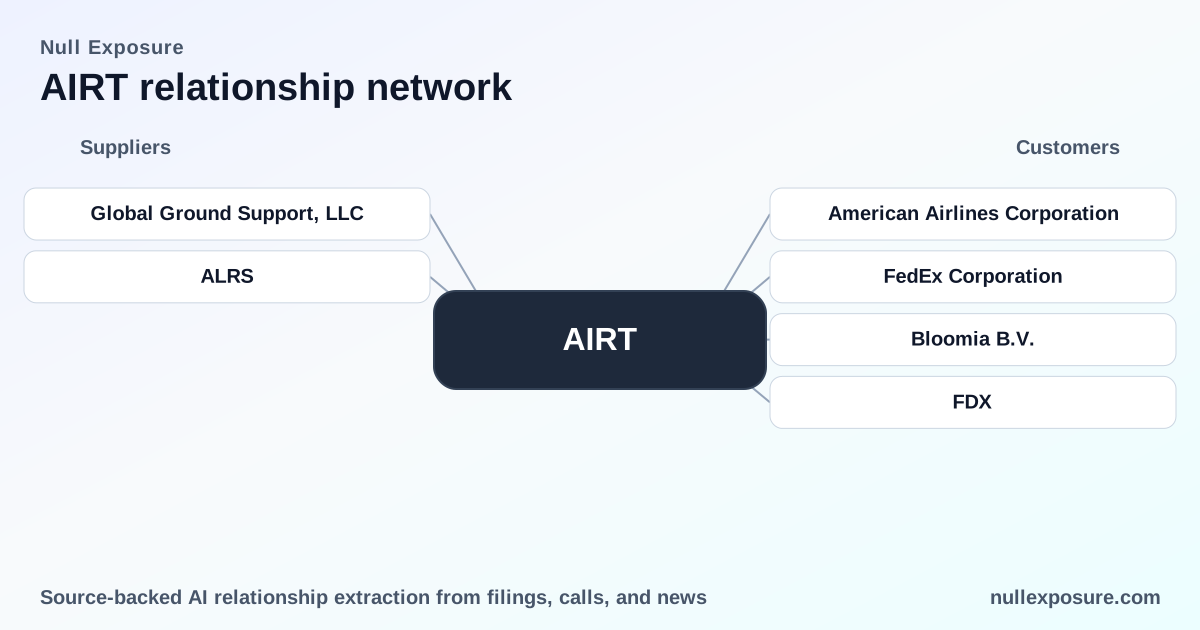
Air T Inc (AIRT) — Customer Relationships and Operating Constraints: FedEx at the Core
Air T, Inc. is a diversified aviation and equipment holding company that monetizes through contractual air cargo services, equipment manufacturing and sales, engine and parts sales, and a growing digital subscriptions business. The company's Overnight Air Cargo segment operates primarily as a contracted service provider — running feeder flights and supporting logistics customers — while other segments sell hardware and recurring software subscriptions. FedEx represents the single most important commercial relationship, driving a significant portion of revenue and working capital; investors should evaluate AIRT as a service-concentrated operator with meaningful customer concentration risk. For a deeper look at relationship-level exposure and operating signals, see more on our site: NullExposure.
How Air T monetizes and why customers matter
Air T collects revenue from three principal sources: (1) dry-lease / contract air cargo services (crew and operational control provided while large integrators supply aircraft), (2) sales of ground-support equipment and aircraft parts, and (3) recurring digital services and subscriptions. The Overnight Air Cargo business is structured to pass certain operating costs through to the integrator customer under short-duration contracts, which compresses margin variability but concentrates revenue risk when a major integrator changes routing, fleet size or commercial terms. The company also derives material, non-recourse revenue from equipment sales and an expanding software subscription stream that increases recurring revenue mix.
Key takeaway: Air T is a service-led operator with a high degree of customer concentration; its business model reduces some operational margin volatility through pass-through contract features but increases earnings sensitivity to contract renewals and integrator capacity decisions.
FedEx: the dominant, mature partner that defines risk and scale
FedEx is Air T’s principal customer and commercial anchor. According to Air T’s FY2025 Form 10‑K, the Overnight Air Cargo segment generated approximately 39% of consolidated revenues in FY2025 from services performed for FedEx, and a similar share of accounts receivable — a clear measure of both revenue concentration and working capital exposure. The company operates feeder routes and provides crew and operational control under dry‑lease style contracts where FedEx supplies aircraft and Air T supplies crews and services; these contracts are short-term and cancellable on short notice, consistent with industry practice. Public releases around Air T’s FY2026 reporting and acquisition activity reiterate that the Overnight Air Cargo business provides air express delivery services primarily for FedEx. See Air T FY2025 10‑K and related press releases (March 2026) for detail.
- Source citations: Air T Form 10‑K (fiscal 2025) and Air T press releases / newswire reporting on FY2026 results (March 2026).
Investment implication: FedEx’s role is both a revenue engine and a strategic dependency — the relationship is mature (multi‑decade), critical to Air T’s consolidated cash flows, and contractually short-term, which concentrates both upside and downside risk.
Other commercial relationships and capital-market connections
Air T’s portfolio includes ancillary customer and market relationships that diversify revenue and capital structure exposure, but none approach FedEx in scale.
-
American Airlines: Air T’s Commercial Aircraft, Engines and Parts and Ground Support Equipment segments derived about 13% of consolidated revenues in FY2025 from services performed for American Airlines, reflecting meaningful but secondary customer contribution; the company also performs intermittent third‑party maintenance work for other airlines. Source: Air T FY2025 10‑K.
-
Bloomia B.V.: The FY2025 filing references Bloomia B.V. in the context of an acquisition by Lendway on February 26, 2024; this mention appears in transactional disclosure rather than as a direct Air T customer relationship. Source: Air T FY2025 10‑K (disclosure referencing external transaction).
-
AIRTP (Alpha Income Preferred Securities): Capital markets instruments tied to Air T surfaced in press coverage about the company’s intention to raise additional capital via the Alpha Income Preferred Securities (NASDAQ:AIRTP), which are issued by Air T Funding and guaranteed by Air T, Inc.; this is a financing relationship rather than a commercial customer. Source: Futunn / Globe and Mail coverage (March 2026).
-
Source citations for these entries: Air T FY2025 10‑K and news coverage (Newswire / Futunn / Globe and Mail, March 2026).
Relationship-by-relationship quick brief
-
FedEx Corporation (FDX) — Air T’s Overnight Air Cargo operations provide feeder flights and repair services for FedEx under long-standing commercial arrangements; FY2025 filings show FedEx accounted for approximately 39% of consolidated revenue and a large share of accounts receivable. Source: Air T Form 10‑K (fiscal 2025) and March 2026 press releases.
-
FDX (news coverage variants) — Multiple newswire articles and investor press releases from March 2026 reiterate that the Overnight Air Cargo segment primarily services FedEx and warn of contract termination and route reduction risks tied to FedEx contract renewals. Source: Newswire and accessnewswire (March 9, 2026).
-
American Airlines Corporation — Air T’s commercial aircraft and parts businesses provided services to American Airlines representing roughly 13% of consolidated revenues in FY2025, and the company occasionally conducts third‑party maintenance work for other carriers. Source: Air T Form 10‑K (fiscal 2025).
-
Bloomia B.V. — The FY2025 filing contains a disclosure noting that Lendway acquired Bloomia B.V. on February 26, 2024; this mention is transactional background in the filing rather than a customer relationship. Source: Air T Form 10‑K (fiscal 2025).
-
AIRTP (Alpha Income Preferred Securities) — Press reports describe the Alpha Income Preferred Securities (NASDAQ:AIRTP) issued by Air T Funding and guaranteed by Air T, Inc., as part of the company’s capital-raising plans; this is a financing instrument linked to the company’s balance‑sheet strategy. Source: Futunn / Globe and Mail coverage (March 2026).
Operating constraints and what they mean for investors
Air T’s filings and disclosures generate a consistent set of operating signals that shape investment analysis:
-
Contracting posture: The company’s non‑lease revenue is largely derived from agreements with initial expected duration of one year or less; dry‑lease services with integrators include short notice termination clauses, so revenue continuity depends on frequent renewals. This short-term contracting profile reduces long-duration revenue lock-in.
-
Concentration and criticality: FedEx is a critical, material customer (over a third of revenue and a substantial share of receivables), creating concentrated counterparty risk that directly affects cash flow stability and working capital.
-
Role and economics: Air T functions principally as a service provider in its overnight cargo business, often passing certain costs through to the integrator without markup, which reduces gross margin but stabilizes cash flow under steady utilization.
-
Geography and maturity: Core operations are North America‑centric (eastern U.S., upper Midwest and Caribbean feeder routes) and the FedEx relationship is mature, spanning over four decades in variants of the current contractual framework.
-
Diversification signals: The company is expanding recurring revenue via digital subscriptions (digital solutions segment), has manufacturing exposure through ground support equipment, and occasional hardware aircraft sales, which modestly diversify topline streams.
-
Spending scale: Contract pass‑throughs and order backlog items place many customer engagements in the $10m–$100m spend band, indicating medium-sized contract economics at the segment level.
These constraints should be read together: short-term contracts with a single critical integrator create high revenue concentration but limited margin volatility from pass-through mechanics; the route to de‑risking is scaling software subscriptions and equipment order backlog.
Bottom line for investors and operators
Air T’s business is defined by a dominant, long-standing operational relationship with FedEx that drives a large share of revenue and working capital while simultaneously concentrating counterparty risk through short-duration, cancellable contracts. Secondary commercial relationships, such as with American Airlines, and an expanding digital subscription business provide partial diversification, while capital-market activity (AIRTP preferred securities) shapes leverage and liquidity. Active monitoring of FedEx contractual status, fleet utilization, and the growth of recurring digital revenues will be the clearest predictors of AIRT’s near-to-medium term stability.
For research teams tracking counterparty exposure and contract structure across aviation service providers, see detailed relationship coverage and tools at NullExposure.