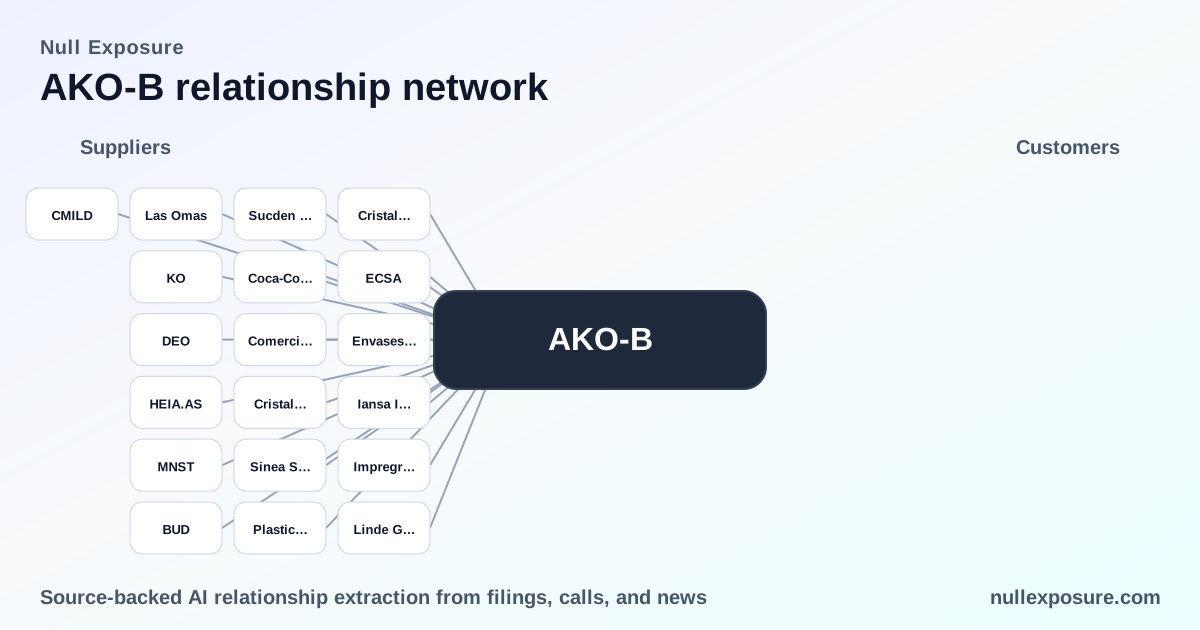
Embotelladora Andina (AKO-B): Bottling scale, Coca‑Cola dependency, and a notable inter-bottler flow
Embotelladora Andina operates as a regional Coca‑Cola bottler that monetizes by producing, marketing and distributing finished non‑alcoholic beverages across Chile, Brazil, Argentina and Paraguay, selling through retail, institutional and wholesale channels — including periodic bulk transactions with other Coca‑Cola system bottlers. With a market capitalization of about $4.22 billion and a trailing P/E near 14.2 as of the 2026‑Q1 reporting window, the company delivers stable cash flow characteristics typical of mature consumer‑defensive beverage businesses while retaining exposure to brand concentration and inter‑bottler commercial flows. For primary source visibility into customer ties and disclosures visit the Null Exposure homepage: https://nullexposure.com/.
Business model in plain English Embotelladora Andina is a classic franchise bottler: it licenses Coca‑Cola brands and captures margin through manufacturing scale, distribution density and consumer pricing in local markets. Revenue comes from high‑frequency, low‑ticket beverage sales across diverse retail endpoints and from larger wholesale/bulk contracts when the company executes inter‑bottler transactions. Operational leverage is driven by production capacity, route-to-market efficiencies and localized pricing power tied to Coca‑Cola brand equity.
What the numbers say about stability and scale
- The company reports multi‑billion top line throughput and profit margins in the high single digits, consistent with a mature FMCG bottler with cost advantages from scale and integration.
- Capital intensity is moderate: expansion and capacity investments are episodic (capacity builds were highlighted in recent commentary), while working capital cycles are driven by inventory and receivables from large retail and wholesale customers.
- Market metrics such as a forward P/E near 10.5 and a conservative beta (about 0.39) signal investor expectations of steady cash generation and limited market volatility versus broader indices.
Customer relationships: the current public record This section covers every customer relationship returned in the data payload.
Coca‑Cola Femsa (KOF) — legacy bulk sales referenced in FY2026 disclosure
Embotelladora Andina’s FY2026 results disclosure explicitly adjusted comparatives “excluding prior‑year bulk sales to Coca‑Cola Femsa,” indicating that Andina executed materially sized bulk transactions with Coca‑Cola Femsa in the prior year and that those flows affected year‑over‑year comparatives. See the press release reported by The Globe and Mail on May 2, 2026: https://www.theglobeandmail.com/investing/markets/stocks/AKO-A-N/pressreleases/37283973/embotelladora-andina-delivers-strong-4q-and-2025-results-expands-capacity-and-esg-commitments/.
Operating model constraints and what they imply for customer risk There are no explicit constraint excerpts returned for AKO‑B in the provided record, so the following observations are company‑level signals drawn from the bottler business model and the public record:
- Contracting posture — long‑term franchise orientation. Bottlers operate under brand licensing and system agreements that are effectively long‑term commercial frameworks; this creates predictable demand patterns but also enforces adherence to brand standards and pricing dynamics set within the Coca‑Cola system.
- Concentration — brand and channel concentration is high. Andina’s revenues are concentrated on Coca‑Cola branded beverages and a distribution model tied to retail and wholesale customers; brand dependency is a structural exposure that elevates customer concentration risk toward the Coca‑Cola system rather than to end retailers.
- Criticality — regional distribution hub role. As a major bottler in several South American markets, Andina is a critical node in the Coca‑Cola supply chain across those territories; this status supports pricing leverage and contract continuity but also makes the company sensitive to inter‑bottler renegotiations or system‑level changes.
- Maturity — cash‑generative, investment‑cycle posture. The business exhibits mature consumer staples dynamics: predictable volumes, periodic capital expenditure for capacity expansion, and modest earnings growth. Earnings volatility is typically limited to discrete capacity projects, currency movements and inter‑bottler bulk transaction timing.
How the Coca‑Cola Femsa relationship reads for investors The FY2026 disclosure adjustment that strips out prior‑year bulk sales to Coca‑Cola Femsa is a clear operational signal: Andina engages in occasional material wholesale transfers to other system bottlers, and those flows can distort year‑over‑year comparisons when they are large. For investors, this implies two actionable points:
- Treat headline revenue or volume changes with an eye toward one‑off bulk flows between system partners; normalize comparatives where necessary.
- Recognize that bulk inter‑bottler transactions are part of the commercial toolkit for capacity management and regional inventory optimization, not a standalone change in core consumer demand.
Strategic implications and risk factors
- Upside: Scale, brand exclusivity and distribution density support margin durability and cash generation; forward multiples imply continued earnings resilience. Capacity expansions and ESG investments noted in disclosures can catalyze operational improvements and incremental volume capture.
- Downside: Brand concentration and occasional large wholesale flows introduce comparability risk, and regional macro or currency shocks can compress margins. Inter‑bottler transactions (such as those with Coca‑Cola Femsa) require active monitoring because they affect reported top‑line and inventory cycles.
Middle‑article intelligence link For a deeper look at customer‑level ties, public disclosures and transaction‑level context, review the Null Exposure research hub: https://nullexposure.com/.
Conclusion: where AKO‑B fits in a portfolio Embotelladora Andina is a mature, cash‑generative beverage bottler anchored to Coca‑Cola brand economics, suitable for investors seeking defensive exposure with steady income potential (subject to payout policy) and modest growth from capacity expansion. Key monitoring items for operators and research teams are inter‑bottler bulk transactions that distort comparatives, capacity expansion cadence, and system‑level contractual developments with Coca‑Cola stakeholders.
Key takeaway: Andina’s commercial footprint is large and stable, but the investment thesis requires active attention to inter‑bottler flows (e.g., Coca‑Cola Femsa transactions) and the timing of capacity or inventory moves that can materially affect reported year‑over‑year results.