Aktis Oncology: How a single strategic partner and select investors reshape a radiopharma growth story
Aktis Oncology develops tumor-targeting radiopharmaceuticals and monetizes through collaborations, upfront cash payments, equity investments, and capital markets activity. The company’s operating cadence is development-led—advancing INDs and clinical trials while leveraging strategic partnerships to de-risk programs and extend runway. The Eli Lilly collaboration is the defining commercial relationship; pre-IPO investors backstop development capital, and both sources of funding materially change the company’s financing profile and near-term revenue recognition. For a quick company snapshot or to explore similar coverage, visit https://nullexposure.com/.
Why the Eli Lilly collaboration matters for investors
The Lilly relationship is the single largest commercial tie for Aktis and it materially influences cash generation, program prioritization, and valuation.
- Aktis entered a strategic collaboration with Eli Lilly to discover and develop tumor-targeting radiopharmaceuticals, receiving a $60 million upfront cash payment plus an equity investment from Lilly. According to a PR Newswire release in March 2026, the upfront payment and Lilly’s equity stake were explicit components of the deal.
- The collaboration extends beyond a single program: Aktis and Lilly are working to leverage Aktis’ miniprotein platform to develop radioconjugates outside Aktis’ proprietary pipeline, which creates optionality and potential milestone flows tied to discovery and development success (GlobeNewswire, March 2026; StockTitan investor note, March 2026).
Key takeaway: the Eli Lilly arrangement converts scientific progress into near-term cash and creates structured revenue potential tied to development milestones and licensing economics; Aktis’ FY2026 revenue increase was explicitly attributable to revenue recognized under the Lilly collaboration (GlobeNewswire, March 30, 2026).
Relationship detail — Eli Lilly (LLY)
Eli Lilly provided a $60 million upfront payment to Aktis in the May 2024 collaboration and followed with an equity purchase; the tie has generated recognized revenue in FY2026 and supports joint discovery of radioconjugates using Aktis’ miniprotein platform (PR Newswire, March 2026; GlobeNewswire, March 30, 2026; BiopharmaDive reporting, 2026). Additionally, Lilly purchased a meaningful tranche of Aktis shares during an IPO upsizing, acquiring roughly $100 million of stock and raising investor confidence (BiopharmaDive, FY2026).
Pre-IPO backers matter — RA Capital, Vida Ventures, MPM BioImpact
Aktis’ private funding round ahead of the public offering drew a set of institutional and venture investors that signal deep sector conviction and provide balance to partner-driven financing.
- RA Capital participated in the private financing that aggregated roughly $346 million pre-IPO, positioning institutional capital behind Aktis’ radiopharma pipeline (BiopharmaDive, FY2026).
- Vida Ventures anchored part of that private capital raise, contributing venture-scale expertise in early-stage oncology and life-sciences company building (BiopharmaDive, FY2026).
- MPM BioImpact was also listed among the pre-IPO investors that advanced Aktis’ pipeline ahead of the company’s market debut (BiopharmaDive, FY2026).
Key takeaway: a robust pre-IPO syndicate reduced Aktis’ reliance on dilutive public raises and complemented the Lilly strategic capital. For comparative diligence on institutional exposures and investor-backed financing, visit https://nullexposure.com/.
What these relationships imply about Aktis’ operating model
With no explicit third-party constraint records provided in the dataset, the relationship set itself defines several company-level operating characteristics:
- Contracting posture: Aktis adopts a collaborator-friendly model—outsourcing certain discovery and development functions via a commercial partnership with a large pharma player (Lilly) in exchange for upfront cash, equity, and potential milestones. This posture reduces financing risk but increases program-selection dependence on partner priorities.
- Concentration: The company exhibits single-partner concentration risk at the commercial level; Lilly is the dominant external revenue and strategic partner cited across FY2024–FY2026 disclosures and media reports.
- Criticality: The Lilly collaboration is critical for near-term revenue recognition and de-risking; FY2026 revenue growth is explicitly linked to collaboration revenue. That elevates the commercial relationship from optional to operationally material.
- Maturity and capital structure: Heavy pre-IPO funding ($346M) combined with Lilly’s equity participation and later IPO share purchases demonstrate advanced financing maturity—Aktis transitioned from VC-backed development to public-equity financing while preserving strategic alliance economics.
How each named relationship lines up for investors
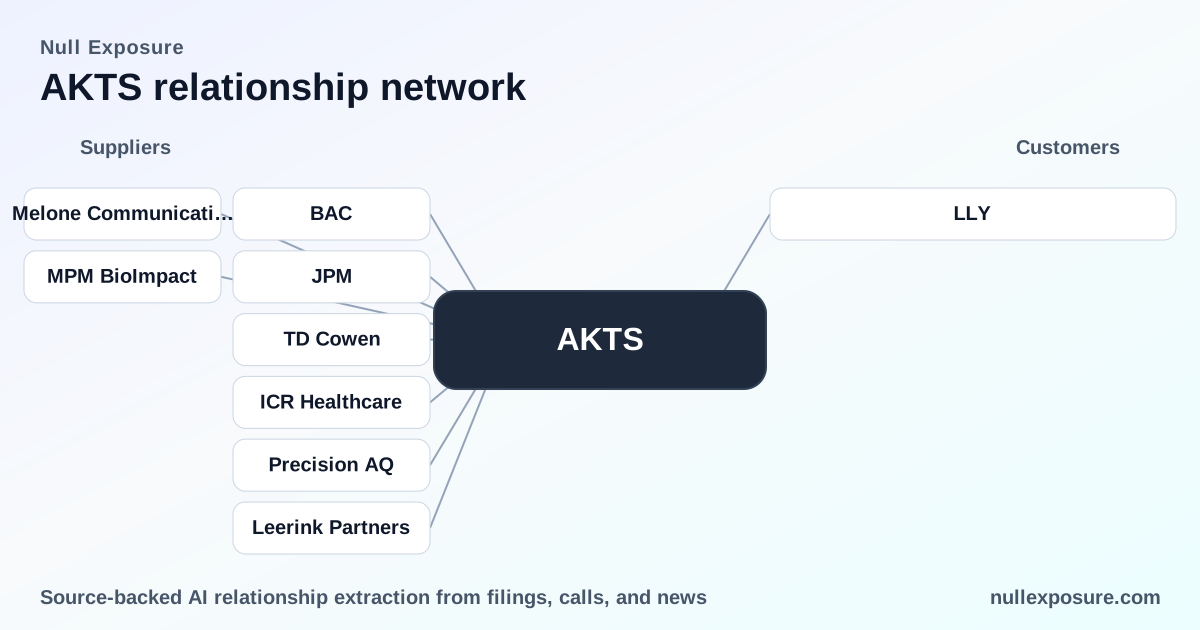
- Eli Lilly and Company (LLY): Strategic collaborator that paid a $60 million upfront fee, took an equity stake, and purchased significant IPO stock, with FY2026 revenue increases explicitly tied to the collaboration and multiple press reports confirming the scope of work on radioconjugates (PR Newswire, March 2026; GlobeNewswire, March 2026; BiopharmaDive, 2026).
- RA Capital: Institutional investor in Aktis’ pre-IPO financing that participated in the $346 million private funding round supporting pipeline advancement (BiopharmaDive, FY2026).
- Vida Ventures: Venture investor in the same private financing, providing capital and sector expertise to help advance Aktis’ early clinical programs (BiopharmaDive, FY2026).
- MPM BioImpact: Participant in the pre-IPO funding syndicate that contributed to the company’s $346 million private financing package (BiopharmaDive, FY2026).
Each of the above relationships is documented in media coverage of Aktis’ private financings and public notices around the Lilly collaboration and the company’s FY2025–FY2026 updates.
Risks, catalysts, and what to watch next
Investors should prioritize a short list of catalytic and risk items tied to the relationship-driven business model:
- Near-term revenue and milestone realization: Monitor reported milestone payments and revenue recognition under the Lilly agreement; FY2026 revenue movements were explicitly attributed to this collaboration (GlobeNewswire, March 30, 2026).
- Clinical progress and regulatory readouts: Aktis announced FDA IND clearances and fast-track designations for pipeline candidates—clinical outcomes will materially affect partner economics and future licensing activity (GlobeNewswire, Feb 24, 2026).
- Partner concentration risk: Any change in Lilly’s strategic priorities or funding cadence would have outsized implications for Aktis’ reported revenue and runway.
- Ownership and liquidity events: Lilly’s purchase of a sizable IPO allocation and the presence of institutional backers (RA Capital, Vida Ventures, MPM BioImpact) reduce financing tail risk but also concentrate exit and governance dynamics.
Bottom line for investors
Aktis’ business model converts proprietary miniprotein discovery into partnered programs with large pharma and institutional capital support. The Eli Lilly relationship is the dominant revenue and strategic driver, while RA Capital, Vida Ventures and MPM BioImpact supplied meaningful pre-IPO financing that strengthened the balance sheet and reduced near-term dilution risk. Track milestone payments, clinical readouts, and partner engagement cadence to assess how partnership economics translate into revenue and valuation over the next 12–24 months. For additional company-relationship monitoring and comparative coverage, explore https://nullexposure.com/.