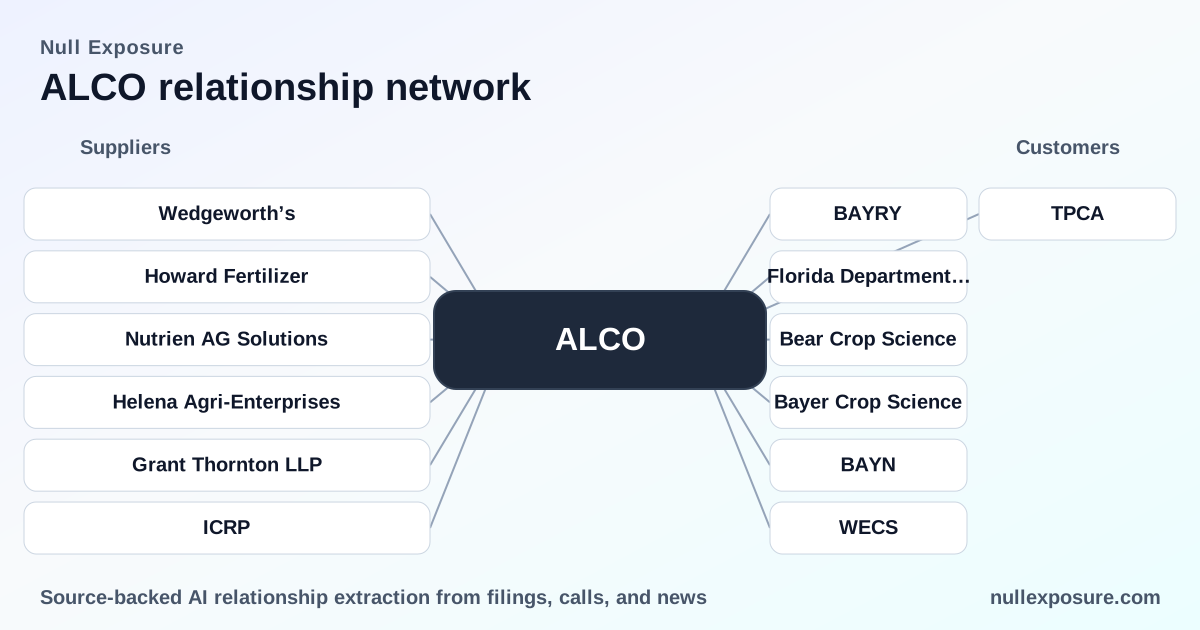
Alico Inc (ALCO): Customer relationships driving a land-to-revenue transformation
Alico monetizes a unique mix of agricultural production, land leasing, royalties and targeted land sales: the company sells citrus and grove services to processors, leases farmland for crop research and farming, and collects royalties for extractive rights, while selectively monetizing large tracts through sales under conservation programs. The current commercial posture combines a pivot away from a single large processor customer toward diversified lease and license income, plus one-off land monetizations that materially affect reported revenue. For deeper relationship intelligence, visit https://nullexposure.com/ for our platform coverage.
Market thesis in one line: Alico is repositioning from processor-dependent citrus sales to a diversified land-lease and royalty model that preserves upside from land valuations and recurring lease income while materially reducing single-customer concentration risk.
What to watch about how Alico contracts and collects revenue
Alico operates with a mixed contracting posture. The company historically relied on multiyear purchase agreements for processed citrus, but it also runs numerous short-term operating leases and usage-based royalty arrangements for mineral extraction. All operating revenues are U.S.-centric, and the business reports revenue under two segments—core citrus product sales and services (grove management)—with services historically small but contributing operating flexibility.
- Long-term contracts exist (multi-year orange purchase agreements and a 10‑year lease example), supporting predictable cash flow on specific parcels.
- Short-term leases predominate for routine farm and hunting leases, generating immaterial but steady land-rental income.
- Usage-based royalties for rock and sand extraction provide variable revenue tied to third-party sales.
- Geographic concentration is domestic (U.S.) and previously exhibited high customer concentration until recent contract changes.
These characteristics shape capital allocation decisions: Alico’s land sales materially change reported revenue and margins, while leases and royalties produce lower-margin but more stable receipts.
Relationship roll call — what every customer and counterparty engagement looks like
Below I cover each relationship mentioned in public disclosures and press coverage, with a concise plain-English summary and source for verification.
Bayer Crop Science — an institutional research lease
Alico signed a 10‑year lease with Bayer Crop Science to establish an agricultural research station on 100 acres of Alico’s TRB property in Charlotte County; multiple press releases and earnings summaries reference the January 2026 transaction and link it to higher utilization of farmable acreage. (See Alico press release reported on GlobeNewswire and subsequent reprints on Yahoo/TradingView, Feb 2026; and analysis noted by Intellectia, Mar 2026.)
Bear Crop Science — duplicate coverage of the same research lease language
Certain transcripts reference “Bear Crop Science” in the same context as the 10‑year research lease on 100 acres, reflecting parallel media and transcript reporting of the earnings call language. The Globe and Mail and InsiderMonkey reproduced the earnings transcript describing this ten‑year lease. (See earnings call transcript coverage in The Globe and Mail and InsiderMonkey, Mar 2026.)
Weco / WECS — utilization driver for farmable acreage
Following January lease signings, Weco is cited in earnings transcripts as part of the set of new lease agreements that helped Alico reach approximately 97% utilization of its ~32,500 farmable acres, indicating commercially meaningful lease uptake across Alico’s portfolio. (See InsiderMonkey and The Globe and Mail Q1 2026 earnings call transcripts, Mar 2026.)
Florida Department of Environmental Protection — large conservation land sale
In 2023 Alico sold more than 17,000 acres known as Devil’s Garden to the Florida Department of Environmental Protection under the Florida Forever program, a strategic land disposal that changes the company’s land base and cash position. (Alico disclosed the sale in its Q1 FY2026 reporting and public statements; see GlobeNewswire reporting of the FY2026 results, Feb 2026.)
Tropicana / TPCA — formerly the dominant processor customer, now terminated
Tropicana was Alico’s largest customer, representing approximately 86–87% of consolidated revenue in FY2024 and FY2025, but the company entered into a Mutual Contract Termination Agreement in May 2025 that ended the Tropicana agreements after the 2024/2025 crop year and settled outstanding amounts by June 30, 2025. Prior agreements dated from May 2020 through multi‑year pricing arrangements. This termination materially reduced Alico’s single-customer concentration risk while removing a stable, high-volume buyer. (See Alico’s FY2025 Form 10‑K disclosures, May 2025 contract termination language and revenue concentration figures.)
How those relationships map to strategic constraints and balance-sheet strategy
- Concentration to diversification: Company-level filings show severe past concentration (Tropicana ~87% of revenue) and a deliberate transition to diversify through leases, royalties and land sales. That shift reduces counterparty concentration risk while increasing the importance of land-management execution. (Company 10‑K, FY2025.)
- Contract maturity mix: Alico’s commercial book contains multi‑year purchase agreements and 10‑year leases alongside many one‑year or shorter operating leases, which produces a laddered cash profile—some durable revenue and many flexible, replaceable tenants. (Company disclosures describing contract terms and lease durations.)
- Revenue mechanics: Alico is both a seller and licensor—it sells citrus and grove services and licenses extraction rights that generate usage-based royalties, modeled as variable revenue recognized on third‑party sales. (10‑K royalty and sales disclosures.)
- Materiality and segmenting: Grove management services are small relative to product sales (single-digit percentages of citrus revenue), whereas large land sales and processor contracts have historically dominated headline revenue. Lease income is generally immaterial on a per-lease basis, but aggregate utilization (e.g., ~97% utilization cited after new agreements) changes operating leverage. (10‑K segment disclosures and earnings commentary.)
Risk and opportunity — a concise investor checklist
- Opportunity: Higher utilization of farmable acreage via long-term research leases (example: Bayer) creates recurring, low‑maintenance cash flow and potential option value for future development or sales.
- Risk: The company’s historical dependence on a single processor created outsized revenue volatility; termination of Tropicana removed that concentration but increased near-term reliance on successful rollout of leases/royalties/land sales.
- Execution sensitivity: Land monetizations materially affect reported results; consistent lease renewal and royalty collection are central to stabilizing EBITDA without recurring large asset sales.
Final read and next steps
Alico’s customer relationships reflect a transition from processor-dependent citrus sales to a diversified land-lease and royalty model supported by selective conservation sales and long-term research leases. For investors focused on revenue durability and counterparty risk, track lease utilization metrics, royalty collection trends, and the cadence of land sales; these will be the primary drivers of near‑term earnings stability.
Explore more relationship intelligence and primary‑source summaries at https://nullexposure.com/ — our platform aggregates these disclosures into actionable signals for investors and operators.