Alector (ALEC): Partner-backed R&D with binary clinical risk — what AbbVie and GSK mean for investors
Alector is a clinical-stage biopharmaceutical company that monetizes through strategic collaborations, upfront payments, and milestone-driven licensing arrangements while it advances immuno‑therapeutics for neurodegenerative disease; product sales remain a future outcome contingent on successful late‑stage trials and regulatory approval. With modest recurring revenue (Revenue TTM $21.0M) and negative operating margins, Alector’s near‑term financing and value realization are tightly coupled to the commercial relationships it maintains with large pharma partners.
For a concise view of counterparty exposures and relationship history, see https://nullexposure.com/.
Big-picture investment thesis: partner-funded development, high optionality, high concentration risk
Alector operates as a research and development engine that converts biological hypotheses into clinical candidates and then transfers program risk and market access leverage to large pharmaceutical partners through collaboration agreements. Those partnerships provide sizable upfront payments and potential milestones that de‑risk cash burn in the near term, but they also create concentration and binary clinical risk: a failed partnered trial can trigger restructurings and materially impair valuation. Alector’s market cap (~$279M) and operating metrics reflect a company still in the value‑creation phase rather than recurring commercial earnings.
- Cashflow model: upfront payments + milestone receipts + future product revenues if approved.
- Risk profile: high clinical binary risk, partner dependence for near‑term funding, limited product revenue today.
- Geographic ambition: explicit intent to seek regulatory approval in the US, EU and other jurisdictions, indicating a global commercialization plan.
Reported counterparties and what each relationship means for ALEC
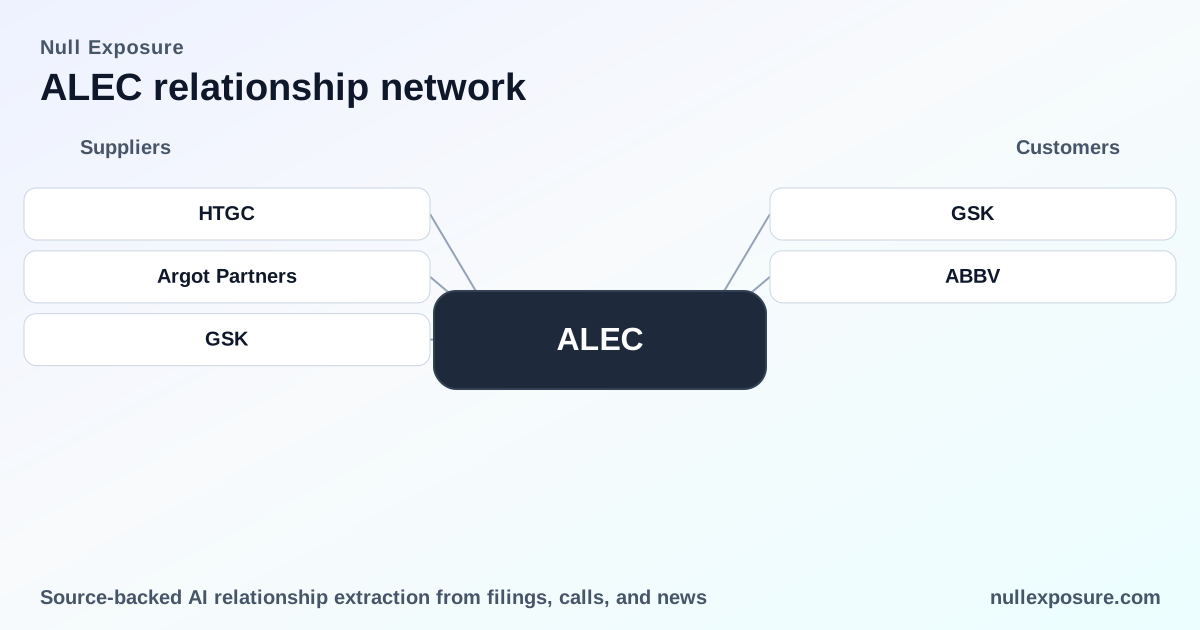
- AbbVie (ABBV) — AbbVie funded Alector’s early Alzheimer’s immunotherapy work with a multi‑hundred million dollar upfront arrangement and held exclusive options to develop and commercialize two TREM2‑targeting programs (AL002 and AL003), creating both near‑term cash and long‑running program alignment. According to MedCityNews and a GlobeNewswire release, AbbVie paid an upfront in the low‑hundreds of millions and was granted an exclusive option for global development of AL002/AL003 (MedCityNews, July 2022; GlobeNewswire, Jan 2020).
- GlaxoSmithKline (GSK) — GSK entered a large collaboration focused on progranulin biology and multiple programs (AL001/AL101 and related candidates) with a headline upfront in the high hundreds of millions and total deal value advertised around $2.2 billion, leaving Alector responsible for clinical development through Phase 2 in certain programs. Multiple news reports and the company’s own updates document a $700M upfront reported in July 2021 and an overall deal structure worth up to approximately $2.2B in payments and milestones, with ongoing joint trials into 2026 (ALNewsToday 2021; BiopharmaDive 2025; Alector press release, Feb 2026).
How the partnerships fit the operating model and what that implies for investors
Alector’s reported relationships illustrate a partner-centric contracting posture: big upfront payments transfer cash risk to partners while Alector retains significant clinical responsibilities for certain Phase 2 programs. This posture produces several firm-level signals:
- Concentration: Alector’s near‑term funding and program advancement are concentrated in a small number of large partners; operational continuity depends on those counterparties’ decisions.
- Criticality: Partners are critical to both financing and commercialization optionality — failure or withdrawal by a partner can force rapid restructuring (as observed in prior workforce reductions tied to trial outcomes).
- Maturity: The company is early‑stage with product candidates requiring significant additional development and regulatory milestones before product revenue is possible; this creates extended timelines to sustainable commercial cash flow.
- Geographic reach: Alector designs programs with global regulatory pathways in view, announcing intent to seek approvals in the US, EU and other markets, which signals an ambition to scale beyond partner markets if candidates succeed.
These characteristics describe a classic small‑cap biotech operating model: high leverage to clinical outcomes, outsized dependence on a few large collaborators, and the potential for large, episodic cash inflows from partner agreements rather than steady operating revenue.
Constraints and company-level signals investors should track
The relationship data and constraint excerpts produce several actionable signals for diligence:
- Company-level subscription indicator: an excerpt referencing the 2019 Employee Stock Purchase Plan was flagged under a subscription contract dimension; this is an HR/compensation mechanism and should be treated as a corporate funding/retention signal rather than a revenue subscription.
- Global commercialization intent: public statements confirm the company will pursue regulatory approval in the United States, European Union, and other markets if programs succeed — this raises global market opportunity but also regulatory and commercialization complexity.
- Core product focus: Alector’s revenue profile stems from clinical program progression rather than existing commercial products; the company states that all product candidates require significant additional development, manufacturing scale‑up, and a commercial organization before product sales begin.
Trackable investor metrics that flow from these constraints include partner milestone timing, cash runway, trial readout calendars (interim futility analyses, PHASE 2/3 starts), and any changes to partnership terms.
Recent market events that affect relationship risk
- Partnered trial failures have immediate operational impact. Alector’s prior workforce adjustments followed disappointing partnered trial readouts; press coverage links staff reductions and restructures to failed or delayed results in AbbVie‑ and GSK‑linked programs (FierceBiotech reporting 2024–2025).
- GSK collaboration remains active into 2026. Company filings and press updates show ongoing execution of the PROGRESS‑AD Phase 2 trial with GSK and a planned interim futility analysis in the first half of 2026 (Alector press release, Feb 2026; Finance Yahoo, Q4 2025/2026).
Key takeaways for investors
- Alector’s valuation and near‑term prospects are driven by a small number of large collaborations — most notably AbbVie and GSK — which supply upfront cash and define the company’s clinical development cadence.
- Clinical readouts are binary value events; partnerships both finance and amplify that binary exposure. Positive readouts could unlock milestone payments and de‑risk commercialization; negative readouts produce immediate financial and operational consequences.
- Investors must monitor partner commitments, milestone schedules, and trial interim analyses as primary drivers of share price movement; secondary considerations include cash runway and any new partnering or licensing activity.
For a structured, continuously updated snapshot of counterparties and exposure timelines, visit https://nullexposure.com/.
Final note: what to watch next
Prioritize these items on the road to de‑risking Alector’s story: announced interim analyses and final data for partner‑managed trials, any revisions to collaboration economics, and quarterly cash runway disclosures. These are the levers that convert partnership rhetoric into realized value for shareholders.
For deeper counterparty analytics and a timeline of partnership exposures, explore https://nullexposure.com/.