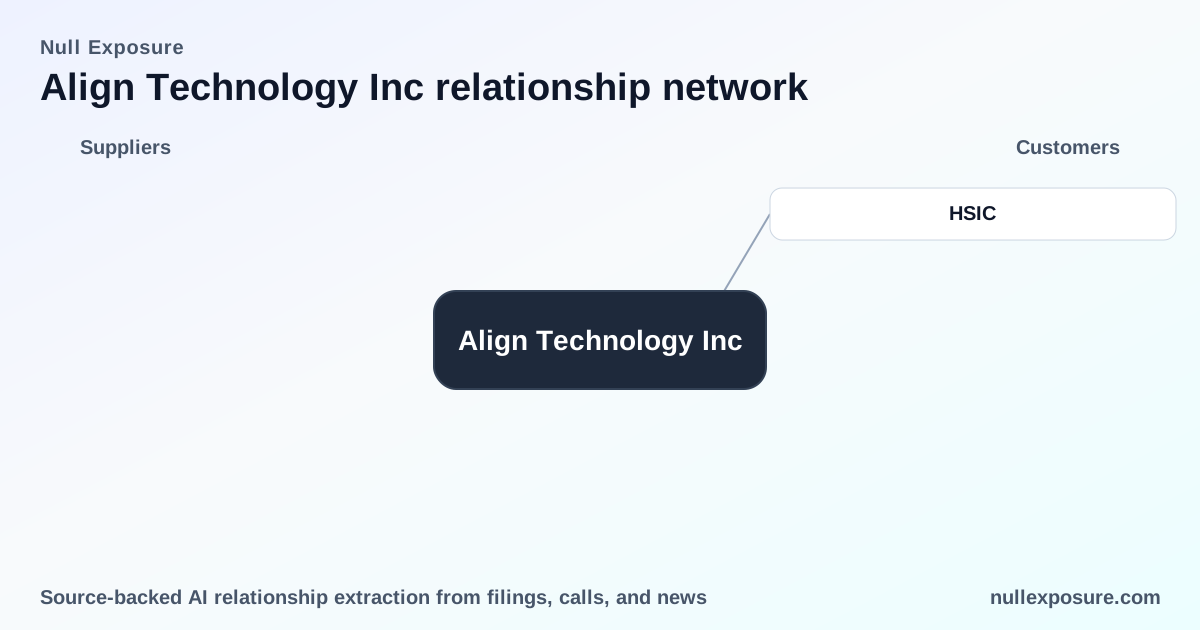
Align Technology’s customer mesh: integrations, subscriptions and what underwrites revenue
Align Technology sells the Invisalign clear aligner system and the iTero intraoral scanners that feed the company’s digital workflow; it monetizes through per-case aligner revenue (the Clear Aligner line), hardware and software sales and leases (iTero and Systems & Services), and recurring doctor-facing subscriptions such as the Invisalign Doctor Subscription Program (DSP). The combination of high-share, per-case cash flows and growing recurring software/subscription revenue creates both revenue predictability and customer lock-in via workflow integrations. For a deeper map of customer relationships and implications for operators and investors, visit https://nullexposure.com/.
How Align actually makes money and how customers contract with it
Align’s commercial model is a hybrid of transactional and recurring economics. Clear Aligner sales drive the majority of revenue — roughly 81% of worldwide net revenues — while Systems & Services (hardware, software, consumables and services) account for the remainder. The company sells primarily directly through a specialized sales force to orthodontists, general practitioners, dental laboratories and DSOs, and it supplements direct sales with agents and distributors in certain countries. The Invisalign Doctor Subscription Program (DSP) is an explicit monthly subscription tier that sells retainers and low-stage touch-up aligners to doctors, introducing recurring revenue alongside per-case income.
- Contracting posture: Mix of direct long-term relationships (doctor training and subscriptions), consumption-based per-case revenue, and channel distribution in international markets.
- Concentration and criticality: Clear Aligner is the core product line; iTero integrations with practice management software are critical for workflow stickiness and could materially reduce switching.
- Geographic footprint: Align operates globally — direct sales or authorized distribution in more than 100 countries — with material revenue concentration in North America and significant EMEA exposure.
- Maturity signals: As of year-end 2024 there were roughly 130,370 active Invisalign-trained doctors, indicating a large, established installed base to monetize through consumables, subscriptions and upgrades.
Customer relationship snapshots: who integrates with Align today
This section summarizes every customer relationship observed in the public mentions examined for FY2026.
Henry Schein One (HSIC)
Henry Schein One announced a direct data integration between Align’s iTero intraoral scanners and the Dentrix, Dentrix Ascend and Dentally practice management platforms, enabling automatic import of iTero scans into patient records and reducing manual workflows for dental practices. According to reporting from Simply Wall St, the announcement was publicized in February 2026 and emphasizes workflow automation across multiple regions (reported March 2026).
Greyfinch
Greyfinch announced a new integration with Align Technology that brings elements of the Invisalign System and iTero scanner data into Greyfinch’s practice management platform, streamlining case management for practices that use Greyfinch. Orthodontic Products Online covered the integration announcement on May 2, 2026.
American Academy of Clear Aligners (AACA) member practices
Align reported particularly strong adoption in Q1 2026 among AACA member practices, where expanded access to patient financing improved affordability, raised patient conversion rates and drove directional growth in case starts. This commentary was captured in Align’s Q1 2026 earnings call transcript reported by InsiderMonkey in May 2026.
What those relationships mean for revenue durability and operational leverage
The integrations with practice-management vendors and practice groups are strategic enablers of recurring revenue and case-volume resilience. Automating scan upload and charting into Dentrix and other PM systems reduces friction for busy clinics and increases the implicit switching cost for practices that standardize on iTero and Invisalign workflows. The Greyfinch link further broadens the ecosystem of compatible software, extending Align’s reach into different practice-management cohorts.
- Revenue durability: Subscription offerings like DSP create recurring cash flow and an installed-base monetization path (retainers, touch-ups, software and consumables). The installed base of >130k active doctors supplies a steady replacement and consumable market.
- Operational leverage: Systems and Services revenue (hardware, software, scanning services) supports higher-margin software and per-scan revenue streams while anchoring aligner sales in the clinic workflow.
- Channel exposure: Heavy North American revenue share and significant EMEA business make Align sensitive to regional demand cycles and currency fluctuations; global distribution in 100+ countries moderates single-market risk but introduces complexity.
Company-level constraints that shape customer strategy
Several operating constraints captured in filings and disclosures define how Align sells and supports customers:
- Subscription orientation: The DSP is an explicit monthly subscription program available in North America, Latin America and parts of Europe, reinforcing a shift toward recurring revenue alongside per-case sales.
- Global footprint with regional concentration: Align sells directly or through distributors in more than 100 countries; North America represents a material portion of net revenues while EMEA and APAC drive the international mix.
- Multi-role go-to-market: Align functions as a seller, manufacturer and service provider: it sells clear aligners and scanners directly, supplies dental labs, and contracts with DSOs for business-management support. The company also uses distributors and sales agents in certain markets.
- Segment economics: Clear Aligner drives ~81% of net revenues, with Systems and Services (hardware, software, scanning services) delivering the remaining ~19%, which shapes capital allocation between manufacturing and software development.
- Regulatory and compliance risk: Align’s contracts and supplier relationships require compliance; failure to comply can lead to customer contract termination or increased costs, which in turn can hurt revenue and reputation.
Investment and operational implications
For investors and operators evaluating Align’s customer relationships, the key strands are workflow entrenchment, recurring revenue buildup, and geographic/segment concentration. Integrations with practice-management platforms serve as force multipliers for adoption and retention. Strong adoption among specialized groups (e.g., AACA members) coupled with DSP subscription uptake increases predictability of case starts and lifetime revenue per doctor.
From a valuation lens, Align’s mixed model is visible in its operating metrics: trailing operating margin near 18% and meaningful EBITDA contribution, with a market capitalization reflecting growth expectations (market cap and PE figures reported through Q1 2026). Investors should weigh integration-driven stickiness and subscription growth against concentration in the Clear Aligner business and regional demand sensitivity.
For operators, the priority is converting installed iTero scanners and trained doctors into recurring subscribers and consumables purchasers through seamless integrations, transparent financing options, and regionally tailored sales motions.
For a concise customer map and ongoing monitoring of integration announcements, visit https://nullexposure.com/ to see how partnership signals change commercial exposure.
Bottom line
Align’s customer relationships are no longer just buyer-seller transactions; they are increasingly ecosystem-level integrations that lock digital workflows around iTero and Invisalign. That combination — a dominant per-case franchise fortified by subscription and software-based stickiness — underpins revenue predictability and creates operational leverage, but it also concentrates business risk in the Clear Aligner segment and in core geographies. Investors and operators should prioritize integration traction, DSP adoption rates and regional demand trends when assessing Align’s forward prospects.