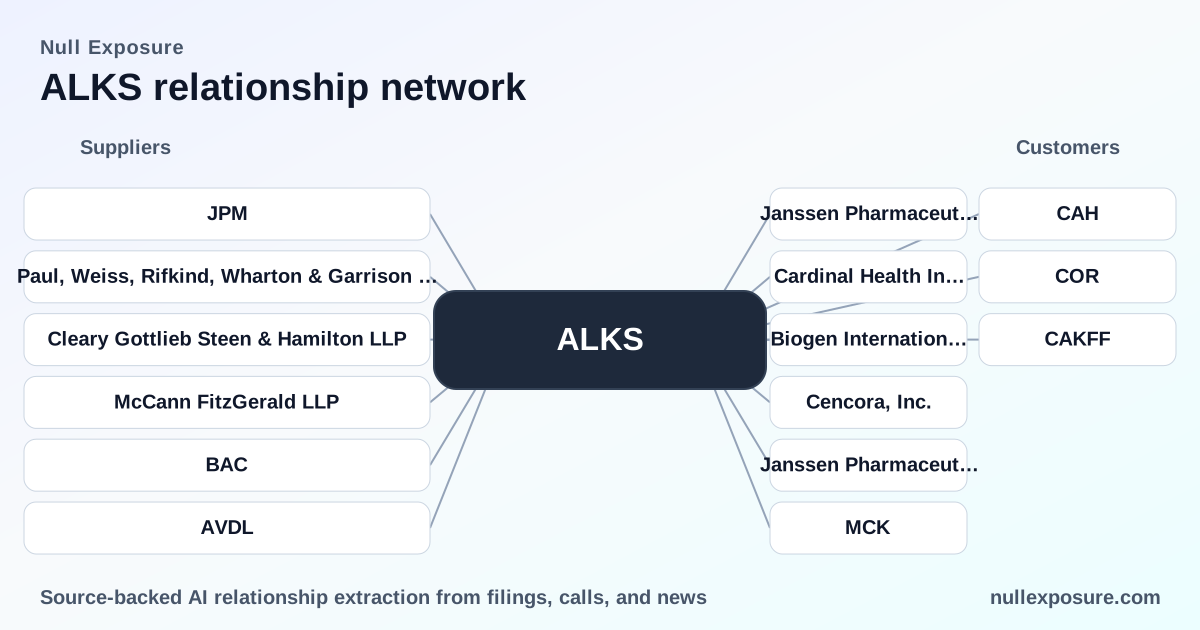
Alkermes’ customer map: wholesalers, licensees and manufacturing partners driving VIVITROL and more
Alkermes is a hybrid biopharma operator that monetizes through three distinct channels: commercial sales of its own-branded products (notably VIVITROL) into the U.S. wholesale channel; manufacturing services sold to large pharmaceutical licensees (for example, Janssen); and licensing/royalty streams from proprietary technologies used by other drugmakers. That mix produces a revenue profile where manufacturing and license income sit alongside concentrated wholesale customers, and where contractual life‑cycles and large-enterprise counterparties determine cash flow durability.
For a quick dive into primary customer relationships, see more at https://nullexposure.com/.
How Alkermes earns — a concise investor view
Alkermes sells and markets several branded products in the U.S. (VIVITROL, ARISTADA, ARISTADA INITIO, LYBALVI), directing the bulk of finished-product flows through the three largest U.S. pharmaceutical wholesalers. The company also manufactures product for third parties and collects manufacturing revenue and royalties under long-standing licensing agreements (notably with Janssen and Biogen). These two operating modes — seller to wholesalers and manufacturer/licensee partner — drive topline and create concentration and counterparty risk that are material to valuation.
Constraints that shape the operating model and capital risks
- Contracting posture and maturity: Alkermes operates under a mix of long-term licensing arrangements — some royalty provisions extend up to 15 years from first commercial sale — giving durable, contractually-backed royalty streams alongside shorter-term commercial sales. The 10‑K describes a know‑how royalty reset and 15‑year payment term for certain agreements.
- Counterparty concentration and criticality: Alkermes’ U.S. distribution is highly concentrated: McKesson, Cardinal Health and Cencora together account for the majority of VIVITROL gross sales (34%, 21%, and 16% of VIVITROL gross sales, respectively). Those wholesalers are very large, strategic counterparties and collateral is generally not required.
- Role complexity: The company is simultaneously a seller, manufacturer and licensor — it sells its own products, manufactures for licensees (and records manufacturing revenues upon acceptance), and historically licensed proprietary technology to third parties.
- Geographic concentration: Revenues are heavily U.S.-centric; the U.S. accounted for the overwhelming share of revenue in FY2024 as reported in the Form 10‑K.
- Materiality: Certain customer relationships are material and critical to commercialization and revenue, making changes in those partnerships a direct business risk rather than an operational nuisance.
Relationship-by-relationship readout (FY2024 sources unless noted)
-
Janssen Pharmaceuticals, Inc.
Alkermes has collaborative arrangements with Janssen related to long‑acting INVEGA products and RISPERDAL CONSTA, and it has provided licensing rights and technical assistance tied to Alkermes’ NanoCrystal technology. The company also records manufacturing revenues under a supply agreement with Janssen for RISPERDAL CONSTA. Source: Alkermes 2024 Form 10‑K (FY2024). -
Biogen International GmbH
Alkermes cites a collaboration with Biogen related to the product VUMERITY, reflecting a license/collaboration revenue relationship. Source: Alkermes 2024 Form 10‑K (FY2024). -
Cardinal Health Inc.
Cardinal Health is one of the three very large U.S. wholesalers through which Alkermes distributes its marketed products; it represented a significant share of VIVITROL gross sales in 2024. Source: Alkermes 2024 Form 10‑K (FY2024). -
Cencora, Inc.
Cencora (formerly AmerisourceBergen) is listed as a primary wholesale customer and accounted for a material portion of VIVITROL gross sales in 2024. Source: Alkermes 2024 Form 10‑K (FY2024). -
Janssen Pharmaceutica International (division of Cilag International AG)
Alkermes’ collaborative arrangements extend to Janssen’s international affiliates for the commercialization of long‑acting INVEGA products, under licensing and technical‑assistance arrangements. Source: Alkermes 2024 Form 10‑K (FY2024). -
McKesson Corporation (MCK)
McKesson is the largest single purchaser of VIVITROL product in FY2024, representing 34% of VIVITROL gross sales, and is a principal distribution partner for Alkermes’ U.S. marketed products. Source: Alkermes 2024 Form 10‑K (FY2024). -
AMRX (AMRX) — Rondo Partners LLC (from AMRX 10‑K)
Rondo Partners LLC purchases inventory from Alkermes for resale, an indication that third‑party distributors and resellers outside the three main wholesalers also transact in Alkermes-manufactured inventory. Source: AMRX 2024 Form 10‑K (FY2024). -
MCK (alternate listing of McKesson)
The filing reiterates that McKesson is a major wholesale customer and purchaser of Alkermes’ VIVITROL product. Source: Alkermes 2024 Form 10‑K (FY2024). -
NVO (Novo Nordisk) — news report (FiercePharma)
Novo Nordisk announced in late 2023 it would acquire a pill factory from Alkermes in Athlone for about $91 million, reflecting an asset sale and capability transfer in Ireland. Source: FiercePharma reporting on Novo/Novo’s 2023 announcement (reported Mar 2026 article). -
Cardinal Health (CAH) — alternate listing
The 10‑K shows Cardinal Health consistently among the top customers and in the Company’s receivables profile across reporting periods, confirming the commercial concentration. Source: Alkermes 2024 Form 10‑K (FY2024). -
CAH (ticker form)
The filing’s receivables and revenue tables reference CAH as a repeat top counterparty in customer receivables and sales. Source: Alkermes 2024 Form 10‑K (FY2024). -
McKesson Corp (alternate name)
Alkermes’ narrative and schedules list McKesson Corp as a cornerstone distribution partner for U.S. sales. Source: Alkermes 2024 Form 10‑K (FY2024). -
Cencora (alternate listing)
The company’s revenue and receivable disclosures list Cencora among the top counterparties and repeat distributors for Alkermes’ marketed products. Source: Alkermes 2024 Form 10‑K (FY2024). -
COR (ticker form of Cencora)
The receivables schedule in Alkermes’ 10‑K includes COR as a principal customer over the three-year period shown. Source: Alkermes 2024 Form 10‑K (FY2024). -
McKesson (variant entry, non‑ticker)
The filing again lists McKesson in revenue/receivable tables; the multiple entries in the results reflect reporting permutations rather than distinct contracts. Source: Alkermes 2024 Form 10‑K (FY2024). -
CAKFF (alternate McKesson listing)
The receivables and revenue tables include another McKesson identifier; the substance remains the same: McKesson is a major purchaser and receivable counterparty. Source: Alkermes 2024 Form 10‑K (FY2024).
Investment implications — what investors should prioritize
- Concentration risk is real and quantifiable: McKesson, Cardinal and Cencora together accounted for roughly 71% of VIVITROL gross sales in 2024 (34% + 21% + 16%). That concentration creates meaningful commercial leverage for those wholesalers and counterparty exposure for Alkermes.
- Licensing and manufacturing provide stability but are counterparty‑dependent: Long‑term licensing terms and manufacturing agreements (with explicit references to Janssen and others) deliver recurring revenue, but the company’s fortunes are tied to the commercial success and contractual continuity of large pharma partners.
- Geography and product concentration: The business is highly U.S.-centric for revenue recognition; U.S. market dynamics and payer/wholesaler behavior will materially influence near‑term cash flows.
- Asset monetization activity is occuring: The sale of the Athlone pill factory to Novo Nordisk is a structural event that changes Alkermes’ manufacturing footprint and capital allocation; treat asset sales as both a source of one‑time cash and a cue to monitor remaining manufacturing scale.
If you want an expanded customer‑concentration dashboard and implications for counterparty credit exposure, learn more at https://nullexposure.com/.
Bottom line
Alkermes is a hybrid commercial‑and‑manufacturing biopharma with durable licensing revenue and concentrated wholesale distribution in the U.S. The company’s value depends on continued execution with very large wholesale partners and on maintaining manufacturing and license relationships with major pharma companies such as Janssen and Biogen. Investors should weight revenue durability from long‑term licensing and manufacturing contracts against the clear concentration and counterparty risks embedded in the wholesale channel.