ALL-P-J (Allstate) — Customer Readout and Strategic Implications for Investors
Allstate operates as a large, diversified insurer that monetizes through premium underwriting, fee income and investment yields on float, with brand partnerships deployed to support distribution and customer acquisition rather than core underwriting. For holders or analysts of ALL-P-J securities, customer-relationship signals are most useful as indicators of marketing strategy, brand risk, and non-core capital allocation, not as drivers of underwriting economics. Learn more at https://nullexposure.com/
A single public customer relationship: what was announced
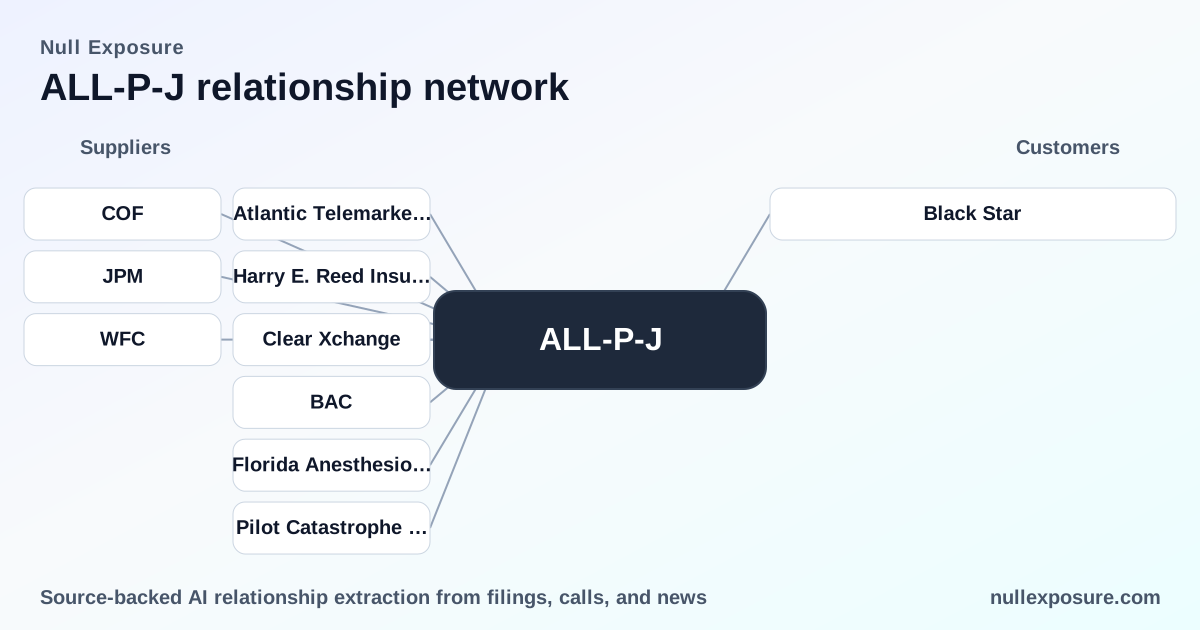
All public customer-scope activity in the available records points to a single marketing and sponsorship engagement. According to a PR Newswire release dated March 9, 2026, Allstate is a Founding Partner and title sponsor of the Black Star ID and National Showcases, a multi‑year partnership targeted at talent development and audience engagement. The announcement characterizes the deal as a brand and event sponsorship rather than a distribution or risk-transfer arrangement (PR Newswire, March 9, 2026).
Black Star — one-line commercial description and source
Allstate acts as a Founding Partner and title sponsor for Black Star ID and its National Showcases, aligning the insurer with youth-focused music and cultural events to amplify brand reach; PR Newswire published the announcement on March 9, 2026. (PR Newswire, 2026-03-09)
Why this relationship matters to investors
This sponsorship signals active brand investment. For a legacy property‑casualty insurer like Allstate, these partnerships serve three clear roles:
- Customer acquisition and retention: sponsorships can drive awareness among younger demographics, improving the long-term renewal and cross‑sell pipeline.
- Reputational positioning: cultural sponsorships shape brand perception and are part of broader marketing ROI with intangible but persistent value.
- Low operational dependency: unlike distribution agreements or large captive clients, event sponsorships do not create counterparty concentration or underwriting exposures.
From a capital and credit perspective, this Black Star relationship is a marketing/brand expense decision rather than a material counterparty contract that would alter loss exposure or collateral. The sponsorship is consistent with an insurer focused on top‑of‑funnel growth and brand modernization.
What the relationship implies about Allstate’s operating posture
With the single partnership disclosed in the customer scope, investors should interpret the engagement as a tactical marketing play within a broad, diversified customer base rather than evidence of concentrated customer risk. Specific operating-model characteristics implied by this signal:
- Contracting posture: sponsorships like this reflect flexible, short-to-medium term commercial commitments rather than long-duration, lock‑in contracts.
- Customer concentration: the record shows no single customer dominating revenue or underwriting flows; the Black Star relationship is non-critical to core operations.
- Criticality: the arrangement is non-systemic for underwriting and claims economics, carrying limited counterparty risk.
- Maturity: labeling the partnership as a multi‑year sponsorship signals mid-term commitment to marketing activation, not a permanent structural change.
There are no customer-scope constraints recorded in the reviewed relationship set. The absence of documented constraints in the customer record is itself a company-level signal: it indicates limited contractual encumbrances surfaced in these public relationship disclosures, and therefore greater agility in pursuing marketing initiatives without material third‑party restrictions.
Learn more about how we surface corporate relationship signals at https://nullexposure.com/
How to translate this for investment decisions
For equity or preferred holders assessing ALL-P-J, weigh the Black Star sponsorship within the following framework:
- Earnings and capital impact: Sponsorship spend is an operating expense; it is not a driver of loss ratios or reserve adequacy. Monitor guidance and segment disclosures for any material reallocation to marketing that could compress near‑term underwriting margins.
- Brand risk vs. return: Cultural partnerships can uplift long-term customer lifetime value if activation and measurement are disciplined; assess management commentary on KPIs tied to the sponsorship.
- Balance-sheet primacy: For preferred securities and credit-focused investors, the primary variables remain underwriting performance, reserve adequacy and investment returns. This partnership is a secondary signal.
- Event of reputational shock: Any sponsor relationship exposes the brand to reputational tail risk if associated events draw controversy; track event governance and contractual reputational protections in subsequent disclosures.
Practical takeaways and monitoring checklist
- The relationship is marketing-first and non-core to underwriting economics; treat it as a brand/expansion signal, not a counterpart risk.
- No customer constraints were identified in the customer-scope record, implying flexible contracting and low apparent third-party friction at the disclosed level.
- Watch for follow-up disclosures: look for ROI metrics, renewal terms, or expanded distribution clauses in quarterly filings or investor presentations that would elevate the partnership’s materiality.
Bottom line
This publicly visible customer relationship—Allstate’s role as Founding Partner and title sponsor of Black Star ID—signals targeted brand investment rather than a material shift in underwriting exposure or counterparty concentration. For most investors in ALL-P-J, the sponsorship is relevant to long-term franchise positioning and marketing cadence; it is not a credit-altering customer dependency. For deeper coverage of Allstate’s commercial relationships and to track future customer-scope disclosures, visit https://nullexposure.com/ and subscribe to ongoing relationship intelligence.