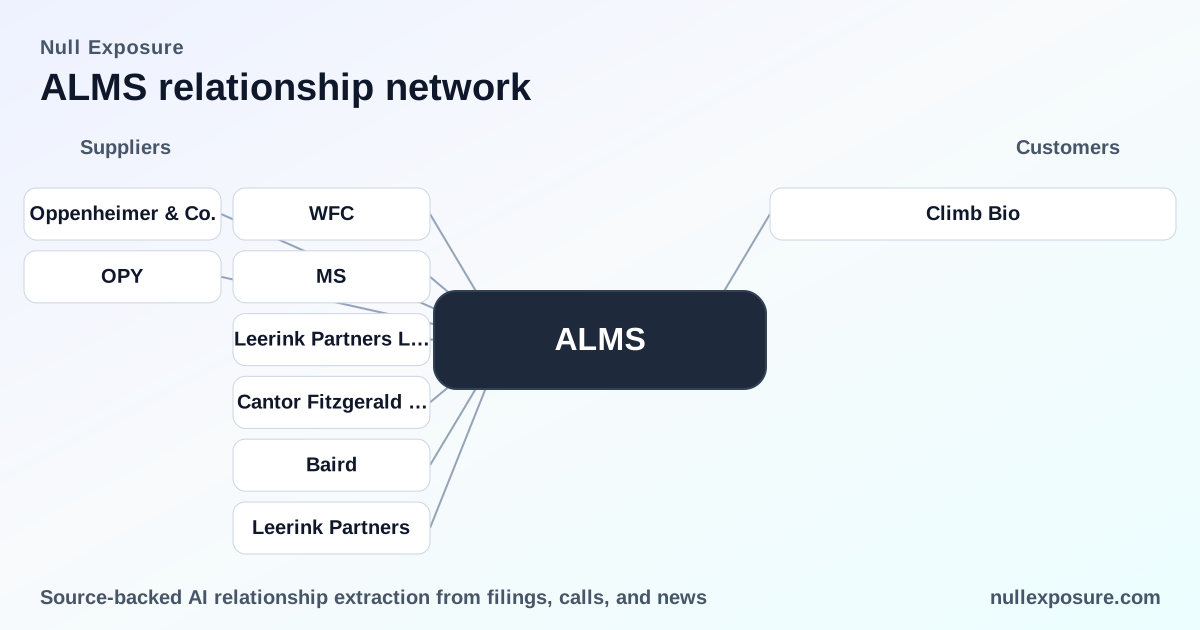
Alumis (ALMS): Customer Map and Investment Implications
Alumis Inc. develops and commercialized products and intellectual property that it monetizes through licensing and collaboration agreements alongside direct commercialization efforts. Investors should treat ALMS as a partnership-driven, early commercial-stage company where discrete partner payments — not recurring product sales — have driven the bulk of reported revenue to date. For a consolidated view of related counterparty records and filings, see https://nullexposure.com/.
Quick take: why customers matter for the stock thesis
Alumis’s P&L shows very low reported revenue versus sizeable enterprise value and negative operating margins, which converts partner payments into the clearest near-term signal of commercial progress. The company’s revenue mix for the latest reported year is concentrated in a small number of collaboration and license receipts, so customer outcomes and contract performance are first-order drivers of cash generation and valuation re-rating.
- Concentration risk is high: a single collaboration accounted for essentially all reported revenue in the year-ended reporting.
- Contract-level performance is critical: milestone payments and license fees materially affect quarterly and annual results.
- Counterparty and reimbursement dynamics matter: corporate and government payor decisions will influence commercialization economics.
For more structured relationship records and source links, visit https://nullexposure.com/.
Customer relationships you need on your radar
Kaken Pharmaceutical Co., Ltd.
Alumis recognized $17.4 million in license revenue and $6.7 million in collaboration revenue for the year ended December 31, 2025, specifically tied to its collaboration and licensing agreement with Kaken, meaning Kaken-generated receipts constituted the overwhelming share of reported revenue in that period. This disclosure is presented in ALMS’s FY2025 reporting and related press filings. (GlobeNewswire/ManilaTimes coverage and an 8‑K filing summarized in StockTitan and AlphaStreet, May 2026.)
Sources: ALMS FY2025 disclosures and press releases reported by GlobeNewswire/ManilaTimes (May 2, 2026) and summarized in AlphaStreet and an 8‑K aggregation on StockTitan (May 2026).
Climb Bio
Alumis issued a notice of material breach to Climb Bio for a missed $3.0 million milestone payment, indicating contractual enforcement and payment recovery are active elements of ALMS’s commercialization playbook. This was reported in a TradingView item on March 9, 2026.
Source: TradingView report covering ALMS’s notice of material breach to Climb Bio (March 9, 2026).
LRE (leading real-estate / design partnership reference)
A March 2026 interview with representatives of LRE notes collaboration activity with leading global furniture and design brands that lists ALMS among partners developing rooms that “merge art, design, and comfort,” signaling ALMS’s involvement in design/brand partnerships beyond pure licensing. The mention is brief but indicates a customer/partner relationship in design or product placement channels according to TheWorldfolio’s March 10, 2026 interview.
Source: TheWorldfolio interview with LRE referencing collaborations that include ALMS (March 10, 2026).
What the relationship map implies for operations and risk
The observable relationships define ALMS as a partner-centric commercial operator with the following operating model characteristics:
- Contracting posture — transactional and milestone-oriented. ALMS’s disclosed revenues are dominated by license and collaboration payments and the public notice of material breach demonstrates a posture that enforces milestone economics when payments lapse.
- Concentration — high counterparty concentration. The Kaken license and collaboration payments roughly equal reported full-year revenue, creating single-counterparty concentration risk that amplifies volatility in reported results.
- Criticality — counterparty performance is highly material to cash flows. Milestone payments and license fees determine near-term revenue recognition and hence the company’s ability to fund operations absent other financing.
- Maturity — early commercial with some de‑risking from monetized licenses. The presence of license income signals progress toward commercialization, but the negative operating margins, modest revenue base, and enforcement actions indicate that business model maturity is still limited and dependent on contract execution.
These are company-level signals derived from contract disclosures and revenue composition; they are not assigned to a single relationship unless explicitly named in the source material.
Investment implications and risk checklist
- Revenue concentration makes guidance and near-term forecasts binary. A single partner not paying milestones or failing to extend a program will produce immediate downdrafts in top-line results.
- Contract enforcement matters to valuation. The Climb Bio breach notice demonstrates management’s willingness to litigate or enforce contract terms, which is positive for recovery but signals counterparty friction risk.
- Reimbursement and government dynamics are a strategic wild card. ALMS’s public filings emphasize that regulatory and payor decisions affect commercialization economics; this is a company-level exposure that will shape pricing and market access for any clinically relevant offerings.
- Partnership diversification is an active lever. Mentions of design and branding partnerships (LRE) imply the company is pursuing non-traditional channels alongside formal licensing, which will matter for revenue durability if those channels scale.
How to monitor these relationships going forward
- Watch ALMS’s SEC filings and the company press release cycle for explicit milestone schedules, license amortization, and any amendments to the Kaken agreement — those items will directly impact quarterly recognition.
- Track legal or enforcement actions and notices (like the Climb Bio notice) as leading indicators of cash recoverability and counterparty stability.
- Follow industry press and partner disclosures for secondary confirmation of commercial rollouts in design or product channels referenced by LRE.
Final read for investors
ALMS is a contract-driven commercial-stage issuer where one partner accounted for essentially all disclosure-backed revenue in the latest reported year; contract execution and milestone receipts are therefore the primary valuation levers. Governance around contract enforcement and the company’s ability to diversify partner revenues will determine whether current enterprise value discounts persist or narrow as revenue becomes more predictable.
For a consolidated set of customer relationship records and source links, consult https://nullexposure.com/.