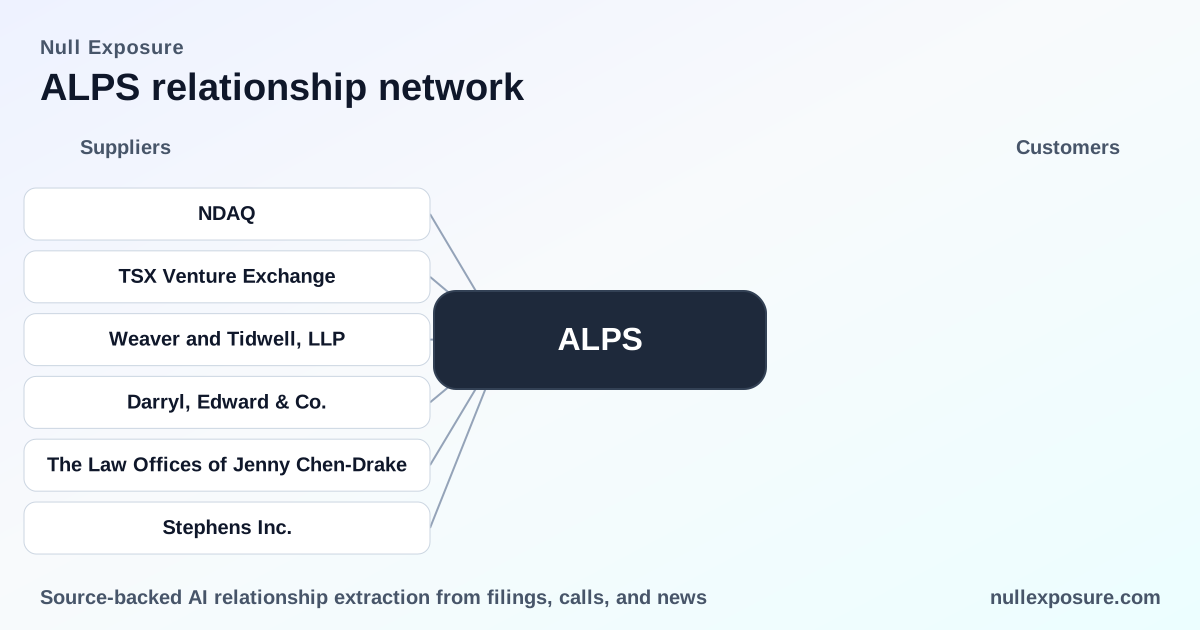
Alps Group Inc (ALPS): Customer Relationships, Contract Risk, and Valuation Disconnect
Alps Group Inc operates as an energy developer under the Alpine Summit Energy Partners identity and monetizes through contractual upstream development and production agreements with operating partners and oilfield counterparties. The company’s economics are contract-driven rather than asset scale-driven: revenues depend on counterparty performance and retained contractual claims, not on a broad, recurring customer base. For investors, this elevates counterparty credit and contract-enforcement risk above traditional commodity exposure. For quick reference, see more company intelligence at https://nullexposure.com/.
Market snapshot and where risk concentrates
- Market capitalization sits at roughly $153 million with Revenue TTM reported as $0, while valuation multiples show Price-to-Sales of 44.87 and EV/Revenue of 45.06, indicating valuation is disconnected from reported operating revenue.
- Shares outstanding are 3.0 million; reported insider and institutional holdings are 0% in the overview, which signals very low institutional participation and potential liquidity constraints.
These facts frame the investment case: Alps is a small-cap developer whose value is tightly linked to a small set of contractual relationships and the company’s ability to enforce claims or find buyers for its assets. The recent public record of Chapter 11 proceedings and counterparty disputes makes contractual counterparty performance the primary driver of near-term equity value.
Operational posture and business-model constraints Alps’ operating model exhibits several characteristics that investors must treat as central, not peripheral:
- Contracting posture: The company’s revenue stream is highly contingent on partner payments and contract performance. Public filings tied to Alpine Summit’s Chapter 11 show operating partners and contract counterparties directly influenced cash flow by withholding payments, which forced legal action to enforce contracts. This indicates a fragile contracting posture: when counterparties stop paying, operational cash flow collapses and litigation becomes a substitute for revenue collection.
- Concentration and criticality: With zero reported revenue and a small outstanding share base, a handful of counterparties are functionally critical. The refusal of a single material counterparty to remit payments had a systemic effect on operations, demonstrating high counterparty concentration risk.
- Maturity and liquidity: Zero reported revenue and negligible institutional ownership suggest a pre-revenue or distressed developer profile with limited market liquidity. Valuation multiples reflect expectations about asset sales or recovery rather than ongoing operating cash flow.
- Enforcement reliance: Given Chapter 11 activity, the company’s upside depends on successful restructuring, sale processes, or successful breach-of-contract litigation outcomes rather than organic growth.
No explicit contractual-excerpt constraints were returned in the relationship results set, so these operating-model constraints are company-level signals derived from the combination of the financial overview and the public reports on bankruptcy and counterparty disputes.
How the public records map to the customer footprint Below I cover every customer-related relationship surfaced in the results, with concise plain-English summaries and source references.
SMRF — Brand connection to ALPS SMRF is referenced in a market listing that connects the name “Brand ALPS” to SMRF, indicating usage of the ALPS brand in external market listings. According to a TradingView listing dated May 3, 2026, SMRF’s entry includes the string “Brand ALPS,” suggesting a branding or naming relationship in market references rather than a clearly documented commercial supply contract (TradingView, May 3, 2026: https://www.tradingview.com/symbols/BOATS-SMRF/).
Dallas Petroleum Group — contract counterparty and legal adversary Dallas Petroleum Group is named in a Chapter 11-era dispute where Alpine Summit alleged breach of contract after counterparty non-payment; operating partners and counterparties’ refusal to pay precipitated legal action and played a role in the debtor’s decision to pursue a sale process in bankruptcy. A DebtWire case profile on IonAnalytics (published May 2, 2026) documents Alpine Summit Energy Partners’ breach-of-contract complaint against Dallas Petroleum Group as part of its Chapter 11 proceedings (IonAnalytics / DebtWire, May 2, 2026: https://ionanalytics.com/insights/debtwire/case-profile-alpine-summit-energy-partners-will-look-for-buyer-in-chapter-11/).
Interpreting relationship risk into valuation and investor action
- Counterparty enforcement is the adjustable lever for equity recovery. With operational revenues at zero, upside is realized through recoveries in bankruptcy, asset sales, or legal claims against counterparties. Investors should value the equity on the probability and timing of recovery actions, not on stable operating cash flow.
- Concentration risk is de facto governance risk. The lack of institutional holders and a small share base make conventional market oversight and liquidity thin; minority-equity action will depend heavily on the bankruptcy process and major creditor/insider dynamics.
- Legal and restructuring timelines dominate near-term outcomes. The IonAnalytics profile documents an active Chapter 11 process; monitoring court dockets, counterparties’ motions, and any announced stalking-horse bids or sale timelines is the primary short-term catalyst set.
Key takeaways for investors
- Primary risk: counterparty non-performance and contract enforcement. Public records show counterparties refusing payment that directly stopped operations.
- Valuation disconnect: high multiples vs zero revenue. The market prices optionality around asset sales or litigation outcomes rather than operating results.
- Low institutional interest and limited liquidity increase execution risk for any equity play and concentrate outcome control in the restructuring process.
Next steps for due diligence
- Track the Chapter 11 docket and any court filings for sale motions, stalking-horse bids, or settlement agreements involving Dallas Petroleum Group and other counterparties.
- Verify actual counterparty exposure and contract terms in filed schedules or plan disclosures; these documents will reveal the magnitude of disputed claims and the likely recovery path.
- Monitor brand and market listings for additional named counterparties such as SMRF, and confirm whether those are branding references or reflect material commercial arrangements.
For a concise intelligence package and ongoing monitoring of ALPS and its counterparties, visit our research hub: https://nullexposure.com/.
Conclusion Alps Group (ALPS) is a litigation-and-restructuring story as much as it is an energy developer: equity value is contingent on the outcome of bankruptcy-sale dynamics and successful enforcement or settlement of disputed contracts. Investors should treat counterparty disputes—and the company’s demonstrated zero operating revenue—as the dominant variables in any valuation or operating-projection exercise.