Alerus Financial (ALRS): Customer Relationships That Drive Fee Income and Regional Lending
Alerus Financial Corporation operates a diversified regional financial services platform through three revenue engines—banking, retirement & benefit services, and wealth—monetizing via interest spread on loans and deposits, fee-based retirement plan administration and investment advisory, mortgage origination and servicing, and transactional banking services. For investors, the customer book combines broad retail deposit relationships and fee-dependent institutional clients, producing a revenue mix where noninterest income is a material driver of profitability.
Learn more about how relationship intelligence informs investor decisions at https://nullexposure.com/
How ALRS structures its customer-facing business: concise operating model
Alerus runs as a national-chartered bank with a pronounced regional footprint. The company’s operating model emphasizes fee-based services (retirement plan recordkeeping, investment fiduciary services, HSAs, ESOP administration) alongside traditional banking activities (commercial and consumer lending, deposit gathering, cash management). This hybrid configuration produces a contracting posture that is short-term and transactional for revenue but includes pockets of longer-duration funding relationships (time deposits and certain public deposits).
- Contracting posture: Revenue is predominantly transactional and month-to-month for retirement and wealth services; ALRS does not typically enter long-term revenue contracts with customers and reports minimal contract balances. At the same time, the bank holds time deposits with maturities extending beyond one year, indicating a mix of short-term revenue and some longer-term funding commitments.
- Concentration: Commercial lending and real estate collateral are concentrated in North Dakota, Minnesota and Arizona, with 83% of loans tied to those states as of Dec 31, 2024.
- Criticality: Retirement and benefit services are material to the business, representing a significant portion of noninterest income and forming a strategic, national-facing service line.
- Maturity and lifecycle: Customer relationships are largely active and growing—the firm reported a marked increase in deposits and a large jump in loans serviced for others—supporting ongoing servicing revenue streams but also elevating operational complexity.
These characteristics drive cash flow stability through recurring fees while concentrating credit risk regionally and exposing the firm to execution risk on servicing and administration.
Who ALRS serves in plain terms
ALRS targets a blend of counterparty types that shapes both risk and opportunity:
- Individuals and professionals: Wealth clients, depositors and consumer loan borrowers—including professionals such as lawyers, accountants and doctors—drive retail deposit and advisory fee income.
- Small and mid-market businesses: The bank focuses on businesses with sales between $2 million and $100 million, generating commercial loan volumes and treasury services revenue.
- Government entities: Municipalities, school districts and other public depositors represent a stable source of low-cost funding.
- National retirement plan clients: Retirement and benefit services operate nationally, bringing scale to fee revenue and diversification beyond the regional lending book.
Relationship snapshots: what the public signals say
Air T, Inc. — funding expectation from Alerus (FY2026)
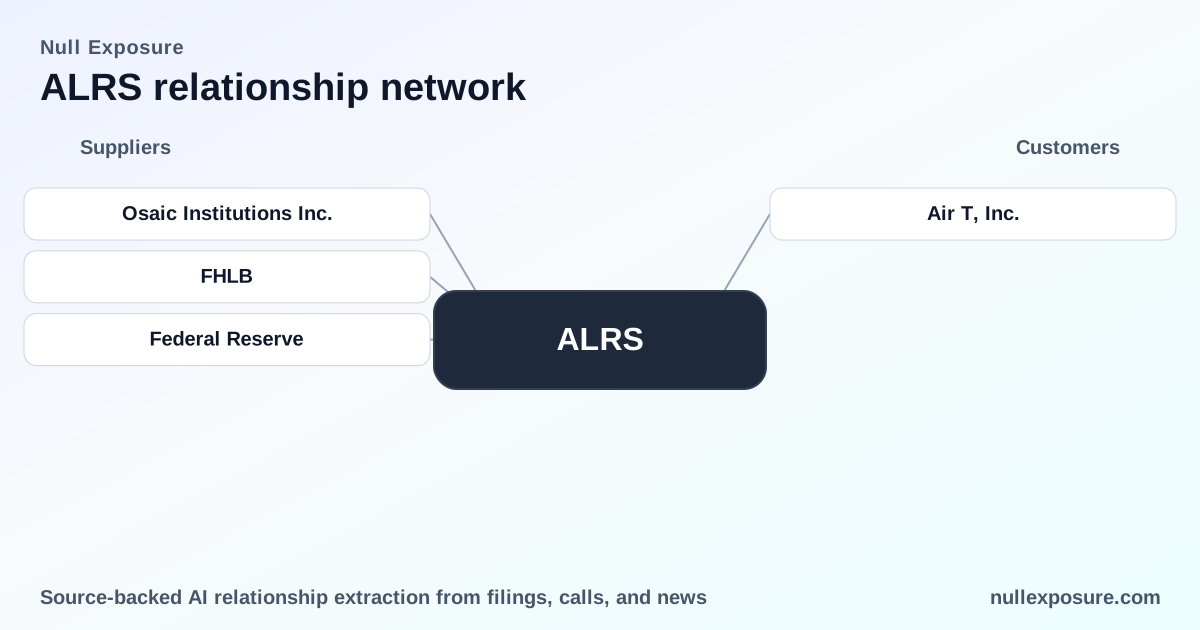
A MarketScreener news report from March 9, 2026, noted that Air T, Inc. expects to receive $6 million in funding from Alerus Financial, National Association, indicating a direct lending or credit facility relationship between the two companies. This item signals ALRS’s role as a regional lender providing targeted capital to corporate borrowers. (MarketScreener, March 9, 2026)
AIRT (Air T) — amendment to revolving credit agreement (FY2025)
A TradingView summary citing Zacks on March 9, 2026, reported that Air T amended its revolving credit agreement with Alerus, increasing borrowing capacity to $20 million, reducing interest costs, and extending maturity to August 28, 2027, confirming that Alerus structures medium-term working capital facilities for mid-market borrowers and is active as a committed creditor. (TradingView / Zacks, March 9, 2026)
What these relationships reveal about ALRS’s customer posture
The two public notices concerning Air T/AIRT illustrate a recurrent commercial pattern: Alerus acts as a lender and credit-provider to mid-market companies, structuring revolvers and term facilities that improve borrower liquidity and extend maturity profiles. Those actions align with the firm's stated strategy of serving small to mid-sized businesses and supporting growth-oriented commercial borrowers.
Commercial implications and risk profile for investors
- Revenue stability from services: The retirement and benefit services business supplies recurring, fee-based income and accounted for a significant share of noninterest revenue in 2024; this reduces earnings volatility compared with an interest-only model.
- Balance-sheet funding mix: Total deposits jumped to $4.4 billion as of Dec 31, 2024—a 41.4% increase year-over-year—strengthening liquidity but raising the importance of deposit retention strategies. ALRS also holds time deposits with maturities beyond one year, indicating some medium-term funding commitments that support loan origination.
- Concentration risk: With 83% of loans concentrated in North Dakota, Minnesota and Arizona, ALRS carries regional credit concentration that increases sensitivity to local economic cycles.
- Operational and regulatory exposure: The large and growing portfolio of loans serviced for others (unpaid principal balances increased materially between 2023 and 2024) creates operational scale but elevates servicing risk and regulatory oversight tied to mortgage servicing rights and fair-value measurement.
Investor takeaways
- ALRS delivers a hybrid revenue model: fee-dominant retirement services provide recurring cash flow while regional commercial lending delivers growth and interest income.
- Customer relationships are active and commercially oriented, with the bank stepping in as committed lender to mid-market borrowers (exemplified by the Air T credit facility amendments and funding expectation).
- Concentration and servicing scale are the principal risks: geographic loan concentration and rapid growth in loans serviced for others require careful monitoring of underwriting and operational controls.
- Balance-sheet resilience is improving: sizable deposit growth and diversified fee streams create resilience but demand disciplined liability management.
For more on relationship-level signals and how they affect portfolio stress testing, visit https://nullexposure.com/
Bottom line
Alerus’s customer-facing strategy is deliberately hybrid: it leverages national-fee businesses to stabilize earnings while using regional banking relationships to deploy capital into mid-market borrowers. The publicly visible transactions with Air T/AIRT reinforce ALRS’s role as an active commercial lender, and company disclosures make clear that retirement services are a material and strategic revenue driver. Investors should weigh the benefits of recurring fee income against regional concentration and the operational demands of an expanding servicing business.