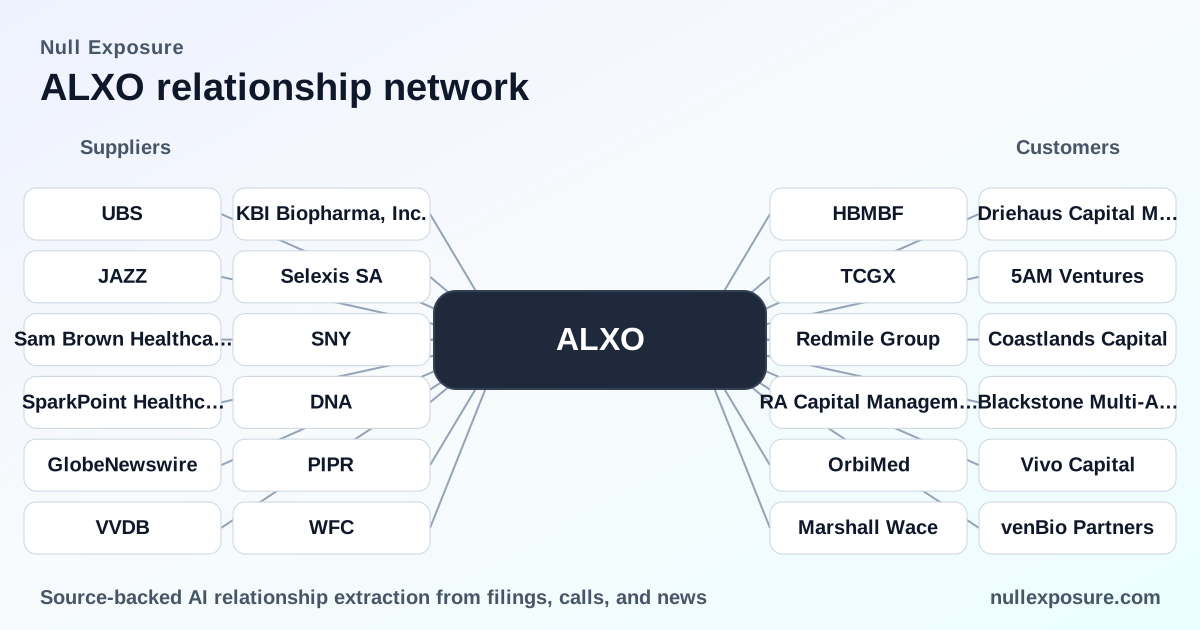
ALXO — Financing relationships that shape commercialization optionality
Alx Oncology (ALXO) is a clinical-stage immuno‑oncology company that develops cancer therapeutics and currently monetizes through equity financings and the prospective licensing or direct commercialization of approved products. Since late Q1 2026 the company executed an underwritten equity offering that brought a slate of institutional life‑science investors onto the cap table, reinforcing its near‑term cash runway while leaving commercialization rights largely in-house. For investors and operators evaluating ALXO’s customer and capital relationships, the financing syndicate and the company’s stated commercial posture are the dominant commercial signals for 2026.
If you want concise tracking of institutional involvement and related governance signals, see the full coverage at https://nullexposure.com/.
What the January–May 2026 financings tell you about ALXO
ALXO’s public disclosures and press coverage show the company priced underwritten offerings in early 2026 with broad participation from specialist healthcare investors and multi‑asset managers. That participation accomplishes two things for ALXO: it supplies operating capital and validates investor interest from both biotech‑specialist funds and larger multi‑strategy asset managers. Key public notices include a GlobeNewswire company release (January 30, 2026) and news reports in March–May 2026 that summarized the transaction and syndicate.
Who joined the cap table (one‑ or two‑line summaries)
-
RA Capital Management — Lead new investor in the financing syndicate, signaling specialist biotech conviction and likely follow‑on support for clinical milestones. According to ALX’s press release on January 30, 2026 and subsequent coverage, RA Capital was listed among the new investors backing the offering. (GlobeNewswire, 2026‑01‑30; Investing.com, 2026‑05‑02)
-
TCGX — Identified as a new participating investor in the offering that led to the January/early‑2026 capital raise. The company disclosure and media wires list TCGX as one of the institutional newcomers in the round. (GlobeNewswire, 2026‑01‑30; Investing.com, 2026‑05‑02)
-
OrbiMed — A repeat biotech investor that participated in the underwritten offering, reinforcing sector expertise on ALXO’s shareholder register. OrbiMed was cited in the company release and investor reports as a participant. (GlobeNewswire, 2026‑01‑30; Investing.com, 2026‑05‑02)
-
5AM Ventures — Existing venture investor that joined the financing alongside new institutional backers, maintaining early‑stage sponsor continuity. The press materials list 5AM among participating investors. (GlobeNewswire, 2026‑01‑30; Investing.com, 2026‑05‑02)
-
Vivo Capital — Healthcare‑focused investor included in the financing syndicate, indicating continued specialist capital support. The GlobeNewswire announcement enumerated Vivo Capital as a participant. (GlobeNewswire, 2026‑01‑30)
-
HBM Healthcare Investments (HBMBF) — Listed both as HBM Healthcare Investments and under ticker HBMBF in coverage; participated as an institutional investor in the transaction. The company press release and secondary coverage cite HBM among participating funds. (GlobeNewswire, 2026‑01‑30; StockTitan reporting, March 2026)
-
Blackstone Multi‑Asset Investing — A large multi‑asset manager that participated in the offering, bringing scale and non‑specialist capital to the register. Investing.com and company announcements list Blackstone Multi‑Asset Investing among participants. (Investing.com, 2026‑05‑02; GlobeNewswire, 2026‑01‑30)
-
Coastlands Capital — Included as a participating investor in the underwritten offering, adding boutique institutional support to the financing. The GlobeNewswire release identified Coastlands Capital among participants. (GlobeNewswire, 2026‑01‑30)
-
Driehaus Capital Management — Participated in the financing, representing active asset‑manager interest from growth‑oriented public funds. The company release names Driehaus as a participant. (GlobeNewswire, 2026‑01‑30)
-
Marshall Wace — Hedge‑fund/asset‑manager participation in the underwritten deal, supplying additional public‑market capital. Marshall Wace appears in the published investor list. (GlobeNewswire, 2026‑01‑30; StockTitan, March 2026)
-
Redmile Group — Healthcare growth investor that joined the round, signaling further specialist buy‑side support. Redmile was listed among participating investors in ALXO’s disclosure. (GlobeNewswire, 2026‑01‑30)
-
venBio Partners — Life‑science investor that participated in the offering, reinforcing sector alignment on ALXO’s cap table. The press release included venBio among participants. (GlobeNewswire, 2026‑01‑30)
Each of the names above is drawn from ALX’s underwritten offering announcements and subsequent press coverage that itemized the participating new and existing investors (GlobeNewswire press release, January 30, 2026; investing.com coverage, May 2, 2026; StockTitan reporting, March 2026).
How these relationships affect ALXO’s operating model
-
Contracting posture: ALXO has stated intent to retain significant development and commercial rights and to commercialize product candidates on its own in key markets. That corporate posture indicates a seller/owner stance rather than an early licensing exit strategy; commercialization responsibilities and costs will remain an internal priority if approvals are achieved. (Company disclosure language reported in its 2026 communications.)
-
Concentration and capital composition: The cap table refresh blends specialized biotech VCs and large multi‑asset managers, which reduces concentration risk relative to a single sponsor while increasing expectations for clear milestone delivery. Institutional diversity suggests ALXO gains both domain expertise and balance‑sheet scale.
-
Criticality and maturity: ALXO is clinical‑stage with minimal revenue; the recent offering is critical to sustaining operations through near‑term clinical readouts. Equity financing remains the primary monetization lever until regulatory approvals or licensing deals are secured.
Operational constraints investors should factor into models
Company‑level disclosures include two geography‑related constraints and one role declaration that influence commercial planning:
- ALXO flags difficulties in building effective sales and marketing organizations in both North America and the European Union / EMEA, which is a company‑level signal about the practical challenges and costs of multi‑regional commercialization. (Company risk language reflected in regulatory and investor communications.)
- ALXO expresses intent to retain development and commercial rights and to commercialize product candidates itself in the United States and other regions, which confirms a direct commercial posture and increased future operating expense if the company advances to market. (Company disclosure language.)
These signals matter for premium finance models: expect higher SG&A needs if ALXO pursues in‑house commercialization globally, and plan capital scenarios accordingly given the dependency on equity financings until product revenue materializes.
If you want a structured investor brief that links these relationships to governance and runway outcomes, visit https://nullexposure.com/ for the full set of signals and timelines.
Bottom line: what active investors and operators should take away
- Capital validation: The January–May 2026 underwritten offering brought specialist biotech investors and large asset managers onto ALXO’s register; that mix strengthens liquidity and sector credibility.
- Commercial posture: ALXO intends to remain a seller/operator for its assets, which increases near‑term funding needs but preserves upside capture for shareholders.
- Model implications: Build scenarios that prioritize equity funding until clinical or regulatory inflection points and budget for meaningful commercial build‑out if ALXO executes on in‑house commercialization in NA and EMEA.
For due diligence downloads and relationship tracking tools that map investor participation to cash runway scenarios, see our resources at https://nullexposure.com/.