Antero Midstream (AM): Customer Map and Commercial Risks for Investors
Thesis: Antero Midstream operates and monetizes by owning and operating midstream infrastructure—gathering, compression, processing, fractionation, and water handling—in the Appalachian Basin and contracting those services under long‑term, fixed‑fee and cost‑of‑service arrangements that generate predictable cash flow; the company’s economics are highly sensitive to throughput volumes from its primary counterparty, Antero Resources, and selective asset sales and note issuances are being used to optimize capital and concentration risk. Learn more at https://nullexposure.com/.
Big picture: what AM sells, who pays, and how revenue is structured
Antero Midstream’s business model is a classic fee‑for‑infrastructure play: it builds and owns physical assets that service upstream activity in West Virginia and Ohio and earns fees under multi‑decade contracts and minimum volume commitments. The company’s revenue mix is heavily concentrated and contract‑driven rather than commodity exposed, with a material portion of cash flow secured by contractual minimums and cost‑of‑service provisions that protect returns on incremental capital. That contractual posture underpins the company’s dividend policy and valuation multiples while centralizing the single biggest operating risk: the fortunes of the upstream customer base that feeds its pipes and water systems.
The operating constraints that define AM’s risk/return profile
- Long‑term contracting posture: AM’s contracts include terms running into the 2030s with explicit minimum volume commitments and cost‑of‑service options that allow the company to recover capital with defined returns, reducing direct commodity exposure. This is a company‑level structural feature informed by AM’s FY2025 10‑K and recent disclosures.
- Customer concentration and criticality: Antero Resources is a very large enterprise and AM’s most significant customer, accounting for substantially all revenues historically; this concentration is a critical single‑counterparty risk that materially shapes cash‑flow visibility.
- Geographic concentration: AM’s asset base and contracted service areas are focused in the Appalachian Basin (West Virginia and Ohio), concentrating exposure to regional production trends and infrastructure bottlenecks.
- Commercial maturity: Many of the water and gathering agreements are mature with right‑of‑first‑offer protections and multiyear terms, creating stable demand but limiting rapid diversification without new capital deployment.
- Scale of revenue: Public filings disclose revenue from Antero Resources in the hundreds of millions, supporting a corporate spend band consistent with >$100M annual revenues from the anchor counterparty.
These constraints make AM an infrastructure yield story: highly contractual, geographically concentrated, and dependent on a dominant customer relationship.
Who pays the bills: clients and counterparties
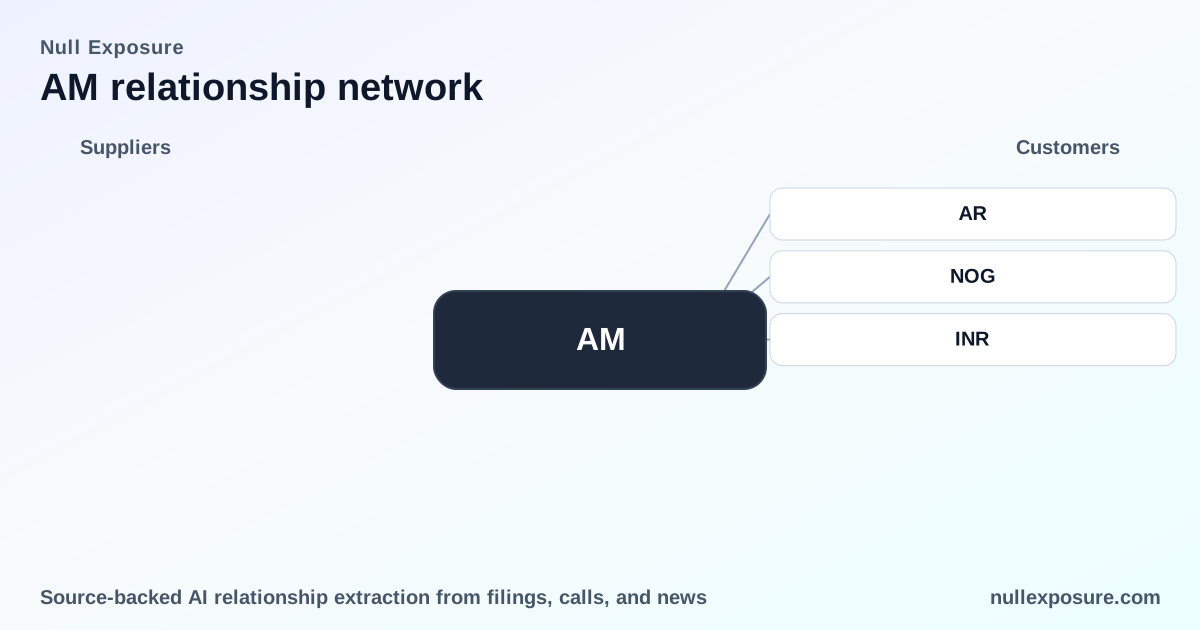
Antero Resources Corporation (AR) — the anchor customer
Antero Resources is the primary and historically dominant counterparty for AM’s gathering, compression, processing, fractionation and integrated water services, and AM discloses long‑term agreements that dedicate substantially all of Antero’s acreage for service. According to AM’s FY2025 10‑K, the 2019 gathering and compression agreement contains options that provide either minimum volume commitments (e.g., utilization or payment for 75% of high‑pressure capacity and 70% of compression for 10 years) or a cost‑of‑service fee that yields a defined return on invested capital; AM’s public commentaries and recent earnings releases reiterate that most of AM’s revenue is derived from Antero Resources (FY2025 filing, and multiple March–May 2026 press releases and earnings call transcripts). Source: AM FY2025 10‑K (filed Feb 2026) and March–May 2026 press releases and earnings transcripts (PR Newswire, Marketscreener, earnings call transcripts).
Northern Oil and Gas, Inc. (NOG) — buyer on a discrete asset purchase
Northern Oil and Gas participated as an acquirer of Utica Shale midstream assets purchased from AM in a transaction announced and closed in 2026; press reports cite an affiliate structure and aggregate cash consideration in the ~$400–470 million range depending on reporting. This was a sale of specific Utica assets rather than an ongoing service relationship and reflects AM’s active portfolio management to sharpen geographic focus and monetize noncore holdings. Source: Investing.com and MarketScreener coverage of the Utica asset sale (March–May 2026).
Infinity Natural Resources / INR — affiliate buyer in Utica sale
Infinity Natural Resources (listed in the news as INR) was named alongside Northern Oil and Gas as an affiliate buyer in the Utica disposal, demonstrating the use of joint buyers/affiliates in divesting regional assets. The transaction structure was described in AM’s SEC‑filed notices and subsequent market reporting as a purchase and sale agreement executed December 5, 2025 and completed in early 2026. Source: TradingView reporting and related press items on the Utica sale (March 2026).
Natural Resources, Inc. / Natural Resources, LLC — transaction counterparty
News coverage and SEC filing summaries identify an affiliate of Natural Resources, Inc. / Natural Resources, LLC as a co‑purchaser in the Utica Shale asset sale, with aggregate cash consideration disclosed and customary post‑closing adjustments noted in the announcement. The naming of Natural Resources entities in the purchase agreement is consistent across multiple March–May 2026 filings and press reports. Source: Investing.com SEC‑filings summary and related March–May 2026 news items.
(Collectively, the asset sale counterparties above represent discrete transactional relationships distinct from AM’s recurring fee customers; the sale reduced AM’s direct exposure to the Ohio Utica footprint while concentrating remaining operations on Appalachian Basin assets supporting Antero Resources.)
How these relationships shape investment considerations
- Revenue visibility is contractual, not market‑priced. Long‑term, fixed‑fee and cost‑of‑service contracts with minimum volume commitments create a predictable cash flow base that supports AM’s dividend guidance and forward EBITDA profile—this is an earnings quality signal investors should value.
- Concentration is the dominant risk. Because Antero Resources supplies the lion’s share of throughput, any operational or strategic reversal at Antero would be the primary downside catalyst for AM; conversely, growth at Antero is the main upside driver for throughput and organic returns.
- Balance‑sheet and portfolio actions matter. AM’s sales of Utica assets to Northern Oil and Gas / Infinity / Natural Resources affiliates and simultaneous capital markets activity (senior note offerings reported in 2025–2026) indicate management is actively reshaping the asset footprint and funding mix to reduce cycle exposure and preserve yield capacity.
- Regional exposure creates idiosyncratic sensitivity. With assets concentrated in West Virginia/Ohio, regional production forecasts and takeaway capacity are leading indicators for throughput trends and midstream utilizations.
Investment takeaway and next steps
Antero Midstream is a contract‑anchored midstream operator with strong cash‑flow visibility but concentrated counterparty and geographic risk. For yield‑oriented investors, the company offers a clear income profile supported by long‑dated contracts; for total‑return investors the key questions are Antero Resources’ production trajectory and AM’s success in diversifying counterparties and redeploying proceeds from asset sales.
For a deeper look at AM’s customer and counterparty map, and to track ongoing filings and market commentary, visit https://nullexposure.com/.
Bold takeaway: AM’s valuation and dividend reliability depend on contractual minimums and continued throughput from Antero Resources; recent Utica divestitures reduce peripheral exposure but do not alter the core customer concentration dynamic.