AMN Healthcare: Staffing plus SaaS, anchored by a large Kaiser relationship
AMN Healthcare operates a dual revenue model: it supplies clinical and non-clinical staffing (short-term travel assignments and longer international nurse contracts) and sells VMS/SaaS workforce-management tools, while also running managed services programs (MSPs) that earn fees as a percentage of client spend. Revenue mixes across services, MSP-managed spend and VMS subscription/usage fees create both recurring and transaction-driven cash flow. For investors, the defining commercial dynamic is client concentration coupled with platform exposure—large health systems provide scale and predictable spend-through, while staffing mix injects assignment-level variability. Learn more about how we surface customer intelligence at https://nullexposure.com/.
Kaiser: a single customer with outsized economic weight
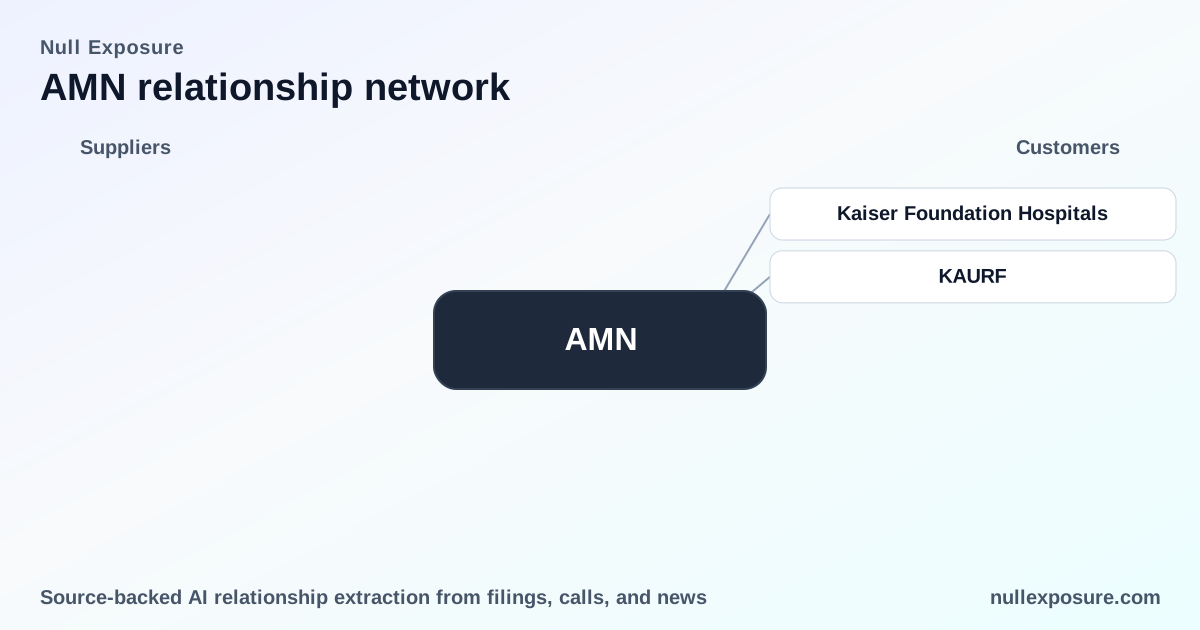
Kaiser Foundation Hospitals (Kaiser) is the most consequential customer in the dataset. Multiple sources report Kaiser accounted for a material share of AMN’s revenue (reported figures cluster in the mid‑teens to low‑twenties percent range), making it an anchor account for the company’s nurse and allied solutions.
- TradingView’s coverage of AMN’s 10‑K (March 2026) highlights consolidation-driven pricing pressure and concentration risk tied to Kaiser, noting Kaiser comprised 22% of revenue in 2025. (TradingView, Mar 2026)
- Analyst commentary compiled by Investing.com (May 2026) states Citizens Research views the probability of retaining the Kaiser contract as high given AMN’s longstanding relationship and its role coordinating strike responses across the Kaiser system. (Investing.com / Citizens, May 2, 2026)
- SimplyWallSt narratives echo analysts’ expectations that the Kaiser relationship improves revenue visibility and reduces contract execution risk, referencing AMN’s strike-support role and retention expectations. (SimplyWallSt updates, Mar–May 2026)
- Company disclosures referenced in constraints show the same customer historically comprised approximately 16% of consolidated revenue in 2024 and a larger share of AMN’s nurse and allied solutions segment (about 23% in 2024), confirming the relationship’s materiality. (Company filing excerpts, FY2024)
What the press and analysts are saying about retention and strikes
Analysts and market commentary treat AMN’s operational role during labor actions as a competitive advantage. Citizens increased its price target in early May 2026 on the premise that AMN’s coordination of strike responses across Kaiser reinforces contract stickiness and execution capability—a near-term positive for retention and revenue visibility. (Investing.com / Citizens, May 2, 2026) SimplyWallSt’s narrative updates repeat the same thesis and frame the Kaiser relationship as central to bullish scenarios. (SimplyWallSt, Mar–May 2026)
How customer and contract signals define AMN’s operating model
The constraints and company disclosures together explain how AMN structures commercial exposure and where investors should look for operational leverage or vulnerability.
- Contracting posture: mixed-maturity — AMN runs short-term travel nurse assignments (typical 13‑week tours) and international long‑term nurse contracts (24–36 months). Short assignments create revenue volatility; long-term placements and MSPs provide multi-year cash flow tails.
- Revenue drivers: usage and subscription plus services — AMN earns transactional staffing fees, usage-based fees from VMS programs (company reporting shows roughly $2.0 billion in VMS spend flow-through in 2024 for which AMN typically earns a percentage fee), and SaaS subscriptions for VMS platforms (ShiftWise Flex, Medefis, b4health). This blend reduces pure staffing cyclicality by adding recurring technology fees.
- Customer concentration and criticality — The company explicitly reports a material customer that composed ~16% of consolidated revenue in 2024, while independent coverage places Kaiser at ~22% of 2025 revenue; concentration is real and economically meaningful. That single large client relationship elevates commercial risk and bargaining dynamics.
- Counterparty mix and procurement posture — AMN serves large enterprise health systems and state/federal government entities, so contract awards and pricing can be influenced by procurement cycles, regulation, and negotiations with sophisticated buyers.
- Geographic focus and operational scale — AMN generates the vast majority of revenue in the United States, concentrating regulatory, labor and demand exposure domestically.
- MSP and spend under management — AMN reports roughly $2.0B in VMS spend and about $4.0B total spend under management in 2024, with about 45% of revenue flowing through MSP relationships; these arrangements increase visibility but also make AMN a focal point in client cost-management efforts.
These attributes combine into a business that is service-intensive and client-dependent but increasingly platform-augmented, creating both stability (recurring MSP/VMS fees and long-term international placements) and sensitivity (short-term travel staffing and concentrated customer exposure).
Investment implications: what to monitor
- Retention and contract renewals with Kaiser are the single highest-impact variable. Positive outcomes for renewal materially support revenue visibility and downside protection; loss or renegotiation would pressure both top line and segment profitability. (TradingView; Investing.com; company disclosures)
- MSP and VMS revenue provides margin diversification. Usage-based fees scale with client spend and are less exposed to assignment-level churn, improving cash flow quality when MSPs grow.
- Staffing mix drives quarter-to-quarter volatility. The 13‑week travel cycle and international placement timing create lumpy revenue recognition despite platform tailwinds.
- Regulatory or procurement shifts among government and system buyers can change pricing leverage. AMN’s client roster of large health systems means contract terms and compliance exposure determine margin persistence.
- Operational competence in strike-response and surge staffing is a competitive moat. Analyst commentary credits AMN’s coordination capability with strengthening retention odds for large accounts like Kaiser. (Investing.com / Citizens, May 2026)
For a deeper look at customer-level sourcing signals and to track how AMN’s client mix evolves, visit https://nullexposure.com/.
Bottom line
AMN’s business is built on a hybrid model of workforce supply and workforce-management platforms. The firm’s economics improve when MSP/VMS penetration grows and large clients like Kaiser renew on favorable terms, but customer concentration and staffing-cycle volatility remain the principal idiosyncratic risks. Investors should prioritize contract renewal updates, MSP spend growth, and any earnings commentary on assignment mix and VMS monetization when assessing forward revenue durability.