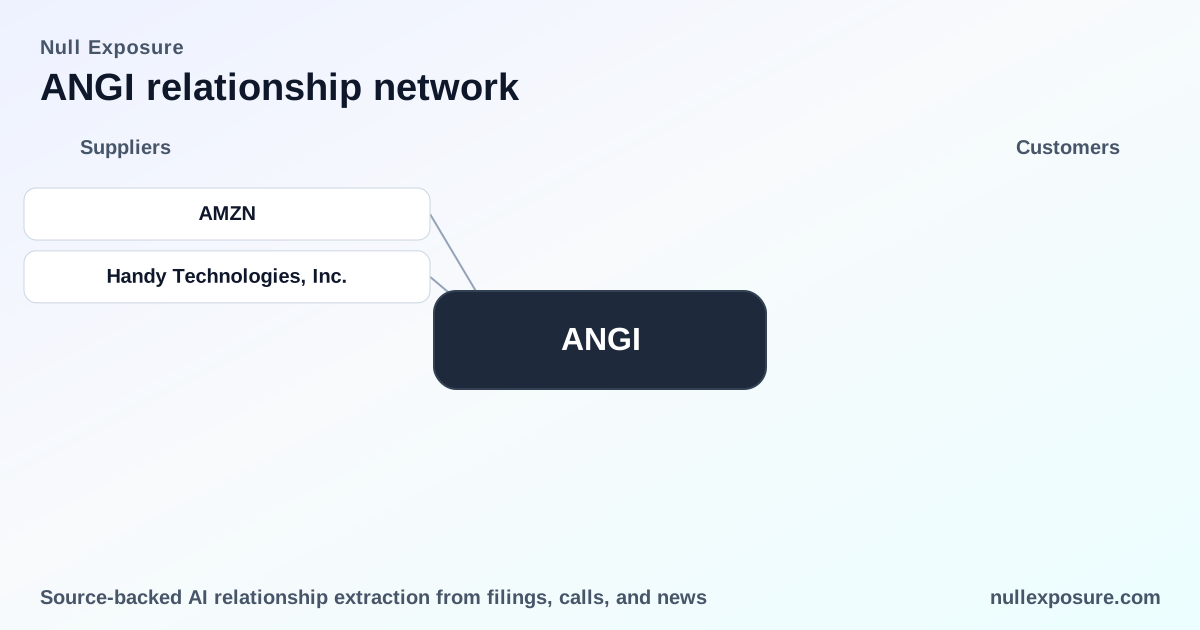
How Angi monetizes the home-services marketplace and why customer relationships matter
Angi Homeservices operates a two-sided home-services marketplace that monetizes primarily by selling memberships and advertising to independent service professionals and by charging fees for consumer-facing services. The company’s Ads & Leads business sells subscription-based placements and lead packages to professionals (typically annual contracts), while its Services segment directly facilitates and, in some cases, coordinates consumer transactions — shifting Angi’s role toward a marketplace connector and revenue-earning facilitator. For investors, the durability of revenue depends on the company’s ability to retain paying professionals, defend placement economics, and manage reputational and regulatory risk around paid placement. Learn more at https://nullexposure.com/.
What the customer evidence tells you about Angi’s commercial model
Angi’s commercial relationships are transactional, subscription-oriented, and geographically concentrated in North America. The company’s stated practice is to sell membership and advertising packages to professionals on short-term, typically one-year terms, with revenue recognized on a straight-line basis over the subscription period. That contracting posture produces predictable near-term revenue but exposes the business to annual renewal cycles and price sensitivity among professionals.
- Contracting posture: Professionals choose monthly or annual pre-paid advertising or membership options; the typical contract term is about one year.
- Revenue mix and roles: Professionals act both as buyers (paying for leads/placement) and as service providers (fulfilling consumer requests), so Angi’s platform is both a supplier of demand and a channel for independent contractors.
- Geography and concentration: The business is heavily U.S.-centric, with international operations in Europe and Canada; the U.S. market generates the bulk of revenue.
- Maturity and scale: The business manages a mature marketplace with a substantial active base of professionals that transact regularly, which supports recurring revenue but leaves the company vulnerable to churn.
These characteristics translate into highly repeatable, subscription-driven cash flows but with meaningful renewal and reputational risk—key points for valuation and scenario analysis.
How those mechanics show up in the P&L and operating metrics
Angi reports run-rate scale with near‑billion-dollar revenues and positive operating leverage in recent periods. The company discloses professional membership subscription revenue being deferred and recognized over the subscription period, and it reported a sizable active professional base — approximately 168,000 transacting professionals during Q4 2024 — which underpins Ads & Leads revenue. Investors should treat margins and cash generation as sensitive to retention and acquisition economics for professionals.
The customer relationships identified in the record
Below are the specific customer or counterparty relationships surfaced in the available records, with concise, plain-English summaries and source attribution.
-
Classic Trees — A business owner reported that, since 2005, Classic Trees paid Angie’s List more than $200,000 for advertising services and coupon-retention fees in exchange for advantageous placement of its profile on the site. This is concrete evidence of paid-placement commercial arrangements between professionals and the Angi platform. Source: a TopClassActions report citing litigation and customer claims referencing FY2017 facts.
-
IAC / InteractiveCorp — In May 2017 IAC agreed to acquire Angie’s List with the plan to combine it with HomeAdvisor to form a consolidated publicly traded home-services business. This transaction history explains Angi’s strategic alignment with larger platform consolidation efforts and is material to how the company’s product and monetization model evolved. Source: Bloomberg reporting, May 2017.
Each relationship citation supports either the existence of paid-placement subscription economics (Classic Trees) or the corporate lineage and strategic combination that shaped the current platform (IAC acquisition).
Constraints and what they signal about commercial risk
The extracted constraints provide company-level signals about contracting, counterparty mix, geography, and spend patterns. These are not assigned to any single named counterparty unless explicitly identified in source material.
- Contract type: Short-term and subscription-oriented. Angi structures its professional contracts predominantly as subscriptions, usually recognized over a one-year term, and allows monthly or annual prepayment. This yields predictable short-term revenue but creates annual churn risk.
- Counterparty type: Individual professionals and small businesses populate the supply side; these relationships are more modular and less sticky than enterprise contracts, making retention and price sensitivity key risk factors.
- Geography: Primarily North America, with additional—but smaller—operations in Europe and Canada. This concentration increases exposure to U.S. housing and consumer spending cycles.
- Relationship roles: The platform’s counterparties act as buyers (purchasing leads/placement) and service providers (delivering consumer services), so Angi’s revenue is sensitive to both sides’ economics and satisfaction.
- Relationship stage and maturity: A significant active base of professionals indicates a functioning marketplace, but the short contract terms imply ongoing sales effort and renewal management.
- Spend bands: Internal inter-segment service flows totaling millions in certain periods indicate material intercompany activity during strategic initiatives (for example, when Angi owned other vertical businesses). These demonstrate historical spend at the mid-to-high single-digit million range between segments.
Taken together, these constraints show a business that is revenue-driven by repeat, subscription payments from many small counterparties in a single dominant geography, which creates predictable near-term cash flow but concentrated operational risks that require strong retention and brand management.
Risks and investor action items
- Churn and renewal sensitivity: One-year contracts mean revenue stability depends on repeat renewals; model conservatively for turnover in stress cases.
- Reputational and regulatory exposure: Paid-placement allegations (as documented in customer claims) create reputational and potential legal risk that can affect consumer trust and advertiser willingness to pay.
- Geographic concentration: Heavy U.S. exposure ties performance to U.S. housing and discretionary spending cycles.
- Two-sided platform dynamics: Maintaining both supply (professionals) and demand (consumers) requires balanced incentives; mispricing or poor consumer outcomes hurt both sides.
If you want a systematic view of how these relationship dynamics affect vendor risk and valuation scenarios, review the full evidence at https://nullexposure.com/.
Bottom line for investors
Angi’s customer relationships confirm a subscription-and-advertising-centered monetization model anchored in a large base of independent professionals, primarily in North America. The model delivers recurring revenue and scale benefits but is exposed to renewal cycles, reputational issues tied to paid-placement practices, and concentration in the U.S. market. For valuation and risk assessment, emphasize retention metrics for professionals, legal/reputational developments, and the company’s ability to widen monetization into higher-margin services without undermining platform neutrality.