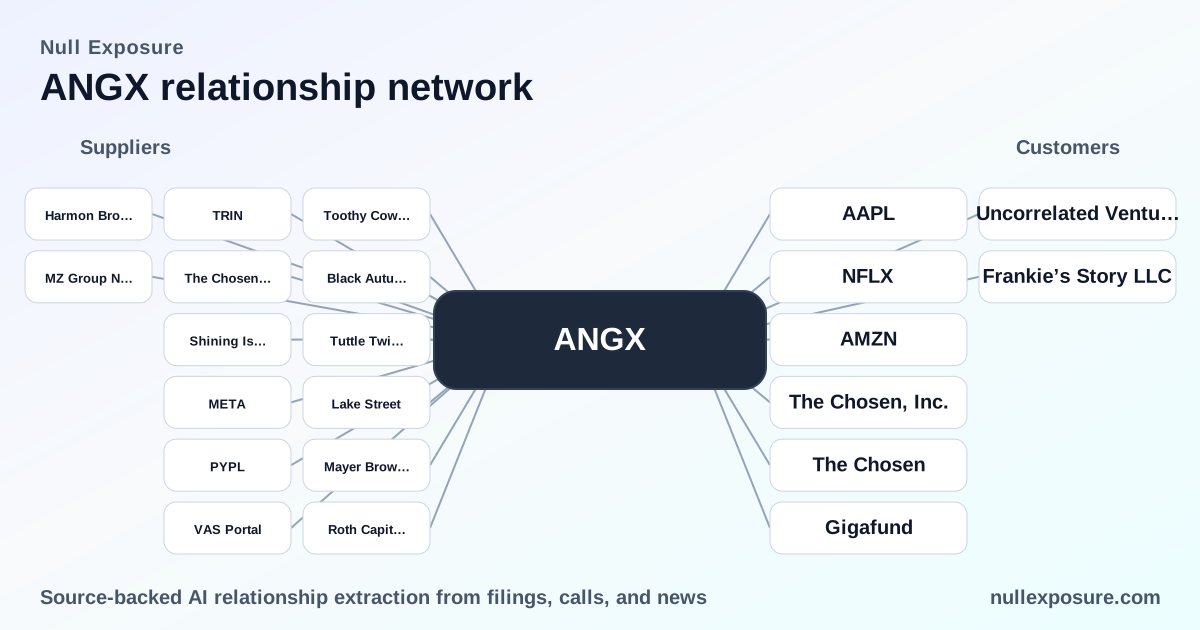
Angel Studios (ANGX) — how customer relationships monetize and what they reveal for investors
Angel Studios operates as a niche content producer and distributor that monetizes through a mix of box-office releases, direct-to-consumer streaming, licensing of finished content to large platforms, and creator partnerships that shift marketing and production risk away from the studio. Revenue is driven by ticket sales, subscription/streaming receipts, and licensing fees to major aggregators, while creator partnerships and crowdfunding reduce capital intensity and concentrate upside in hit properties. For primary research on relationship footprints and go-to-market signals, visit https://nullexposure.com/.
How Angel’s business model actually works for investors
Angel Studios combines crowd-backed greenlighting of shows and films with a distribution-first model: it finances or co-finances projects with creators and then distributes through its own streaming channel and theatrical windows, before selling or licensing streaming rights to larger platforms. This hybrid monetization profile means revenue volatility is content-driven (one successful theatrical release or licensing sale can materially swing results) while fixed costs remain relatively low given creator-led production financing. The FY2026 financial snapshot shows meaningful scale—Revenue TTM of $389M and Gross Profit of $240M—but negative operating and net margins, underscoring reliance on outsized content outcomes to reach sustained profitability.
Company-level constraints and operating signals
The available contract-related evidence signals a seller posture in certain capital or transactional activities, reflecting Angel’s willingness to monetize ownership stakes or rights rather than hold assets indefinitely. This is a company-level signal about contracting posture and liquidity strategy rather than a relationship-specific clause. Taken together with Angel’s distribution model, the following characteristics define operational risk and opportunity:
- Concentration: Licensing deals with a handful of major platforms amplify revenue when successful but create customer concentration risk.
- Criticality: Relationships with large streamers are highly material to monetization of hits after theatrical windows or sampling on Angel’s own platform.
- Contract maturity: Many arrangements are project-based (single-title licensing or distribution options) rather than long-term platform-wide exclusives, producing episodic revenue rather than predictable recurring cash flow.
- Commercial posture: Angel’s historical behavior favors monetization events (sales/licenses) over perpetual ownership, consistent with a seller orientation.
For deeper relationship discovery, see https://nullexposure.com/.
What every customer relationship in the public record tells investors
Below are plain-English summaries for each relationship entry found in public reporting. Each entry is tied to the cited source so you can verify context and timing.
-
Amazon / AMZN — GlobeNewswire (Sept. 11, 2024)
Angel licenses films and TV shows to major distributors including Amazon as part of its content-licensing channel, indicating Amazon is a commercial outlet for Angel’s post-theatrical monetization. According to the company announcement tied to the SPAC combination, content licensing to Amazon is a stated distribution path for Angel’s titles. Source: GlobeNewswire press release, September 11, 2024. -
AMZN (duplicate entry) — GlobeNewswire (Sept. 11, 2024)
An additional mapping in the public dataset repeats Amazon as a content-licensee, reinforcing that Amazon figures repeatedly in Angel’s stated distribution strategy. Source: GlobeNewswire press release, September 11, 2024. -
Apple / AAPL — GlobeNewswire (Sept. 11, 2024)
Apple is listed alongside other major streamers as a prospective license/buyer for Angel’s catalog, confirming that Apple’s platform is part of the studio’s go-to-market for finished content. Source: GlobeNewswire press release, September 11, 2024. -
Netflix / NFLX — GlobeNewswire (Sept. 11, 2024)
Netflix appears in the same licensing context as Apple and Amazon, indicating Angel targets multiple large streamers when monetizing content rights. Source: GlobeNewswire press release, September 11, 2024. -
The Chosen, Inc. — Deseret News (June 24, 2025)
The first three seasons of The Chosen were distributed through a partnership between creator Dallas Jenkins and Angel Studios, showing Angel’s role as distributor for creator-led series and the company’s ability to scale niche faith-based content. Source: Deseret News feature, June 24, 2025. -
Amazon / AMZN — Rolling Stone (FY2023 coverage)
Rolling Stone reported that Angel sold streaming rights to Sound of Freedom to Amazon after a competitive bidding process, demonstrating Angel’s capability to convert theatrical success into lucrative platform licensing. Source: Rolling Stone feature on Angel’s audience/business practices, covering FY2023. -
AMZN (duplicate Rolling Stone entry) — Rolling Stone (FY2023 coverage)
The dataset includes a duplicate mapping of the same Rolling Stone report that records Amazon’s acquisition of streaming rights for Sound of Freedom, reinforcing the transaction’s presence in media coverage. Source: Rolling Stone feature, FY2023. -
The Chosen — CHVN Radio / CHVN reporting (FY2024)
Local reporting noted distribution arrangements where The Chosen would appear on the Angel app and The Chosen app before wider release, reflecting short-term exclusivity windows used to drive Angel’s owned-platform engagement prior to third-party distribution. Source: CHVN Radio coverage of The Chosen–Angel relationship, FY2024. -
Gigafund — CoinDesk (May 3, 2022)
CoinDesk reported that venture funds including Gigafund participated in an equity sale to Angel that involved crypto-denominated proceeds, indicating institutional venture capital interest and nontraditional financing in Angel’s earlier growth stages. Source: CoinDesk business reporting, May 3, 2022. -
Uncorrelated Ventures — CoinDesk (May 3, 2022)
The same CoinDesk piece names Uncorrelated Ventures as a participant in Angel’s private funding rounds, highlighting VC backing from funds with crypto and alternative strategies. Source: CoinDesk business reporting, May 3, 2022. -
Frankie’s Story LLC — Rolling Stone (FY2023 coverage)
Rolling Stone notes that Frankie’s Story LLC entered a distribution option agreement with Angel for projects tied to Bratcher, signaling Angel’s use of optioned agreements to acquire distribution rights from production umbrellas. Source: Rolling Stone feature, FY2023.
Investment implications: what this relationship map means for investors
- Platform licensing is a core monetization lever. Major platform licenses to Amazon, Apple, and Netflix convert episodic theatrical or direct-release wins into large, lump-sum or multi-year revenue streams—a critical de-risking mechanism for a studio with concentrated hit-driven economics.
- Concentration and episodicity are intrinsic risks. The business depends on a small number of breakout titles and a handful of large licensees, creating revenue lumpiness and counterparty concentration that investors must price into valuation multiples.
- Creator partnerships and options reduce capital intensity. Agreements like those with The Chosen and Frankie’s Story LLC show Angel’s strategy to secure content economically, but also make long-term revenue contingent on successful creator-led monetization.
- Early-stage institutional backing and nontraditional capital are supportive but not guaranteed. Venture participation from Gigafund and Uncorrelated Ventures demonstrates investor appetite for Angel’s model during growth phases, but public investors must assess how that backing translates into recurring revenue as the company scales.
- Contracting posture suggests a willingness to monetize assets. The company-level signal that Angel acts as a seller in transactional settings implies management favors converting rights into cash rather than holding for long-term control, which affects long-run margin and asset strategies.
Conclusion and next steps
For investors evaluating ANGX, the relationship map shows a company centered on earning outsized returns from hit content and converting those hits into licensing revenue with large platform partners — a model that produces high upside and high episodic risk. For a concise, investor-grade view of Angel’s customer and partner footprint, visit https://nullexposure.com/ and review the full relationship-backed evidence.
Key takeaway: Angel’s monetization is proven on a title-by-title basis; valuation should reflect both the frequency of hits and the risk that a small number of platform deals drive most near-term cash flow.