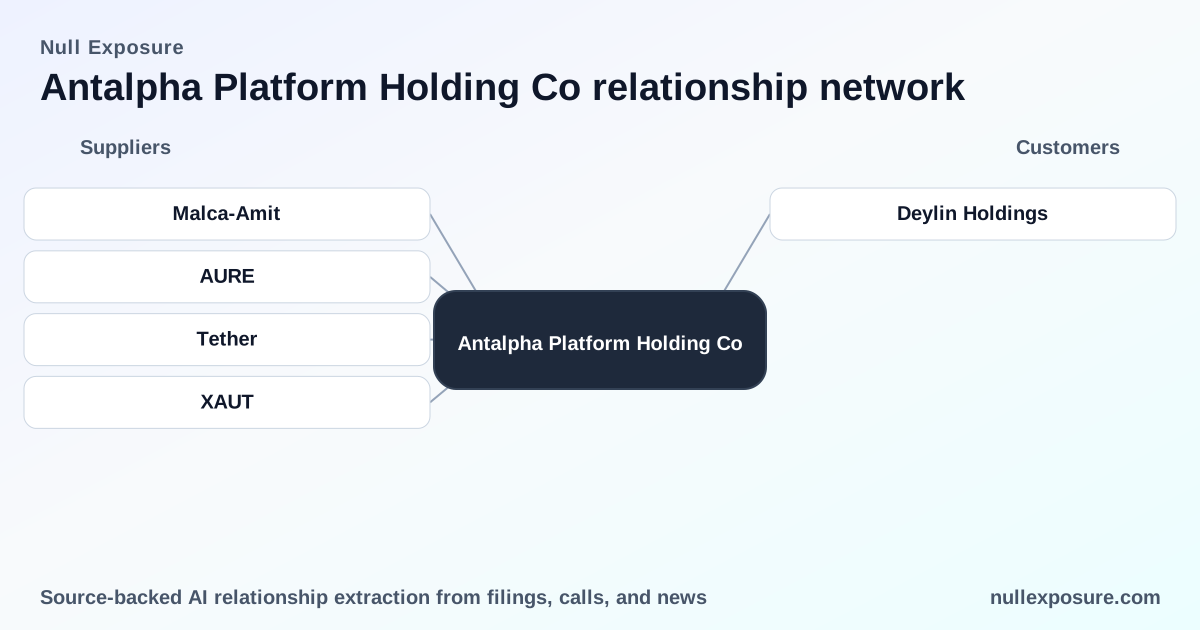
Antalpha Platform Holding (ANTA): The financing hub for tokenized gold and crypto miners
Antalpha operates as a specialty lender and liquidity provider to the crypto-asset ecosystem, combining direct lending, anchor equity investments, and platform services to monetize spreads, platform fees and proprietary financing returns. The business generates revenue from secured lending (notably bitcoin-backed loans), technology fees for white‑label platform services, and balance‑sheet investments such as PIPEs and committed tokenized assets. For a concise view of Antalpha’s investor signals, visit https://nullexposure.com/.
Snapshot investors need up front
Antalpha is a NASDAQ‑listed credit services firm with ~$79.7M revenue (TTM) and ~23% profit margin, trading at a trailing P/E around 12x and market capitalization near $206M. The company exhibits high operating leverage (operating margin ~45%) and concentrated ownership (insiders ~25.8%, institutions ~0.37%), indicating a management‑led capital structure and relatively low institutional float. These characteristics align with a high‑conviction, founder/insider controlled growth lender in a niche vertical.
How Antalpha contracts and where it matters
Antalpha’s contracting posture is that of a secured counterparty lender and anchor investor: it provides senior and structured debt, takes collateralized positions, and places capital into early-stage tokenized treasuries. That posture creates counterparty concentration and criticality—relationships with large miners and token issuers are operationally critical to Antalpha’s revenue; a handful of anchor deals drive outsized earnings and balance‑sheet utilization. The company’s maturity profile is hybrid: platform and fees show early recurring characteristics, while balance‑sheet investments and large facility arrangements resemble bespoke private credit.
Customer and partner relationships — a transaction‑level ledger
Below are the publicly reported relationships and the core deal terms or commercial role Antalpha performs for each counterparty, with sources.
Aurelion (AURE)
Antalpha acted as the anchor investor in Aurelion’s $150M financing, including approximately a $100M PIPE and participation in a $50M senior facility, and will provide lending collateral services to generate yield on unencumbered gold holdings. (Reports: QuiverQuant and CryptoNews, March 2026.)
Bitmain
Antalpha is Bitmain’s primary lending partner and has a memorandum of understanding to continue financing Bitmain’s customers, exchange referral flows, and a right of first refusal to serve Bitmain‑referred customers when Antalpha offers competitive terms; Antalpha also supports bitcoin‑backed loan exposure that was reported near US$1.6B. (Sources: MarketBeat alerts and CryptoNews Australia, January–May 2026.)
Deylin Holdings
Through a strategic cooperation, Deylin (via its DL HODL subsidiary) entered into a purchase agreement with an Antalpha subsidiary to acquire XAU₮ token holdings worth roughly USD 5 million, indicating Antalpha’s role as both seller and market‑maker for tokenized gold. (Source: Futunn news, FY2025.)
PWM / Prestige Wealth (Tether Gold treasury vehicle)
Antalpha served as anchor liquidity and provided the $100M private placement that underpinned the Tether Gold treasury vehicle (Prestige Wealth), plus a $50M senior debt tranche; Antalpha’s资金 cemented the XAU₮ treasury launch. (Sources: CoinDesk and Bitget announcements, October 2025–March 2026.)
XAUE (XAUE Yield Protocol)
Antalpha committed 6,052 units of XAU₮—approximately US$29M based on the preceding gold benchmark—to the XAUE protocol to support yield generation on tokenized gold while preserving full metal exposure. This is a direct balance‑sheet allocation into a yield protocol for tokenized assets. (Source: TipRanks, April 24, 2026.)
Metalpha (MATH)
Metalpha adopted the Antalpha BTC Mining Index for its BTC mining stocks fund and maintains historic commercial ties to Antalpha, reflecting Antalpha’s index and benchmarking role for mining‑oriented investment products. (Sources: Hubbis and Streetwise Reports, FY2024–FY2025.)
NAKA (Nakamoto / Kindly MD)
Antalpha structured a five‑year convertible note of $250M with the entity that merged into Nakamoto/Kindly MD, representing a large, long‑dated convertible financing arrangement tied to bitcoin‑focused fintech activity. (Source: CoinMarketCap Academy reporting on FY2026 deals.)
Northstar (NSGCF)
Northstar sources its non‑U.S. Bitcoin margin loans through Antalpha Prime, with Antalpha earning a technology platform fee—an example of Antalpha monetizing its lending and tech stack via B2B platform arrangements. (Source: MarketBeat instant alert, FY2026.)
What the relationship map implies for investors
- Revenue concentration and counterparty risk are high. A small number of anchor deals—miners and tokenized‑gold treasuries—drive material balance‑sheet utilization and fee income. Loss or non‑renewal of a key partner could compress margins quickly.
- Capital deployment is strategic and active. Antalpha combines lending returns with strategic equity/Pipe placements and token commitments, creating multiple channels for return but also elevated asset‑specific risk.
- Commercial criticality increases pricing power but raises funding sensitivity. Being a primary lender to miners and an anchor investor gives Antalpha leverage in structuring deals, but it also ties its liquidity needs to cyclical sectors (mining, tokenization).
- Corporate governance and float matter. With insiders holding ~25.8% and institutions under 1%, governance decisions and capital allocation are concentrated and likely management‑driven—investors must weigh execution risk alongside upside.
Risk and upside — the investor checklist
- Upside: high yield generation on secured crypto loans, recurring platform fees, and potential upside from successful portfolio investments (e.g., Aurelion PIPE, XAUE commitments).
- Risks: counterparty and concentration risk, tokenization liquidity risk, and market volatility in bitcoin/gold that directly affect collateralized book values.
- Operational: watch for funding cost changes and covenant exposure on senior facilities—these will materially affect net interest margins.
Bottom line
Antalpha occupies a differentiated niche as a lender, anchor investor and platform provider to crypto miners and tokenized‑gold issuers. Its model blends private credit economics with venture‑style downside exposure, delivering attractive margins when counterparties perform but exposing the firm to concentrated counterparty risk and funding volatility. For a practical investor briefing and ongoing relationship tracking, see https://nullexposure.com/.