Angel Oak Mortgage (AOMR): Liquidity partners, counterparty posture, and what investors should watch
Angel Oak Mortgage Inc. originates, acquires and services first‑lien non‑qualified mortgage (non‑QM) loans and monetizes that portfolio through interest spread, servicing revenue and balance‑sheet arbitrage — financing assets with a mix of repurchase facilities, bank counterparties and access to government‑sponsored enterprises. The company is a U.S.‑focused mortgage investor whose profitability depends on stable wholesale funding and the availability of market liquidity that supports continued origination and holding of non‑QM assets. For a quick look at the firm’s public profile, see the company homepage: https://nullexposure.com/.
Operational model and sources of revenue Angel Oak combines direct originations and broker distribution with portfolio acquisition and servicing. Revenue is driven by net interest income on held loans, fees from servicing retained loans, and episodic gains from loan sales or securitizations. The balance sheet is capital‑intensive: the company leverages master repurchase agreements and other bank facilities to fund mortgage holdings, and it supplements that with market access to institutional capital and government liquidity channels.
How Angel Oak’s liquidity picture shapes investment risk Angel Oak’s operating model is built around three linked realities: concentrated funding relationships, U.S. geographic focus, and dependence on wholesale liquidity. Company disclosures identify master repurchase agreements with large banking counterparties executed in 2018, 2020 and 2022 that provide committed short‑term funding against mortgage collateral. That contracting posture — repeated, material repo facilities with global and multinational banks — makes access to these counterparties a core operational dependency. At the same time, Angel Oak explicitly positions itself inside the U.S. mortgage market, so macro shifts in U.S. housing finance and GSE policy directly affect cash flow and capital deployment.
Key structural signals investors should track
- Geographic concentration: Angel Oak operates in the U.S. residential mortgage market as a pure‑play non‑QM investor and servicer, which concentrates regulatory, credit and interest‑rate risk inside one jurisdiction and market cycle. The company’s 10‑K frames its strategy around U.S. first‑lien non‑QM loans (FY2024 Form 10‑K).
- Contracting posture: The firm relies on master repurchase agreements with major banks for short‑term liquidity; facilities cited in filings include arrangements signed in 2018, 2020 and 2022, with committed borrowing capacities referenced at material levels in those agreements. That indicates a repeat, contractual funding approach rather than ad‑hoc market sales.
- Concentration and criticality: Public filings describe Fannie Mae and Freddie Mac as “primary sources of liquidity in the residential mortgage markets,” underscoring the critical role of GSE liquidity conditions for the broader market in which Angel Oak operates — even when the company transacts outside conventional conforming channels.
- Maturity of relationships: The dated repurchase agreements suggest multi‑year, established counterparty ties rather than one‑off facilities; that maturity reduces onboarding risk but amplifies counterparty concentration risk.
Customer relationships called out in filings Below are the customer or market counterparties referenced in the company results and how each relationship functions for Angel Oak.
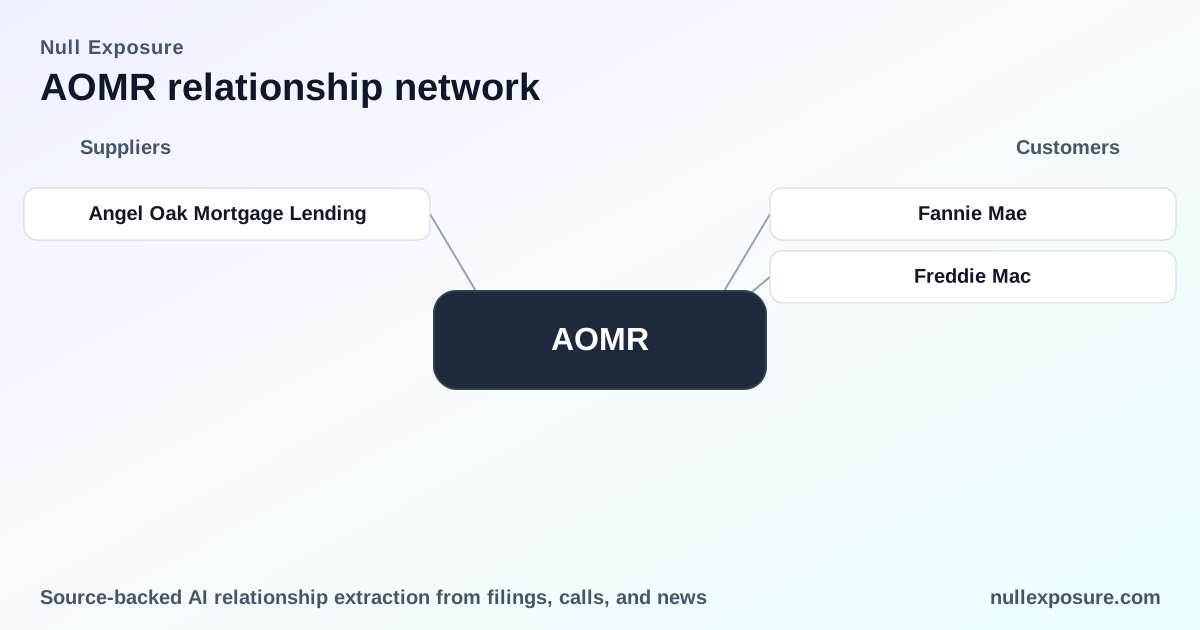
Fannie Mae Angel Oak’s 2024 Form 10‑K references Fannie Mae as one of the entities that “currently act as the primary sources of liquidity in the residential mortgage markets,” which situates the company’s market access in the context of GSE liquidity provision for the broader mortgage market (FY2024 Form 10‑K). This reference is a market‑level acknowledgment that GSE behavior and policy influence funding conditions and pricing for mortgage investors like Angel Oak.
Freddie Mac The 2024 Form 10‑K likewise lists Freddie Mac alongside Fannie Mae as a primary source of market liquidity in the residential mortgage ecosystem, reinforcing that GSE liquidity is a macro driver for Angel Oak’s ability to originate, sell or warehouse loans (FY2024 Form 10‑K). The mention places Freddie Mac in the same functional category as a structural market liquidity provider rather than as a direct contracting counterparty to Angel Oak in the cited excerpt.
Repurchase counterparties and repo structure (company‑level signal) Company disclosures describe multiple master repurchase agreements with large banking counterparties under which Angel Oak’s subsidiaries are sellers of mortgage collateral and can later repurchase those assets. The filings cite a 2018 master repo with a global investment bank for up to $200 million, a 2020 master repo for up to $250 million with a global investment bank, and a 2022 agreement permitting up to $600 million in aggregate borrowings with a multinational bank. These agreements indicate an established, standby funding layer that supports balance‑sheet activity and liquidity management (FY2024 Form 10‑K).
Why these relationships matter for investors
- Funding fragility vs. flexibility: Master repo agreements deliver flexible, collateralized short‑term funding that enables Angel Oak to warehouse loans and manage duration mismatches, but heavy reliance on a small set of repo counterparties creates counterparty concentration risk during market stress.
- Market sensitivity: Because Angel Oak operates exclusively in the U.S. mortgage market, policy actions or liquidity shifts from GSEs will alter the pricing and availability of exit channels for originated loans and thus affect origination economics and realized spreads.
- Operational predictability: The existence of multi‑year repo agreements suggests predictable access to funding under normal conditions; nevertheless, the terms, haircuts and renewal options embedded in such agreements are critical determinant variables for stress scenarios.
Financial context and investor considerations Angel Oak’s public profile shows modest market capitalization and high institutional ownership, with dividend distributions and a low price‑to‑book ratio relative to peers; these metrics reflect a yield‑oriented security in a capital‑intensive niche within mortgage finance (company public filings and market data, latest reported figures). Investors should weight the yield profile against liquidity concentration, repo‑counterparty exposure and sensitivity to U.S. mortgage policy.
If you want a consolidated view of Angel Oak’s counterparty contracts, repo capacity and where liquidity risk concentrates, we track these relationships and their evidence on the platform at https://nullexposure.com/. For a deeper review of how individual facilities and market channels influence balance‑sheet outcomes, the company’s FY2024 Form 10‑K is the primary reference in which these relationships are documented.