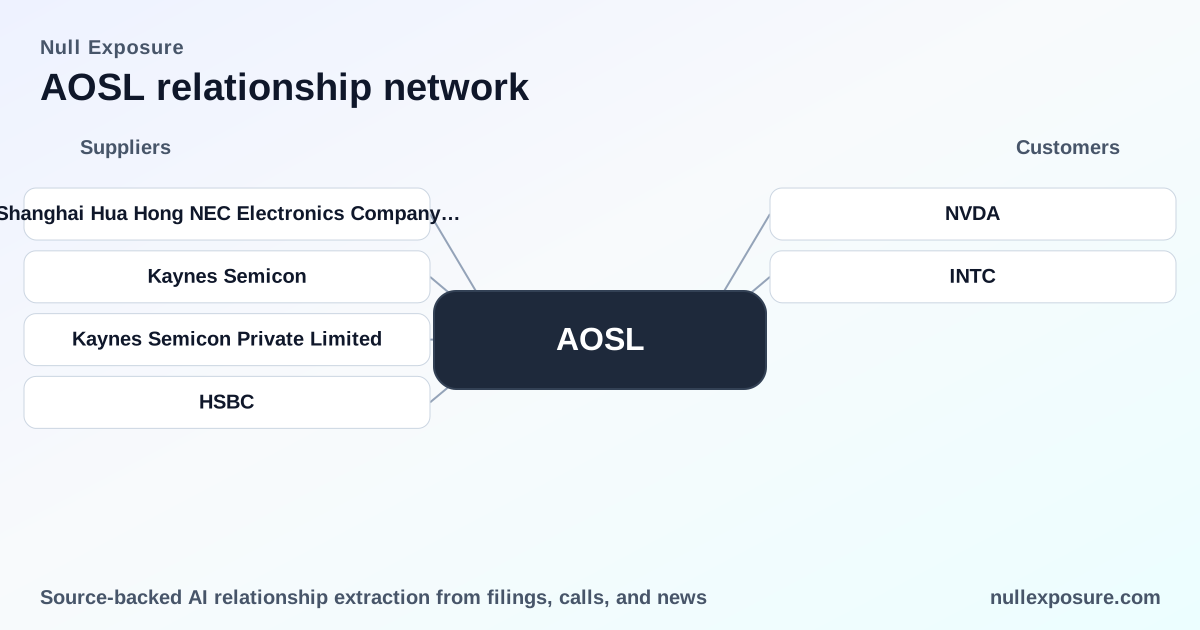
Alpha & Omega Semiconductor (AOSL): Customer relationships that underpin power‑semiconductor growth
Alpha and Omega Semiconductor designs and supplies power semiconductors and monetizes through product sales, distributor channels, targeted licensing deals and short-term engineering services. Revenue is driven by high-volume MOSFETs, power ICs and niche wide‑bandgap (SiC) intellectual property, with monetization coming from direct sales to distributors, targeted wafer-supply arrangements, and discrete licensing projects that can include large upfront and milestone payments. For a concise view of AOSL’s customer exposure and operational constraints, visit https://nullexposure.com/.
Why customers matter: the business model and contracting posture
AOSL operates as a product-centric hardware supplier that also licenses technology when strategic. The company predominantly sells through distributors, which shortens payment cycles but concentrates commercial exposure into a small set of partners. AOSL has executed time‑boxed licensing agreements and accompanying wafer‑supply contracts, reflecting a mixed contracting posture: product sales for routine revenue and fixed-duration engineering/licensing engagements for specialty tech monetization.
- Concentration is material. As of June 30, 2025, two distributors accounted for the majority of revenue, creating single‑point risks to cash flow and order stability.
- Contracts skew short and tactical. The company uses 24‑month licensing and supply packages for high‑value IP transfers, rather than long, evergreen supply contracts.
- Global footprint with APAC focus. Engineering, sales and many customers are concentrated in the Asia‑Pacific region, while product distribution and end‑use are global.
These company-level signals shape both upside (design wins at Tier‑1 customers) and downside (customer consolidation and regional operational risk).
NVIDIA: a strategic power partner for AI platforms
AOSL is a supplier of MOSFETs and power ICs used in NVIDIA’s HGX/DHX H100 AI server modules and has been reported as a new supplier for NVIDIA’s GB200 platform. In parallel, AOSL is collaborating with NVIDIA to develop 800 VDC power semiconductors aimed at next‑generation AI data center power distribution modules, supporting higher efficiency and power density across AC‑to‑DC and DC‑to‑DC stages. A TweakTown report (March 9, 2026) described the GB200 supplier status and product supply role (https://www.tweaktown.com/news/98981/aosl-is-new-gb200-supplier-leading-beneficiaries-of-nvidias-process-certification-changes/index.html), while coverage in DQIndia and StockTitan in March 2026 documented the 800 VDC collaboration (https://www.dqindia.com/esdm/alpha-and-omega-semiconductor-supports-800-vdc-power-architecture-for-next-gen-ai-factories-10599913).
Key takeaway: NVIDIA represents a high‑value design win and a technical partnership that elevates AOSL’s content per server and positions the company for AI‑infrastructure demand.
Intel: BOM traction on new client platforms
AOSL is increasing bill‑of‑materials (BOM) content on Intel platforms as part of its “total solution” go‑to‑market, with explicit callouts to newer Intel families such as Camberlake and Panther Lake during the Q2 FY2026 earnings commentary. Management highlighted that, despite constrained PC unit demand, AOSL is securing incremental BOM share on Intel platforms through integrated power solutions (earnings call transcripts reported March–May 2026; see InsiderMonkey and Investing.com transcripts: https://www.insidermonkey.com/blog/alpha-and-omega-semiconductor-limited-nasdaqaosl-q2-2026-earnings-call-transcript-1690232/ and https://ng.investing.com/news/transcripts/earnings-call-transcript-alpha--omega-semiconductor-q2-2026-misses-earnings-93CH-2327075).
Key takeaway: Intel engagement demonstrates AOSL’s success selling higher‑value integrated solutions into traditional PC and platform OEMs, which stabilizes volumes when discrete component cycles soften.
Distributor concentration and material counterparties
AOSL sells most products through distributors; WPG Holdings and Promate were reported as the two largest distributors, together representing a dominant share of sales (51.3% and 22.1% of revenue for fiscal year ended June 30, 2025). This concentration creates both efficiency (faster fulfillment, cash conversion) and significant counterparty risk if either distributor changes stocking strategy or faces its own demand compression. The FY2025 disclosure explicitly lists these counterparties and their materiality.
Key takeaway: Distributor concentration amplifies execution risk and makes AOSL’s revenue sensitive to a handful of commercial relationships.
Licensing and short‑term development contracts as a strategic lever
AOSL executed a 24‑month license agreement (February 2023) to transfer proprietary Silicon Carbide (SiC) technology and provide engineering services for a total fee of $45.0 million; the company recognized all related revenue and received all consideration by June 30, 2025. The same engagement included an accompanying supply agreement for limited wafer supply. These facts are disclosed in the company’s filings and reflect a business model that leverages IP licensing and fixed‑term engineering contracts to realize non‑recurring, high‑margin cash inflows.
Key takeaway: Licensing projects are a deliberate, time‑boxed revenue stream that complement recurring product sales, but are episodic rather than structural.
Operational signals that matter to investors and operators
- Geographic concentration in APAC means execution is tied to Taiwan/China supply chains and regional OEM ecosystems, increasing geopolitical and logistics sensitivity.
- Role diversity: AOSL functions as a licensor, seller and supplier via distributors, showing product and IP monetization flexibility.
- Maturity profile: Core product lines remain hardware‑centric, while the company is pushing higher‑value “total solutions” and SiC IP sales to improve margins and deepen customer integration.
Investors should weigh the positive leverage from Tier‑1 design wins (NVIDIA, Intel) against revenue concentration and regional operational exposure. For operators, the priority is diversifying distributor exposure and converting short‑term engineering wins into longer‑lifecycle design‑in footprints.
Investment takeaway and next steps
Alpha & Omega has secured strategic OEM and platform partnerships that elevate per‑unit content, notably with NVIDIA on AI server power architectures and with Intel on platform BOM increases. However, material distributor concentration and APAC operational centrality create execution and customer‑concentration risk that requires active monitoring. For investors and commercial operators, the tradeoff is clear: design wins drive asymmetric upside, but counterparty concentration limits downside protection.
For deeper coverage of these customer relationships and to monitor changes in AOSL’s commercial profile, visit https://nullexposure.com/.
Sources referenced in this analysis include AOSL earnings call transcripts and reporting from TweakTown, DQIndia, StockTitan, InsiderMonkey and Investing.com during March–May 2026, as cited above.