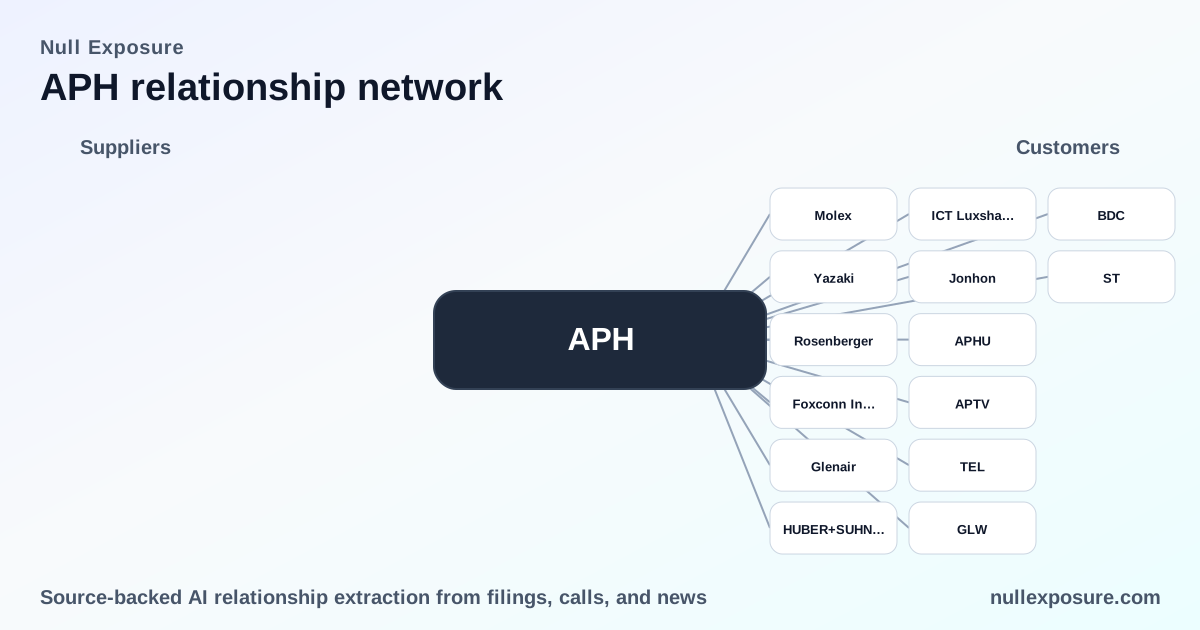
Amphenol (APH): Customer and competitive relationships that define durability and risk
Amphenol monetizes by designing, manufacturing and selling connectors, interconnect systems and cable assemblies into diversified end markets — communications, data centers, automotive and industrial — earning margin on high-volume hardware sales and aftermarket upgrades. Revenue is largely point‑in‑time product sales to large OEMs, contract manufacturers and distributors, governed by short-term purchase orders and master sales agreements; scale and proximity to customers drive Amphenol’s competitive advantage. For an expanded view of relationship signals and source-level provenance, visit https://nullexposure.com/.
How contract structure, geography and segment shape the business model
Amphenol operates with a clear contracting posture: short-duration, point‑of‑sale contracts with frequent purchase orders rather than long-term financed contracts. The FY2025 filing discloses payment terms generally net 30–120 days and that most performance obligations have original durations of one year or less, which establishes working capital dynamics driven by inventory and receivables rather than long-duration backlog.
Geographically Amphenol is a global manufacturer with concentration outside North America — roughly 65% of sales are outside the U.S., with China explicitly disclosed as a multi-billion dollar market — giving the company scale advantages but also geopolitical and supply‑chain exposure. The business is hardware‑centric and commercially mature: product sales, reseller/distributor channels and spot sales predominate, and the Communications Solutions segment represented a material share of revenue growth in 2025.
Operational implications for investors:
- Contracting posture: Short-term purchase orders and master agreements imply revenue visibility is transactional and demand-sensitive.
- Concentration: Global footprint reduces single-market dependency but increases complexity across regions.
- Criticality: Communications and IT datacom products are materially important to overall revenue growth.
- Maturity: The company competes on manufacturing scale, product breadth and customer relationships rather than high‑margin recurring software revenue.
All identified counterparties and mentions — what each relationship signals
Rosenberger
Rosenberger is listed among Amphenol’s primary competitors in the FY2025 Form 10‑K, signalling peer pressure in connector and interconnect markets. Source: Amphenol FY2025 Form 10‑K.
Jonhon
Jonhon is identified in the same competitor list, underscoring the competitive intensity from regional connector manufacturers in Asia. Source: Amphenol FY2025 Form 10‑K.
Molex
Molex appears as a direct competitor in the filing, reflecting overlap in electronic connector and cable product lines that affect pricing and product win rates. Source: Amphenol FY2025 Form 10‑K.
Yazaki
Yazaki is cited as a competitor, highlighting automotive wiring and connector competition that impacts Amphenol’s auto-related markets. Source: Amphenol FY2025 Form 10‑K.
Foxconn Interconnect Technology
Foxconn Interconnect Technology is named among primary competitors, indicating pressure from vertically integrated suppliers with large OEM relationships. Source: Amphenol FY2025 Form 10‑K.
Glenair
Glenair’s inclusion in the competitor list points to contestation in specialty interconnect and ruggedized connector niches. Source: Amphenol FY2025 Form 10‑K.
HUBER+SUHNER
HUBER+SUHNER is listed as a peer, reinforcing competition across fiber‑optic and RF interconnect products. Source: Amphenol FY2025 Form 10‑K.
ICT Luxshare
ICT Luxshare is called out in the 10‑K competitor roster, demonstrating competitive intensity in Asian manufacturing and connector assembly capabilities. Source: Amphenol FY2025 Form 10‑K.
Nvidia (news: Sahm Capital)
Amphenol’s IT datacom segment has benefited from increased hyperscaler AI data center spend and demand for high‑speed interconnects supplied to Nvidia, contributing to recent outperformance. Source: Sahm Capital news article (Apr 2026).
NVIDIA (news: TradingKey)
Analysts flagged concentration risk tied to potential design changes in Nvidia’s AI systems (e.g., GB200) that could shrink the addressable market for Amphenol’s specialized flyover cables, creating substitution risk for certain high‑margin components. Source: TradingKey market commentary referencing BofA concerns (Mar 2026).
Arrow Electronics Inc. (news: Embedded.com)
Arrow’s single‑pair Ethernet reference design includes an IEC 63171‑6 compliant SPE connector supplied by Amphenol, illustrating Amphenol’s role as a component supplier in ecosystem reference designs that accelerate market adoption. Source: Embedded.com product announcement (2026).
T-REX 2X Long APH Daily Target ETF (TradingView)
The ETF APHU uses swaps and listed options to make leveraged bets on Amphenol and may also invest directly in the stock, signaling active investor demand structures built around APH’s equity performance. Source: TradingView fund description (Mar 2026).
APHU (duplicate TradingView entry)
A reiteration of the leveraged ETF structure confirms market products that track and amplify Amphenol’s stock movements, which can increase intraday volatility during rallies and selloffs. Source: TradingView fund description (Mar 2026).
Aptiv
Aptiv is named in the FY2025 Form 10‑K competitor list, indicating direct competition in automotive connectors, sensors and systems that influences share in automotive OEM programs. Source: Amphenol FY2025 Form 10‑K.
TE Connectivity
TE Connectivity is listed as a principal competitor, representing head-to-head contest in connectors and sensors for industrial and automotive customers. Source: Amphenol FY2025 Form 10‑K.
Arrow Electronics (news: EEAsia)
An EEAsia article describes a joint evaluation platform built with Microchip, Bourns and Amphenol; the platform uses Amphenol’s SPE connector and emphasizes the importance of magnetic interfaces and component quality at the physical layer. This underlines Amphenol’s strategic role in reference designs that reduce adoption friction for new interfaces. Source: EEAsia coverage of the reference design (2026).
Corning
Corning appears in the competitor list, reflecting overlap in fiber‑optic systems and cabling solutions that intersect with Amphenol’s communications portfolio. Source: Amphenol FY2025 Form 10‑K.
Belden
Belden is cited among peers, corroborating competition in industrial and enterprise cabling where system-level performance and channel relationships matter. Source: Amphenol FY2025 Form 10‑K.
BDC (duplicate Belden entry)
The duplicate BDC entry in the results reiterates Belden’s competitor status and the channel-level pressures in enterprise cable markets. Source: Amphenol FY2025 Form 10‑K.
Sensata
Sensata is listed in the FY2025 competitor list, which highlights competitive overlap in sensor and electronic components relevant to automotive and industrial end markets. Source: Amphenol FY2025 Form 10‑K.
Investment implications and risk highlights
- Demand sensitivity: Short-term contracts and point‑in‑time sales make Amphenol’s top line responsive to cyclical capex in data centers, automotive and communications. The Nvidia linkage is a growth vector but introduces customer‑design concentration risk when large OEMs alter specifications.
- Competitive intensity: A broad roster of competitors—global incumbents and regional specialists—limits pricing power in commoditized product lines but Amphenol’s scale and product breadth sustain market share in higher‑end interconnects.
- Geographic exposure: With ~65% revenue outside the U.S. and notable sales in China and North America, trade and supply‑chain dynamics are a core operational consideration.
- Channel complexity: Sales through distributors and resellers, alongside direct OEM contracts and reference design participation, diversify go‑to‑market but require inventory and margin management.
For investors and operators tracking customer concentration, product substitution risk and go‑to‑market execution, Amphenol’s model is fundamentally a high‑volume hardware play supported by ecosystem partnerships and reference designs. For source‑level provenance and continuous relationship monitoring, explore more at https://nullexposure.com/.
Conclusion: Amphenol’s competitive breadth and global scale position it to capture interconnect demand across growth end markets, while short contract durations and exposure to a few large design wins create both upside and execution risks that investors must actively monitor.