Apollomics (APLM): Licensing partnerships drive near-term monetization, not product revenues
Apollomics develops oncology therapeutics and monetizes primarily through out‑licensing and collaboration agreements—collecting upfront payments, development milestones and royalties rather than broad commercial sales today. With trailing twelve‑month revenue of roughly $8.8 million against negative profitability and high insider ownership, the company’s financial profile is consistent with a small-cap biotech that relies on partner milestones to fund operations and derisk programs for investors. For a deeper look at relationship coverage and sourcing, visit https://nullexposure.com/.
The LaunXP deal: a focused, non‑China commercialization carve‑out that pays now and pays later
Apollomics granted LaunXP exclusive development and commercialization rights for vebreltinib in combination with an EGFR inhibitor across Asia excluding mainland China, Hong Kong and Macau. The commercial economics are clear and conventional for biotech licensing: $10 million upfront, up to $50 million in pre‑commercial milestones and royalties on net sales, which converts clinical and regulatory progress into staged cash flow for Apollomics and transfers regional development cost and execution risk to LaunXP. According to a GlobeNewswire release covering the agreement, LaunXP will lead development in its territory while Apollomics retains upside through milestones and royalties.
All reported customer relationships — every result covered
-
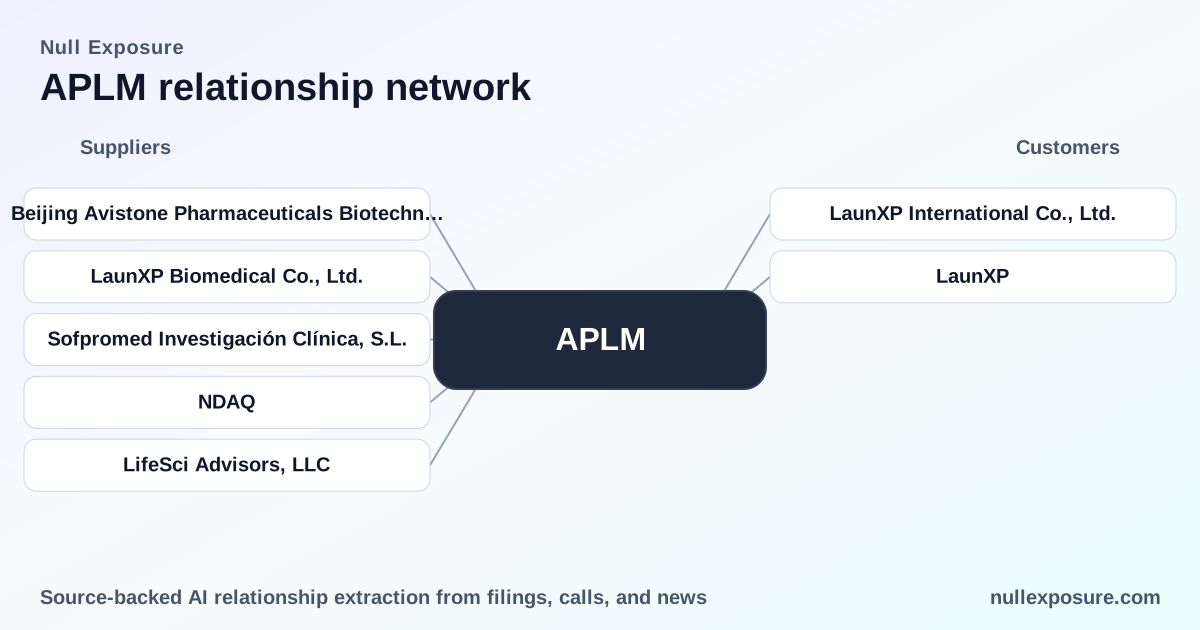
LaunXP International Co., Ltd. (GlobeNewswire) — A March 2025 GlobeNewswire announcement lays out the development and commercialization agreement for vebreltinib in combination with an EGFR inhibitor in Asia (excluding mainland China, Hong Kong and Macau), with a $10 million upfront payment, up to $50 million in pre‑commercial milestones and royalties on net product sales. This is Apollomics’ primary reported customer/licensing partner in public filings and press releases.
-
LaunXP (StockTitan bulletin) — A StockTitan summary reiterates the same commercial structure—$10 million upfront within 60 days, $50 million in potential pre‑commercial milestones and downstream royalties—underscoring market reporting that LaunXP will lead development in its designated territory. The StockTitan item captures how the market parsed the agreement when it was reported.
-
Launxp RE payment (MarketScreener: wind‑up reversal notice) — MarketScreener reported that Apollomics received a payment of USD 3.9 million from LaunXP RE, a cash event previously disclosed in company notices; that receipt was cited in the context of corporate restructuring and listing status updates. The reported cash receipt is a tangible example of milestone/upfront monetization realized from LaunXP‑related activities.
-
Launxp payment (MarketScreener: continued listing notice) — In a separate MarketScreener piece discussing Nasdaq listing matters, the same USD 3.9 million payment from LaunXP RE is referenced, reinforcing that LaunXP has been a payer to Apollomics historically, and that those funds have been material enough to be noted in public company communications about liquidity and listing status.
How these relationships shape Apollomics’ operating model
-
Contracting posture: license‑centric. Apollomics structures value capture through territory‑based licensing deals that generate discrete cash inflections (upfronts, milestones, royalties) rather than recurring product revenue today. The LaunXP agreement exemplifies a standard biotech approach to de‑risking clinical development while preserving upside.
-
Concentration: concentrated counterparty exposure. Publicly reported customer receipts and deals point to a small number of partner relationships; LaunXP is the dominant named counterparty in the available coverage. Concentration elevates execution and timing risk because a significant portion of near‑term cash depends on a limited set of partners achieving clinical and regulatory triggers.
-
Criticality: partner execution matters for funding. For a small biotech with negative EBITDA (‑$9.085 million trailing) and limited institutional ownership, partner milestone payments are critical to sustaining operations and extending the company’s runway absent equity raises.
-
Maturity: early commercialization via partners rather than internal roll‑out. The exclusion of mainland China and the arrangement to let LaunXP lead regional development indicate Apollomics is leveraging partners to execute commercialization in complex markets, consistent with a company that is not yet executing full internal commercialization.
These observations are company‑level signals based on the relationship coverage and Apollomics’ public financial profile (market capitalization ~$36.2 million; revenue TTM ~$8.8 million; high insider ownership ~53%).
What investors should monitor next
-
Milestone cadence and cash receipts. Track confirmations of milestone payments and the timing of any $50 million‑tier events tied to development or regulatory progress; MarketScreener’s reporting of a $3.9 million payment is a precedent for how these events show up in public filings and press reports.
-
Geographic commercialization scope and partner performance. The LaunXP carve‑out highlights that commercial upside is geographically partitioned, so regulatory & commercial success in LaunXP’s territories is necessary to vindicate the royalty stream.
-
Balance sheet and dilution risk. With negative profitability and a small float (≈1.185 million shares) plus high insider ownership, Apollomics will remain sensitive to cash needs; licensing payments reduce dilution pressure but are binary and lumpy.
-
Regulatory progress on vebreltinib combinations. Clinical readouts or regulatory filings that accelerate pre‑commercial milestones will convert future contingent value into cash and materially re‑rate the equity.
For those tracking partner cashflow and counterparty concentration, NullExposure compiles relationship signals and source links in a format designed for investor due diligence — learn more at https://nullexposure.com/.
Bottom line: partner economics power the story
Apollomics is executing the classic small biotech playbook: create clinical value, monetize through selective regional licensing, and rely on partner milestones and royalties for liquidity. The LaunXP relationship is the most prominent public example—it provides immediate cash and the potential for meaningful milestone payments, but it also concentrates commercial exposure and creates dependency on third‑party execution. Investors should price in binary milestone risk, monitor cash receipts closely, and treat partner performance as the primary short‑term driver of value.