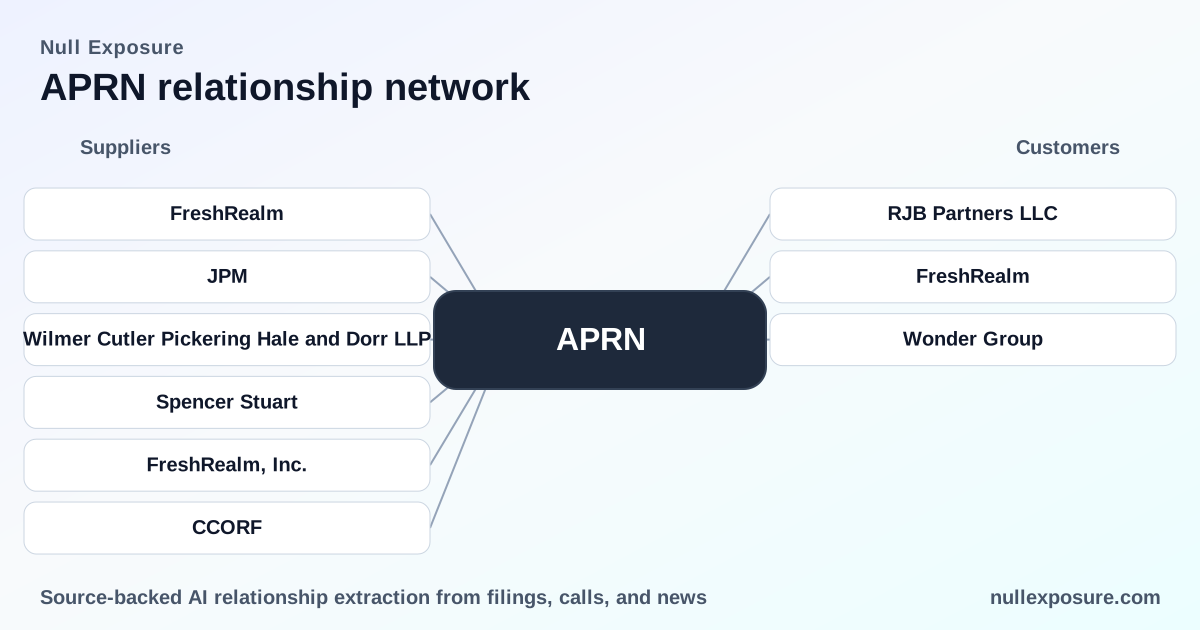
Blue Apron (APRN): From subscription operator to asset-light brand — what investors need to know
Blue Apron operates and monetizes a subscription-first meal-kit business built on direct-to-consumer sales and periodic retail and strategic transactions. Over the last several years the company executed a clear shift away from capital-intensive operations: it raised equity, sold physical infrastructure, and ultimately transferred the brand to a buyer — generating cash and reducing operating overhead while concentrating future economics into fewer, more strategic counterparties. For investors and operators evaluating APRN customer relationships, the key themes are an asset-light conversion, reliance on M&A to unlock value, and discrete financing arrangements that materially altered ownership and upside. For a concise view of broader intelligence offerings supporting this analysis, visit https://nullexposure.com/.
The operating pivot distilled: why the infrastructure sale matters
Blue Apron’s operational posture changed decisively when the company sold its production and fulfillment infrastructure and pared back headcount to prioritize brand economics. That sale converted fixed costs into a one-time cash inflow and shifted day-to-day fulfillment and operational risk off Blue Apron’s balance sheet. This is a structural shift from being an operator of meal-kit production to being a branded, asset-light customer-facing company. That change is central to assessing counterparty risk and future margin profiles: revenue will continue to come from subscriptions and brand licensing or resale, while operating leverage depends on third-party execution.
Capital markets activity provided a bridge to restructure
Blue Apron supplemented asset sales with equity injections and structured financings to shore up liquidity during its transition. The pattern is consistent with a business that prioritized de-risking through capital and corporate transactions rather than organic scale alone.
M&A completed the strategic reset
The brand’s sale to an acquirer crystallized the asset-light strategy into an exit event and concentrated future upside with a single buyer. At the same time, the sale generated scrutiny from investors and counsel about valuation and process, which is relevant to governance and investor protections going forward.
For more context on how counterparties and capital partners influence outcomes like these, see https://nullexposure.com/ for related research and workflow tools.
Relationship-by-relationship review (complete coverage)
FreshRealm — operational infrastructure purchaser (FY2023)
Blue Apron sold its operational infrastructure to FreshRealm for $50 million as part of a broader move to become an asset-light business, shifting production and fulfillment responsibilities away from Blue Apron and reducing overhead. According to FoodOnDemand’s October 2023 reporting, the $50 million sale transferred the physical operating footprint to FreshRealm and materially altered Blue Apron’s cost and operational profile. A subsequent report in FoodNavigator-USA reiterated that the FreshRealm transaction was a key step enabling Blue Apron’s asset-light pivot and headcount reductions in FY2023.
RJB Partners LLC — equity backstop and private placement participant (FY2021)
RJB Partners LLC participated in Blue Apron’s FY2021 capital raise by purchasing $30.0 million of securities in the concurrent private placement, taking common stock and multiple tranches of warrants as described in the company’s rights offering documents. FinancialContent’s September 2021 filing summarized the purchase agreement: RJB acquired 3,000,000 shares of Class A common stock plus warrants exercisable at $15.00, $18.00 and $20.00 pricing tiers, supporting short-term liquidity and recapitalization in FY2021.
Wonder / WONDF — buyer of the Blue Apron brand (FY2023)
Wonder (ticker WONDF) acquired Blue Apron for $103 million, converting the company’s repositioning into a full brand sale and consolidating the business under Wonder’s ownership and strategic plan. FoodOnDemand reported in October 2023 that Wonder’s $103 million purchase reflected the culmination of Blue Apron’s asset-light strategy and delivered an exit for the public company structure.
Wonder Group — sale process subject to shareholder litigation inquiry (FY2023)
The proposed sale to Wonder Group triggered investor scrutiny and a formal investigation into the adequacy of price and process by counsel representing shareholders; Kahn Swick & Foti and former Louisiana Attorney General Charles C. Foti, Jr. launched an inquiry published in October 2023. A notice filed and reported by ChronicleJournal documented the investor alert and the legal review of the transaction process, indicating governance and fairness questions that followed the sale.
What these relationships imply about APRN’s business model and operational constraints
- Contracting posture: The sale of operating infrastructure to FreshRealm is a clear signal that Blue Apron adopted an asset-light contracting posture; the company no longer directly controlled fulfillment assets and therefore relies on third-party operators for critical customer-facing functions. This reduces capital intensity but elevates execution dependency on counterparties.
- Concentration and counterparty risk: The acquisition by Wonder consolidates brand-level upside under a single owner; investors should treat post-sale economics as concentrated and tied to Wonder’s execution. The FreshRealm relationship likewise centralizes fulfillment with a single service provider, creating counterparty concentration on the operational side.
- Criticality of relationships: The FreshRealm and Wonder relationships are operationally and financially critical: FreshRealm executes core fulfillment tasks that affect customer experience, while Wonder controls the commercial fate of the brand and subscriber base.
- Maturity and governance signals: The 2021 equity backstop from RJB Partners and the subsequent 2023 sale reflect a maturity arc from capital-constrained public operator to privately owned brand. The investor inquiry into the sale process demonstrates governance frictions that can affect valuation realization and post-transaction integration.
Note: no explicit contractual excerpts were provided in the source material; the above constraints and assessments are company-level signals inferred from transactions and capital activity rather than specific contract language.
Investment implications and closing takeaways
- Blue Apron transitioned from asset-heavy operations to an asset-light branded model via a $50 million infrastructure sale and a $103 million brand acquisition. This materially changes revenue-risk and cost structure: operating risk shifts to third parties while brand economics concentrate under the buyer.
- Capital injections from RJB Partners in 2021 were an important bridge that supported the restructuring and disposition strategy.
- Governance and process risk became an investor focus during the sale to Wonder Group, as evidenced by the legal inquiry into price and process in FY2023.
For asset managers and operating partners assessing exposure to APRN’s former business and its counterparties, focus diligence on the FreshRealm fulfillment agreement terms, Wonder’s post-closing operating plan, and any residual rights retained by former public holders. For additional actionable relationship intelligence and to model counterparty concentration, visit https://nullexposure.com/ for further services and analysis.