Alpha Pro Tech (APT): Customer Relationships and Distribution Risks for Investors
Alpha Pro Tech develops, manufactures and sells disposable protective garments and infection-control products, monetizing through product sales to construction, medical and industrial channels primarily in the United States. Revenue is driven by a distributor-focused go-to-market model, short sales cycles (orders shipped within 30 days) and standard net-30 payment terms, which together create a business that converts orders to cash quickly but concentrates counterparty risk in a small set of distributors and large customers. For investors tracking commercial counterparty exposure and channel stability, APT’s customer disclosures and historical distributor incidents are the most material signals. Visit NullExposure for more analytical coverage: https://nullexposure.com/.
How APT’s commercial model converts product into cash — and why that matters
Alpha Pro Tech sells disposable protective garments, infection-control and construction products through a network of national and local distributors, purchasing groups and direct sales. The company reports consolidated revenue of roughly $59.1 million (TTM) with a gross margin that converted to $22.5 million in gross profit, and operating leverage that produced positive EBITDA. These financials show a small-cap industrial with meaningful profit conversion but concentrated revenue drivers.
Two operational characteristics determine investor focus:
- Short-term contracting posture: orders are typically placed for immediate shipment and are invoiced on net-30 terms. This creates predictability in working capital flows but limits visibility into forward demand and backlog.
- Distributor-led go-to-market: distribution partners are the primary sales channel and therefore are central to demand generation, pricing and credit exposure.
The structural constraints that shape every customer relationship
Company disclosures and evidence across filings provide clear constraints that influence APT’s customer risk profile. These are firm-level signals investors should treat as part of the operating model.
- Short-term contracts and low backlog — The company discloses that orders are generally placed for shipment and shipped within 30 days, with standard payment terms of net 30 days from shipment. This produces fast cash conversion but limited forward revenue visibility, amplifying the impact of any sudden distributor defections or demand shifts.
- Geographic concentration in North America — Sales are distributed principally in the United States through national and local distributors and purchasing groups. U.S. end markets dominate consolidated net sales, so revenue and regulatory exposure are tied heavily to U.S. healthcare, construction and industrial demand cycles.
- Material customer concentration — Filings identify customers accounting for 10% or more of accounts receivable and net sales, and an example disclosure shows a single large customer representing 20% of consolidated net sales. A small number of large customers materially move reported revenue and receivables.
- Distributor role is strategic — The company relies primarily on a network of independent distributors for sales, making distributor relationships operationally critical for market access and pricing execution.
- End-market segmentation centers on distribution channels — Target customers include construction, roofing and medical/device distributors along with select industrial manufacturing channels; the business is effectively a supplier to distribution ecosystems rather than a retail brand owner.
- Spend band signal — Disclosures indicate customers in a $10m–$100m spend band relative to consolidated sales, consistent with multi-million-dollar exposures to individual distributors or large national accounts.
These constraints together define APT’s contracting posture as short-term, distribution-dependent and concentrated — a profile that produces strong near-term cash flow but elevated counterparty and channel risk.
Known customer relationship: VWR — historical distributor that became a competitor
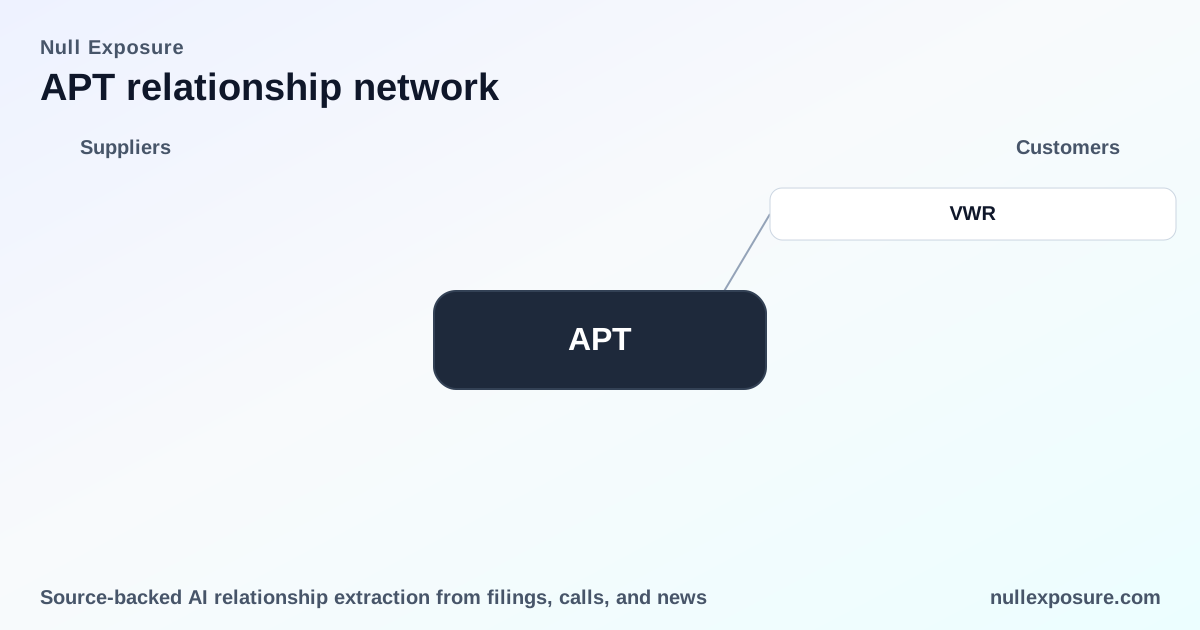
VWR was historically APT’s largest distributor and in March 2010 announced plans to become a competitor, fundamentally altering that channel relationship. The transition from distributor to competitor is documented in a company profile on InnovationInTextiles. This incident is a concrete example of channel conflict converting a major revenue source into a competitor risk, demonstrating the structural vulnerability of a distributor-heavy model. Source: InnovationInTextiles profile of Alpha Pro Tech (reporting the March 2010 VWR development).
Why the VWR episode still matters to investors today
The VWR event is a clear precedent: when a dominant distributor changes strategy, APT’s revenue and margins are exposed. Given the company’s:
- Short-term order book, APT cannot rely on multiyear contracted shipments to smooth the shock of distributor attrition.
- Customer concentration, loss or re-pricing of a large distributor relationship can move annual net sales materially.
- Distributor-centric channel, competitor entry by a distributor substitutes away APT’s sales reach and creates direct product competition.
These dynamics make monitoring distributor stability, distributor competitive moves and customer receivable concentration core to any risk assessment or valuation update.
Practical implications for valuation, operations and monitoring
Investors and operators should treat APT’s customer relationships through three lenses:
- Valuation lens: A concentrated revenue base increases downside volatility; scenario analysis should stress the loss or margin compression of one or two large distributor accounts given disclosures of customers representing >10% of sales.
- Operational lens: Procurement and product strategy should prioritize diversification of distribution channels and contract terms that limit single-distributor leverage; inventory and working capital policies must reflect the net-30 cash cycle.
- Monitoring lens: Track quarterly disclosures of customers accounting for 10%+ of sales, receivables aging, and any public signals of distributor strategy shifts or vertical integration.
Checklist for active monitoring:
- Quarterly customer concentration disclosures and changes in the list of 10%+ customers.
- Receivables aging and days sales outstanding trends relative to net-30 terms.
- Announcements or trade reporting of distributor mergers, vertical integration, or new private-label offerings from major distributors.
- Changes to channel mix (direct sales vs. distributor sales) in filings or investor presentations.
Bottom line for investors and operators
Alpha Pro Tech’s commercial model delivers rapid cash conversion and healthy gross profit, but it is structurally dependent on a distributor network and a handful of large customers. Historic evidence that a top distributor (VWR) transitioned to a competitor is a high-consequence precedent that underscores the company’s exposure to channel risk. Investors should price APT with a premium for concentration risk and monitor filings for changes to the list of material customers, receivables trends, and distributor behavior.
For deeper counterparty mapping and continued coverage of distributor-concentration risks, visit NullExposure: https://nullexposure.com/.