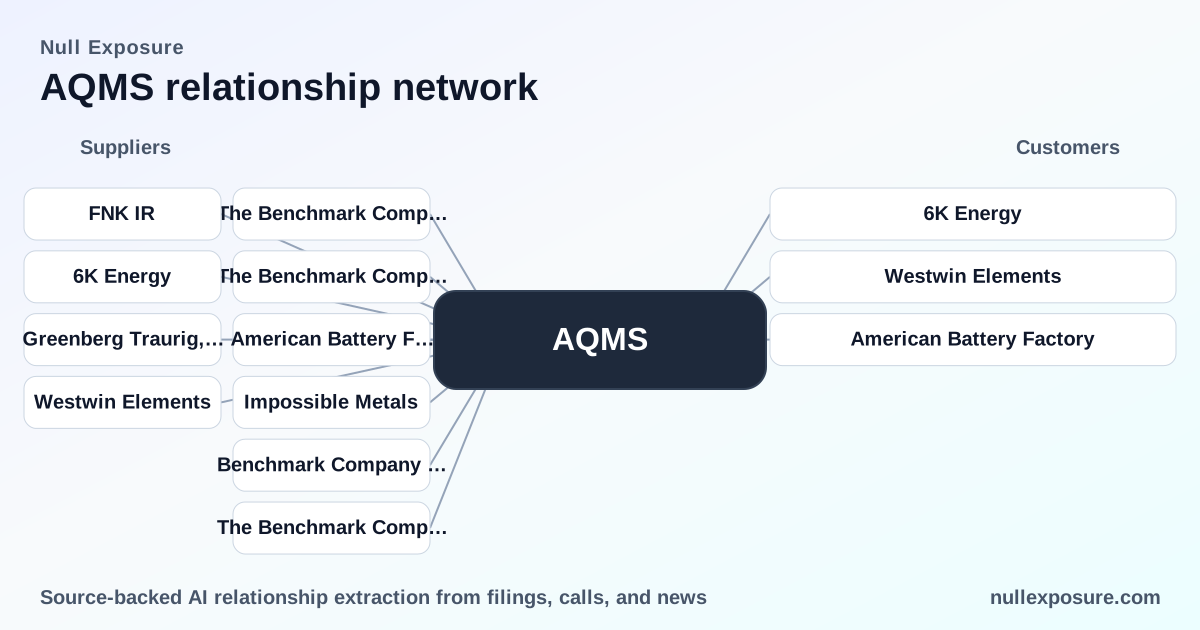
Aqua Metals (AQMS): Customer relationships that define early commercial economics
Aqua Metals commercializes AquaRefining — an electrochemical recycling process that converts spent lead-acid and lithium-ion battery materials into battery-grade nickel, lithium carbonate and recovered lead. The company monetizes through direct sales of refined metals, multi‑year material supply agreements, and an enabler model that includes equipment, licensing and co‑located recycling facilities integrated with downstream manufacturers. Recent offtake agreements and Letters of Intent (LOIs) shift Aqua Metals from technology developer toward supplier-of-record for domestic battery supply chains, while legacy financials show the company is still at very early revenue scale. For a snapshot of the company’s public positioning and partner disclosures, see NullExposure’s coverage: https://nullexposure.com/.
Commercial posture and operating constraints investors need to know
Aqua Metals operates with clear seller economics: it recovers salable metals and sells them into commodity and battery materials markets, and it structures commercial relationships that anchor future volume. Company disclosures indicate Aqua Metals historically sells into large, well-established counterparties and extends trade credit on a relationship basis rather than strict collateralization — a contracting posture consistent with selling commodity‑grade materials to industrial buyers. According to company filings, revenue was extremely concentrated in the past: $25,000 of revenue in 2023 came from one customer (P. Kay Metals) and represented 100% of reported revenue for that year, a signal of revenue immaturity and execution dependence on early buyers.
Other operating signals:
- Aqua Metals positions its market opportunity as global for lead and increasingly focused on the U.S. domestic battery supply chain for nickel and lithium products. Company commentary and investor materials frame AquaRefining as both a product supplier and an enabler (equipment/licensing) for international partners.
- The company’s role is seller of recycled metals and battery‑grade compounds, with core operations organized under a single sustainable metals recycling segment.
- Given the concentration and early stage, commercial relationships are critical to validating capacity, pricing mechanics and throughput as the firm scales.
Commercial relationships: the customers and partners disclosed
Below I cover every customer/partner disclosed in the public relationship set and summarize the commercial intent in plain language.
6K Energy
Aqua Metals executed a multi‑year Material Supply Agreement with 6K Energy to provide future supply of battery‑grade nickel metal and lithium carbonate, with 6K having an option to purchase production at prices tied to then‑current London Metal Exchange levels. This agreement establishes a commercial framework for supplying cathode materials into U.S. domestic CAM production. (Source: GlobeNewswire press release announcing the 6K Energy supply agreement, January 21, 2026.)
Westwin Elements
Aqua Metals signed a non‑binding Letter of Intent with Westwin Elements to potentially supply 500–1,000 metric tons per year of recycled nickel carbonate, targeting domestic nickel refining and supply chain development beginning in 2027. The LOI positions Aqua Metals as a committed feedstock supplier to a major U.S. nickel refinery developer. (Source: Aqua Metals third‑quarter 2025 results and related LOI disclosure on GlobeNewswire, November 12, 2025.)
American Battery Factory
Aqua Metals and American Battery Factory (ABF) announced a proposed strategic collaboration to develop a co‑located recycling facility that would process manufacturing scrap from ABF’s gigafactory and return battery‑grade lithium carbonate into ABF’s supply chain or to designated downstream partners. The relationship is framed as an MOU/proposed collaboration designed to close the manufacturing-to-recycling loop at the factory level. (Source: GlobeNewswire press release describing the contemplated collaboration, February 3, 2026.)
What the relationship set reveals about revenue timing and risk
The customer list demonstrates a deliberate, customer‑first commercialization strategy that anchors Aqua Metals’ scaling pathway into U.S. battery supply chains. Key implications for investors:
- Early commercial anchoring. Multi‑year frameworks with 6K Energy and a proposed co‑location with American Battery Factory give Aqua Metals commercial touchpoints that go beyond pilot sales and LOIs; those agreements function as demand signals that support plant utilization planning.
- Pricing transparency tied to commodity markets. The 6K agreement ties purchase options to LME trading prices — a structure that limits Aqua Metals’ ability to lock fixed premiums, shifting margin exposure to spreads between recovered product costs and LME prices.
- Concentration and immaturity risk. Historical filings show extreme revenue concentration and near‑zero reported revenue in recent TTM figures, so commercial agreements must translate to material off‑take and throughput to move financials; the disclosed LOI volumes (e.g., up to 1,000 tpa of nickel carbonate) are meaningful if realized but are not yet reflected in reported revenue.
- Counterparty profile matters. Company evidence suggests Aqua Metals targets large enterprise customers and industrial partners; that positioning provides credit quality benefits but creates execution dependencies on a handful of strategic buyers.
If you want a rapid rundown of the press releases and partner announcements collected in one place, NullExposure maintains a consolidated feed of Aqua Metals’ customer disclosures: https://nullexposure.com/.
Bottom line for investors and operators
Aqua Metals has moved from lab and pilot narratives into commercial agreements that position it as an upstream supplier of battery‑grade nickel and lithium carbonate to U.S. cathode producers and gigafactory operators. The most important near‑term read for investors is execution: converting LOIs and supply frameworks into consistent, priced deliveries and scale‑efficient throughput. The company’s historical revenue concentration and minimal revenue base make these customer conversions the primary driver of valuation re‑rating.
Key takeaways:
- Supply agreements with 6K Energy and proposed co‑location with American Battery Factory are the most consequential commercial milestones.
- LOI with Westwin Elements signals potential 2027 volume but is non‑binding; realization is the variable that unlocks scale economics.
- Pricing tied to LME improves market acceptability but forces margin dynamics to track volatile commodity prices.
For investors seeking a concise reference to the underlying source materials cited above, those press releases and filings are publicly available on Aqua Metals’ investor pages and mainstream business wire services; NullExposure compiles these items for due‑diligence readers at https://nullexposure.com/.